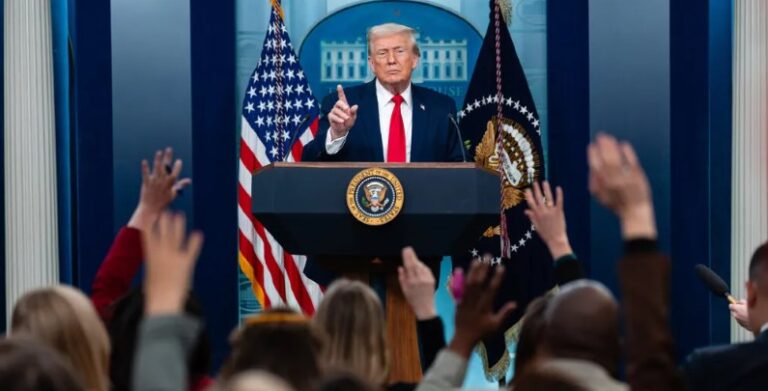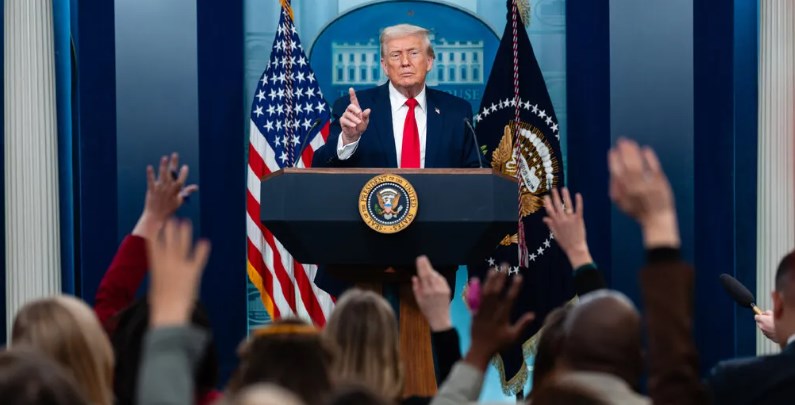
Trump says checks to voters are from economic growth – President Donald Trump is once again putting direct payments to Americans at the center of the economic conversation, arguing that money going back to voters can be supported by the country’s economic growth rather than simply adding to the federal government’s financial burden.
The comments have attracted attention because the idea of sending checks to Americans immediately sounds like another round of government stimulus. But Trump’s argument is different. He has portrayed the potential payments as something that could be made possible by stronger economic activity and increased government revenue, rather than as a program that exists entirely on borrowed money.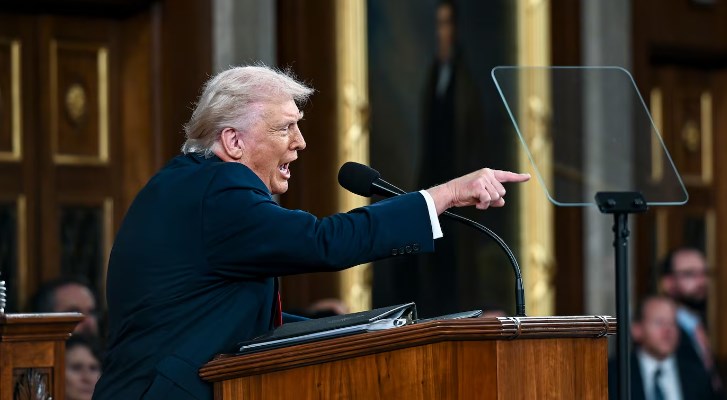
That distinction is important because Americans have heard promises about direct payments before. During the pandemic, stimulus checks became one of the most visible forms of federal assistance, putting money directly into household bank accounts. Trump’s latest comments are being viewed through that history, even though the economic circumstances are very different. For families dealing with high living costs, the question is simple: If checks are coming, who qualifies, how much will they receive, and when will the money arrive?. Those questions remain at the heart of the debate.
Trump Connects Payments to Economic Growth
Trump’s explanation focuses on the idea that a stronger economy can generate additional resources for the government and ultimately give Americans a direct financial benefit. That argument reflects a broader theme that Trump has emphasized throughout his economic agenda: policies designed to encourage domestic production, investment and business activity can eventually translate into greater prosperity for households.
Supporters see direct payments as a way to make that growth more tangible. Instead of economic improvements being measured only through stock-market performance, corporate investment or government revenue, ordinary Americans could potentially see some of the benefits directly in their own finances.
The concept is politically attractive because economic growth can feel abstract. A family does not necessarily notice a change in national productivity or tax receipts. A check, however, is very easy to understand. At the same time, economists and budget analysts are likely to ask an important follow-up question: Is economic growth sufficient to finance the payments without creating additional fiscal pressure?. That is where the details become crucial.
A Check Sounds Simple, but the Economics Are Complicated
Sending money to millions of Americans is considerably more complicated than announcing a payment. The government has to determine eligibility, establish the amount, identify where the money will come from and create a system for distributing it. Depending on the proposal, payments could also have income limits or other requirements designed to target particular groups. There is also the question of timing.
Economic growth does not automatically translate into a pile of cash that can immediately be distributed. Government revenue depends on taxes, economic activity and numerous other factors. Meanwhile, federal spending continues regardless of whether growth is stronger or weaker than expected.
That means any plan for checks would need a clear financial structure. Trump’s framing around economic growth is therefore significant, but it does not by itself answer all of the questions surrounding a potential payment program. For voters, the distinction between a political promise and an enacted federal benefit is especially important. Until Congress authorizes a program where required and the government establishes the relevant rules, Americans should not assume that a check is guaranteed simply because it has been discussed publicly. Trump says checks to voters are from economic growth
Why Voters Are Paying Attention
Direct payments have an emotional impact that few other economic policies can match. When the government announces a tax change, the effect may be difficult for a household to calculate. A payment is different. A specific dollar amount arriving in a bank account creates an immediate and visible benefit. Trump says checks to voters are from economic growth
That is particularly meaningful at a time when many households remain sensitive to the cost of groceries, housing, transportation, insurance and other everyday expenses. Even if inflation has cooled from previous peaks, prices themselves generally remain higher than they were several years ago. For families living paycheck to paycheck, an unexpected payment could help cover bills, reduce debt or simply provide some breathing room.
That helps explain why Trump’s comments are receiving so much attention. But there is another side to the argument. Critics can reasonably question whether direct payments are the best use of additional government revenue. Some may argue that money should instead be used to reduce deficits, invest in infrastructure, lower taxes or address other long-term economic priorities. The debate therefore goes beyond whether Americans would like to receive a check. Most people would. The real question is how such payments would affect the broader economy.
Supporters See a Direct Benefit for Americans
Trump’s supporters are likely to view the proposal as an example of putting economic gains directly into the hands of citizens. That message fits neatly with the broader political argument that government policy should benefit working Americans rather than primarily benefiting large corporations or financial markets.
A direct payment can also serve as a highly visible demonstration that a particular economic strategy is producing results. If the economy grows and the government can distribute some of the resulting revenue, supporters can point to the checks as evidence that voters are sharing in that growth. There is also a psychological element. Trump says checks to voters are from economic growth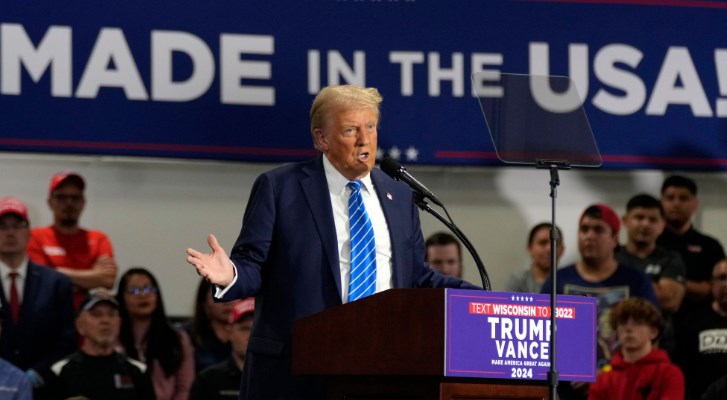
People tend to feel more optimistic about the economy when their own household finances improve. A payment could potentially increase consumer spending as well, with recipients using the money for groceries, household expenses, services or larger purchases. That additional spending could then move through local economies. However, the effectiveness of such a strategy depends heavily on its size, timing and funding source.
Critics Will Focus on the Federal Budget
The biggest challenge for Trump’s argument is likely to be the federal budget. The United States already carries a substantial national debt, and debates over government spending regularly involve questions about whether new programs are financially sustainable. Trump says checks to voters are from economic growth
Critics of direct payments can argue that economic growth should not automatically be treated as money available for distribution. They may also question whether increased revenue should first be used to address existing fiscal obligations. There is another economic concern as well.
If payments are large enough to significantly increase consumer demand at a time when the supply of goods and services cannot keep pace, they could contribute to upward pressure on prices. Whether that happens would depend on the broader economic environment. In other words, giving people more money can provide immediate relief, but policymakers also have to consider what happens after that money enters the economy.
Americans Should Watch the Details
For anyone hoping to receive a payment, the most important thing is to separate the headline from the actual policy. A presidential statement can generate enormous attention, but implementation generally requires specific legal and administrative steps. Eligibility rules, payment amounts, funding mechanisms and distribution dates all need to be established before people can know what they will actually receive.
That means Americans should be cautious about social media posts claiming that everyone has already been approved for a particular payment or that a specific deposit date has been confirmed. Government payment programs can also involve scams. Messages asking people to provide banking information, pay a fee or click an unfamiliar link should be treated with suspicion. The safest approach is to wait for official information from the relevant federal agencies and rely on established government communication channels.
Economic Growth Is the Bigger Story
Behind the debate over checks is a much larger question about what economic growth should accomplish. Trump’s argument suggests that growth should ultimately be felt by ordinary Americans. That can mean higher wages, more jobs, stronger businesses, lower costs or, in this case, potentially direct financial payments. But growth alone does not guarantee that every household will feel better off.
The quality of growth matters. So does the distribution of its benefits. If wages rise, employment expands and productivity improves, households may experience a more durable improvement than they would from a one-time check. That is why the debate surrounding Trump’s comments is likely to continue well beyond the question of whether payments are issued.
What Happens Next?
For now, the biggest unanswered questions concern the exact structure of any proposed payments and the steps required to make them a reality. Trump has made the economic-growth argument, presenting the potential checks as a benefit connected to stronger economic performance. But voters will ultimately need more than a broad promise. They will want to know the amount, eligibility requirements, funding source and payment schedule.
Those details will determine whether the proposal becomes a meaningful financial benefit or remains primarily a political talking point. The appeal is obvious. Americans like the idea of sharing directly in economic prosperity, particularly when household budgets remain under pressure. But the economics are more complicated than a simple promise of money in the mail.
If Trump and his administration can demonstrate that the payments are financially sustainable and genuinely connected to stronger economic performance, the proposal could become a powerful part of his economic message. If the funding raises new concerns about deficits, inflation or government spending, however, the debate could become considerably more complicated. For voters, the message is therefore worth watching—but the details will matter far more than the headline.
About the Author