Revocation of citizenship? The Trump administration intensifies its contentious strategy. – The Trump administration claims that hundreds of people should have their citizenship revoked despite the fact that it has proven to be an expensive and contentious procedure over the years.
As part of a larger immigration enforcement strategy, the proposal calls for increasing the denaturalization process, which President Donald Trump initiated during his first term.
Since the beginning of 2025, the Justice Department has taken action to remove the citizenship of almost ninety individuals. The government hopes to bring at least 250 denaturalization cases in federal court by October.
According to federal law, if someone earned their citizenship through fraud or deception, such as by using a fictitious name or hiding a criminal past that disqualifies them during the naturalization process, the government may ask a judge to remove their citizenship.
The administration is on track to seek more denaturalization cases than any other in recent modern American history if it continues at its current pace. According to the DOJ, the government filed 102 denaturalization claims during Trump’s first term, compared to 24 cases brought by the Biden administration over a four-year period.
“This is a significant increase that we haven’t seen in decades,” stated Cassandra Robertson, a denaturalization specialist and law professor at Case Western Reserve University.
The Trump administration presented the operation as an attempt to maintain the integrity of the naturalization process, claiming that it is targeting criminals and fraudsters who shouldn’t have obtained citizenship in the first place.In a recent statement, Homeland Security Secretary Markwayne Mullin said, “You lose the right to maintain your U.S. citizenship if you commit fraud during the naturalization process.” “DHS is dedicated to making sure we use every resource at our disposal to denaturalize and remove these fraudsters.”
For many years, the government only pursued a small number of denaturalization cases annually, partly due to the fact that they are costly, time-consuming, and resource-intensive. The majority of the cases that prosecutors pursued were alleged war criminals, members of terrorist organizations, and dangers to national security.
However, Trump’s government has taken steps to increase the usage of denaturalization since he took office again. In order to increase the number of cases, DOJ authorities have solicited the assistance of U.S. attorney’s offices across the country, and the DOJ’s civil division has been directed to prioritize denaturalization. The White House called the effort the “Largest Denaturalization Effort Ever” in a post on X on July 20.
The cases being pursued under Trump, according to former DOJ lawyers and immigration law specialists, don’t seem to be out of sync with other administrations. However, some voiced worries that the endeavor might take funds away from other priorities, such as the prosecution of instances involving fraud or corruption. The initiative was criticized by some as an attempt to scare the nation’s more than 26 million naturalized citizens.Former DOJ attorney Stacey Young stated, “I don’t think this will make any dent in the administration’s deportation goals,” characterizing the denaturalization procedure as sluggish and, to some extent, unscalable. “I think it does send a message that naturalized citizenship is impermanent and precarious.”
New government, new campaign for denaturalization
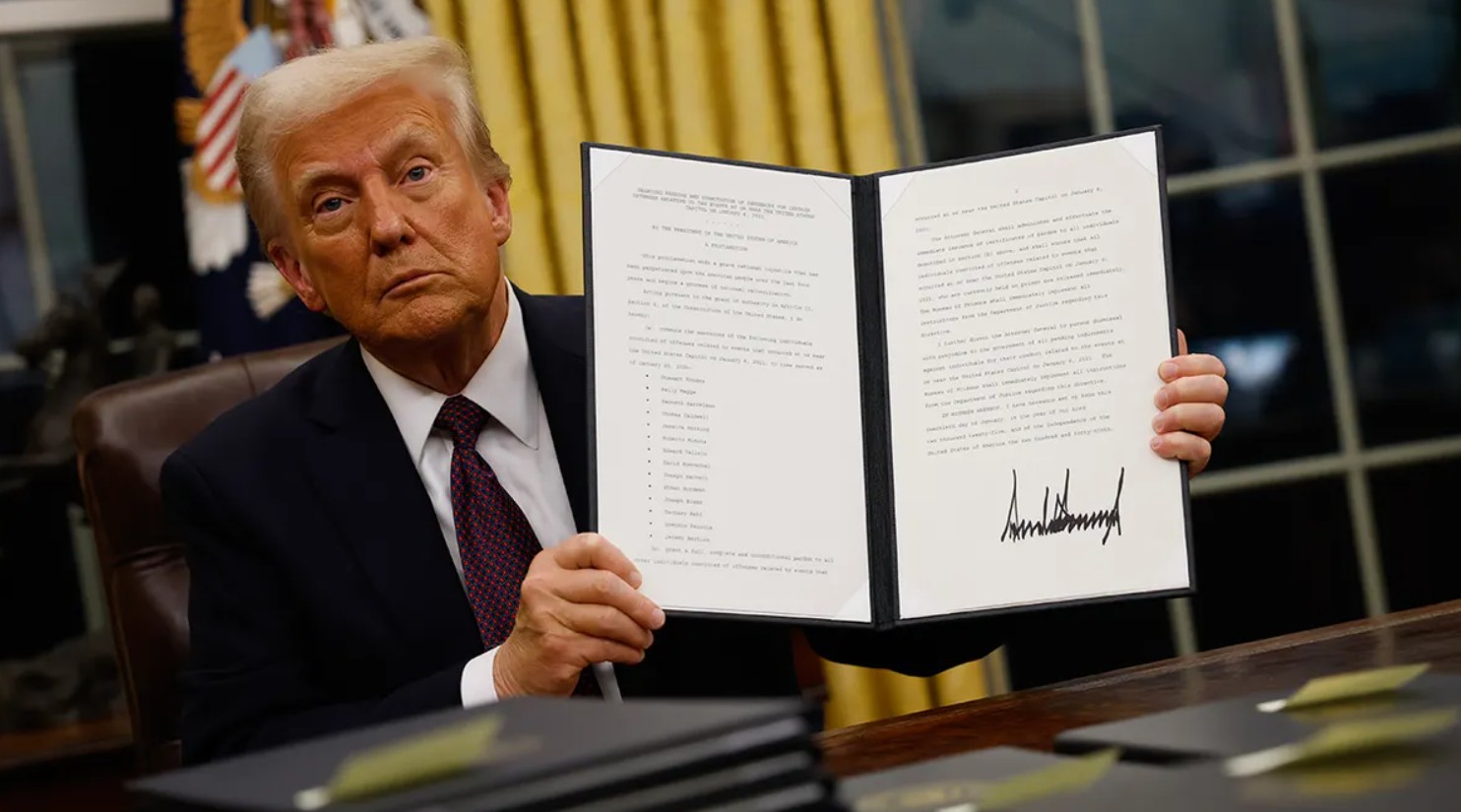
As part of his larger immigration agenda, Trump ordered “adequate resources” to be allocated to denaturalizing some U.S. citizens within a week of assuming office in 2025.
A few months later, the DOJ sent out a memo instructing the civil division of the department, which deals mainly with denaturalization matters, to “prioritize and maximally pursue denaturalization proceedings.”
According to a DOJ official, as of July 22, the Justice Department had filed at least 89 denaturalization cases in federal court—nearly four times as many as were pursued under the administration of former President Joe Biden.
According to the DOJ official, the government has won at least 19 of the cases brought under Trump. Although the DOJ’s civil division handled the majority of the cases, U.S. attorney’s offices nationwide have taken up a sizable portion of them. This change in procedure, according to experts, shows how the government is diverting resources to try and deprive more people of their U.S. citizenship than ever before.According to Young, who worked in the DOJ’s civil division from 2006 to 2019 under the Bush, Obama, and first Trump administrations, the civil division occasionally collaborated with U.S. attorneys’ offices, but it was uncommon. “I don’t remember any cases being handled exclusively by U.S. attorneys’ offices.”
Allegations that the defendant misled or withheld information about their prior behavior that would have disqualified them from obtaining U.S. citizenship are present in many of the ongoing cases.
The Justice Department noted criminal convictions on serious counts like drug dealing, wire fraud, and sexual abuse in the majority of these cases. Others include claims that the defendant falsified their name in order to get naturalization. The government charged defendants in several cases of assisting foreign terrorist groups like Al-Qaeda and al-Shabaab or engaging in war crimes.
The government’s accusations thus far don’t seem unusual, according to immigration experts and former DOJ attorneys, who also pointed out that the overall increase in cases is the result of additional resources being allocated to the denaturalization process.
According to Boston College law professor Daniel Kanstroom, who focuses on immigration, “these cases don’t look all that different from cases that have been brought by previous administrations.”
The DOJ seems to be focusing on those who entered guilty pleas for offenses committed prior to or during the naturalization process, he continued. The government claims that since this group did not fit the “good moral character” standard, they should have been refused citizenship in the first place.
A significant change
The Migration Policy Institute reports that 11 denaturalization cases were filed annually on average between 1990 and 2017. The Supreme Court’s 1967 decision, which states that the government may only remove citizenship in cases of fraud or “willful misrepresentation,” is mostly to blame for the low number.
According to Amanda Frost, a law professor and immigration lawyer at the University of Virginia, that ruling came after a Cold War attempt to denaturalize those the government considered to be political adversaries, such as labor leaders, journalists, or government critics who were allegedly communists. According to Frost, some 22,000 immigrants had their U.S. citizenship revoked throughout the two world wars and the 1950s.
The government restricted its prosecutions in the ensuing decades, concentrating mostly on those who posed a threat to national security or had connections to overseas terrorist organizations.
“After the Supreme Court’s ruling, both Republican and Democratic administrations understood the lesson of that case and realized that denaturalization was to be used sparingly and was not supposed to be a bread-and-butter tool of immigration enforcement,” Frost stated.
Under former President Barack Obama, denaturalization cases did increase. At the time, hundreds of persons who had previously been ordered deported were able to effectively naturalize under false identities because to new digital fingerprinting technologies. In an effort to denaturalize any citizen having connections to overseas terrorist groups, the Obama administration started a study.
Trump’s government expanded the program and cases to cover non-terror crimes like fraud and violent assaults when he took office in 2016. Quotas were also established by the administration. In order to bring some 1,600 cases to court, then-Attorney General Jeff Sessions authorized the probe of 700,000 naturalized Americans.
Even while those objectives weren’t eventually achieved, the DOJ filed an estimated 168 denaturalization cases over a four-year period, far exceeding the Obama and Bush administrations.
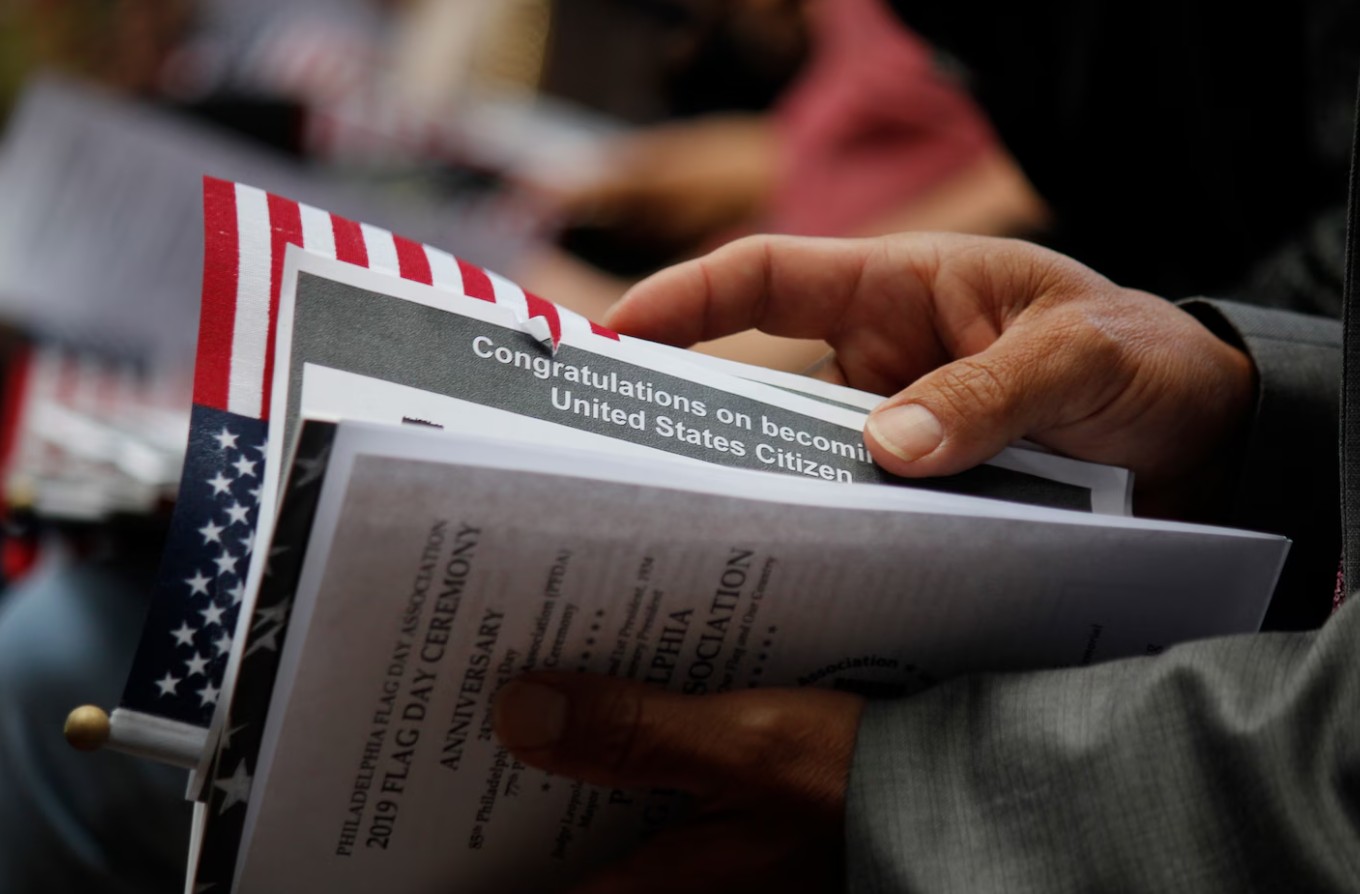
Cases involving denaturalization are drawn out, expensive, and challenging to win.
Denaturalization proceedings can take years to conclude and require substantial resources, which is one of the reasons only a few were pursued in prior decades.
According to Young, the founder of Justice Connection and veteran litigator, “it’s a cumbersome process.” “There is a ton of evidence, extensive discovery, and cases frequently proceed to trial or appeal.”
The Trump administration’s push for denaturalization coincides with the Justice Department’s high workload resulting from court challenges to the White House’s deportation operation and an exodus of federal attorneys.
“They’re overwhelmed,” Young said of federal lawyers across the country, adding that the denaturalization movement would divert prosecutors from important tasks like prosecuting cases involving environmental crimes, health care fraud, corruption, or abuses of national security.
Additionally, deportation is not usually the result of a judge siding with the authorities. Rather, defendants return to their prior status, which is frequently that of a lawful permanent resident with the right to due process and an immigration court hearing.
“You have to go through a whole separate process to remove them,” Young stated.
However, the Trump administration is determined to pursue as many cases as it can. On July 20, Assistant Attorney General Brett Shumate declared that the federal government had “only scratched the surface” and that “many more complaints are coming.”
Shumate declared, “We refuse to give a free pass to criminals who cheated their way into American citizenship.” “You will be subject to the full force of the Justice Department under this administration if you cheated on the naturalization process.”
GOP allies and Trump want to increase denaturalization
The list of denaturalization cases that should be given priority is expanded in a DOJ memo released in 2025.
Some of the new wording called for concentrating on suspects of “fraud against private individuals, funds, or corporations” and those connected to “drug cartels.” The memo’s first section instructs employees to give priority to matters that the civil division “determines to be sufficiently important to pursue.”
Given Trump’s vows to expel some of his opponents from the nation, critics worry that this might lead to indictments against the administration’s alleged political rivals or certain minority groups.
According to Young, who spent almost 20 years in the DOJ, the memo’s wording implies that the division will “target anyone for denaturalization it wants, whenever it chooses – regardless of whether a person poses a threat to the public, or engaged in egregious past conduct.”
A request for comment on the document was not answered by the DOJ.
Trump has frequently advocated for the expulsion of U.S. Representative Ilhan Omar, a Democrat from Minnesota. He stated in a January interview with the New York Times that his administration was reviewing the standards for revoking U.S. citizenships, with a focus on those of Somali heritage.
Additionally, the president made the untrue assertion that Zohran Mamdani, the mayor of New York City, is “here illegally” and promised to “look at everything.” Jason Ogles and Randy Fine, two Republican lawmakers, have urged the Justice Department to look into Mamdani’s citizenship paperwork.
This year, a number of Republicans on Capitol Hill submitted legislation aimed at extending denaturalization.
Rep. Chip Roy of Texas has proposed a bill that would denaturalize “advocates for socialism, communism, Marxism, or Islamic fundamentalism.” Sen. Eric Schmitt, a Republican from Missouri, has introduced a bill that would allow for the denaturalization of anyone found guilty of an aggravated felony, fraud, or espionage up to ten years after naturalization. Except in a few exceptional situations, the government is now unable to denaturalize someone for their behavior after they have obtained citizenship.
Although neither bill is anticipated to pass into law, experts noted that it shows a rising willingness among Republicans to expand the government’s power to denaturalize certain residents of the United States.
However, a major barrier to any widespread denaturalization campaign is federal judges. As mandated by law, immigration lawyers and former Justice Department officials stated that they anticipate the courts to thoroughly consider each case on its merits.
According to Kanstroom of Boston College, “I would expect federal judges to be extremely careful with these cases.” “The case law makes it abundantly evident that citizenship is a valuable asset that should not be taken away lightly.”
About the Author