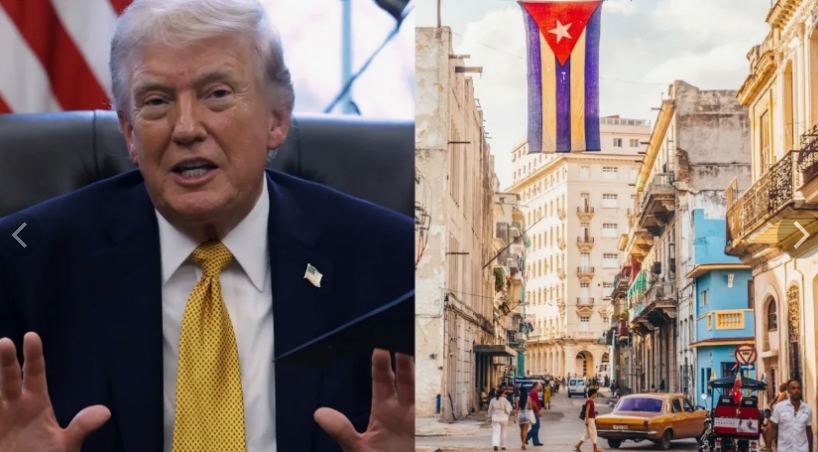
Democrats try to blunt Trump in Cuba — before it’s too late – In the intricate chessboard of American politics, few places carry as much symbolic and strategic weight as Cuba. Just 90 miles off the coast of Florida, the island has long stood at the crossroads of ideology, diplomacy, and domestic electoral strategy. Now, as political tensions sharpen once again, Democrats are making a renewed effort to counter the influence of former President Donald Trump on Cuba policy—an effort that reflects both urgency and a recognition that time may not be on their side.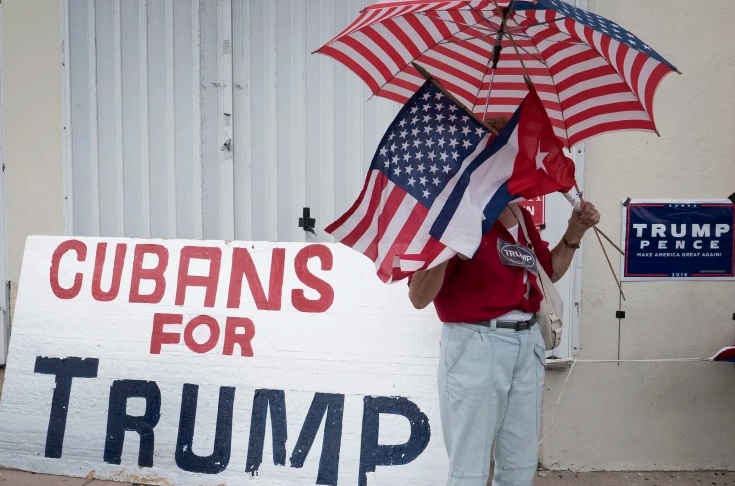
For decades, U.S.–Cuba relations have swung like a pendulum, shaped as much by domestic politics as by international realities. The breakthrough moment came under Barack Obama, whose administration pursued a historic thaw in relations with Havana. Travel restrictions were eased, diplomatic ties were restored, and there was a sense—however fragile—that a new chapter was beginning. For many Cuban Americans and observers alike, it marked a shift away from decades of isolation toward cautious engagement.
That momentum, however, proved short-lived. When Trump entered office, his administration reversed many of those policies, reimposing restrictions on travel, tightening sanctions, and adopting a far more confrontational stance toward the Cuban government. His approach resonated strongly with segments of the Cuban American community, particularly in Miami, where memories of exile and opposition to the Cuban regime run deep. By framing his policy as a firm stand against authoritarianism, Trump was able to solidify political support in a region that often plays a decisive role in national elections.
Now, Democrats find themselves navigating a complicated landscape. On one hand, many within the party still support a return to engagement, arguing that isolation has failed to produce meaningful political change in Cuba and has instead exacerbated economic hardship for ordinary citizens. On the other hand, they must contend with the political reality that a softer approach can be easily portrayed as weakness—particularly in a state like Florida, where Cuba policy is not just a foreign issue but a deeply personal one for many voters.
The urgency behind Democratic efforts to “blunt” Trump’s influence lies in this intersection of policy and perception. It is not simply about reversing specific measures; it is about reshaping the narrative. Trump’s framing of Cuba as a clear-cut battle between freedom and oppression is powerful in its simplicity. Countering that narrative requires nuance—something that can be harder to communicate in the fast-paced world of modern politics. Democrats try to blunt Trump in Cuba
Some Democrats have attempted to strike a middle ground. They emphasize human rights concerns while also advocating for policies that make it easier for Cuban families to stay connected—such as remittances and travel allowances. The argument is that engagement does not mean endorsement of the Cuban government, but rather a recognition that people-to-people connections can foster change in ways that isolation cannot. Still, this balancing act is delicate, and missteps can quickly become political liabilities.
Another layer of complexity comes from the changing demographics of Cuban American voters. While older generations tend to favor a hardline stance, younger Cuban Americans often have more diverse perspectives. Some are more open to engagement, viewing it as a pragmatic approach rather than a political concession. Democrats see an opportunity here, but it is one that requires careful messaging and sustained outreach. Winning over these voters is not just about policy—it is about trust, identity, and understanding lived experiences.
Meanwhile, events within Cuba itself continue to shape the debate. Economic struggles, periodic protests, and government crackdowns all influence how U.S. policies are perceived. For Democrats, this creates both challenges and opportunities. Highlighting human rights issues can strengthen their position, but it also complicates arguments for engagement. Critics are quick to ask how dialogue can be justified in the face of repression, while supporters counter that isolation has done little to improve conditions on the ground.
Trump, for his part, remains a central figure in this discussion, even outside of office. His policies and rhetoric continue to influence Republican strategy and voter expectations. For Democrats, this means that countering Trump is not just about addressing past decisions—it is about anticipating future ones. The concern that it may be “too late” reflects a fear that Trump’s approach has already reshaped the political landscape in ways that are difficult to reverse. Democrats try to blunt Trump in Cuba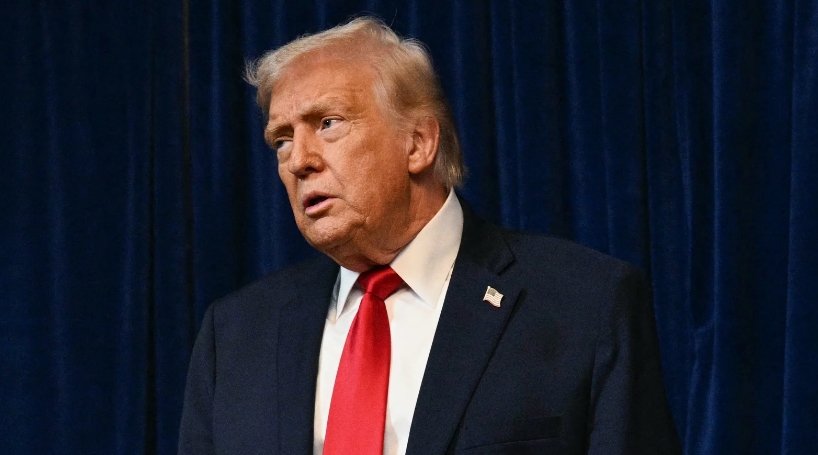
Yet the story is far from settled. U.S.–Cuba relations have always been fluid, shaped by shifting priorities and changing leadership. What feels entrenched today can evolve tomorrow. The question is whether Democrats can articulate a vision that is both politically viable and substantively different—a vision that acknowledges the complexities of Cuba while offering a clear alternative to Trump’s policies.
At its core, this debate is about more than a single country. It is about how the United States engages with the world, how it balances ideals with pragmatism, and how domestic politics influence foreign policy decisions. Cuba, in this sense, serves as a microcosm of larger questions—about diplomacy, democracy, and the limits of power. For voters, particularly those with ties to Cuba, these issues are deeply personal. They are not abstract policy debates but reflections of family histories, cultural identities, and hopes for the future. Any political strategy that fails to recognize this human dimension is likely to fall short.
As Democrats continue their efforts, the stakes remain high. The window for shaping both policy and perception may indeed be narrowing, but it has not yet closed. Whether they can effectively counter Trump’s influence will depend on their ability to navigate a complex web of history, emotion, and politic—while keeping their focus on the people whose lives are most directly affected. In the end, the struggle over Cuba policy is not just about the past or the present. It is about the future—of U.S.–Cuba relations, of American political strategy, and of the millions of individuals whose lives are intertwined with both. Democrats try to blunt Trump in Cuba
About the Author