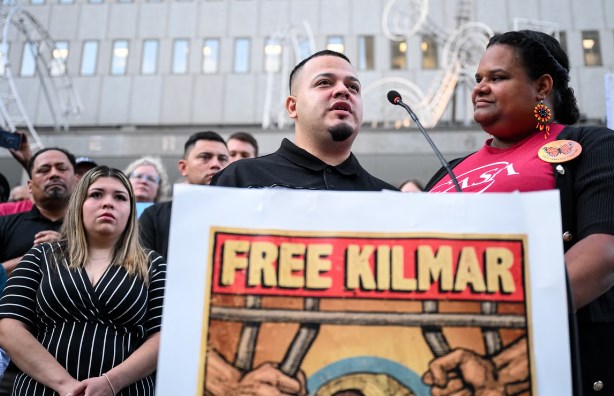
Scott Colom says Democrats need candidates who know rural America – For years, conventional political wisdom treated rural America as a lost cause for Democrats—a map painted reliably red where national party talking points rarely landed. Yet in November 2026, Mississippi shattered that assumption when Democrat Scott Colom unseated incumbent Republican Senator Cindy Hyde-Smith, becoming the state’s first Black U.S. senator since Reconstruction and the first challenger to unseat a sitting Mississippi senator since 1942.
For Colom, a seventh-generation Mississippian and longtime district attorney from Columbus, the upset carries a clear lesson for his party. Winning back trust in small towns and farming communities requires more than polished slogans or parachute candidates. It demands leaders who grew up in these places, understand their rhythms, and show up even when the odds—and the local vote totals—look daunting.
Roots That Cannot Be Faked
Rural voters have a sharp radar for politics that feels imported from somewhere else. When candidates arrive with scripted lines and a checklist of national issues, people in small counties often feel talked at rather than understood. Colom’s credibility in Mississippi starts with lived experience. Born and raised in Columbus, he spent years prosecuting cases across a multi-county district, dealing with everyday realities like local courts, public safety, family strain, and small-town budgets. Voters do not have to agree with every single position a candidate holds to sense whether that person actually knows their home.
That familiarity helps explain why Colom was able to cut through partisan labels during the 2026 campaign. Even some voters who had backed Donald Trump in 2024 gave Colom a hearing after meeting him or watching how he engaged with local concerns. When a candidate speaks the plain language of neighbors, families, and working people, caricatures from outside the state lose much of their sting.
Kitchen-Table Priorities Over Culture-War Clichés
One of Colom’s central arguments to Democrats is that rural voters care deeply about practical survival—keeping rural hospitals open, affording groceries and gas, protecting local jobs, and making sure hard work pays off. In places where a single hospital closure can force residents to drive an hour for emergency care, health care and economic stability are immediate, personal issues rather than abstract debates.
Throughout his run, Colom anchored his message around tangible relief for working families. He pushed back against tariffs that raise prices on everyday goods and hurt farmers, argued against cuts to Medicaid and rural health funding, and proposed eliminating federal income taxes for workers earning under $75,000, starting with teachers and law enforcement officers. Scott Colom says Democrats need candidates who know rural America
Just as importantly, Colom refused to dodge tough cultural or social questions with canned national answers. He spoke openly about his Christian upbringing, his support for the Second Amendment, border security, and his views on girls’ sports and family values. For Democrats hoping to compete outside big cities, Colom’s approach shows the value of sounding like a grounded community member rather than a party spokesperson.
Showing Up Where You Are Not Expected to Win
Talk about rural outreach is cheap; physical presence is what builds lasting credibility. Even after winning a historic statewide election, Colom made a point of holding his first post-election town hall in Fulton, located in Itawamba County—a place where he received just 16% of the vote on Election Day.
Standing before residents in a county that strongly favored his opponent sends an unmistakable signal. It tells people who did not vote for you that you still view them as constituents worth listening to, even when the questions from the crowd are sharp and skeptical.
That habit of showing up—whether answering questions on local control over data centers, education funding, or government ethics—reinforces the idea that representation is an ongoing relationship. Voters remember who actually stands in the room and takes the heat, especially in places that politicians often ignore once ballots are counted. Scott Colom says Democrats need candidates who know rural America
A Blueprint Beyond One State
Mississippi is not identical to every rural stretch of the Midwest, Appalachia, or the Mountain West, and no single candidate is a magic formula for every district. Still, Colom’s rise points to a broader shift in how Democrats can compete in rural America when they pair strong local roots with kitchen-table economic focus.
Across the 2026 cycle, observers noted that Democrats gained ground in several unexpected places when they ran candidates deeply tied to their communities rather than relying solely on nationalized messaging. Investing early in homegrown leaders—people who know local schools, farms, churches, and main streets firsthand—gives the party a much stronger foundation than waiting until fall to pay attention.
At its core, Scott Colom’s message is straightforward: rural America does not want pity, condescension, or last-minute visits every few years. Voters want leaders who know the territory, respect their everyday lives, and are willing to show up and listen. Scott Colom says Democrats need candidates who know rural America
About the Author