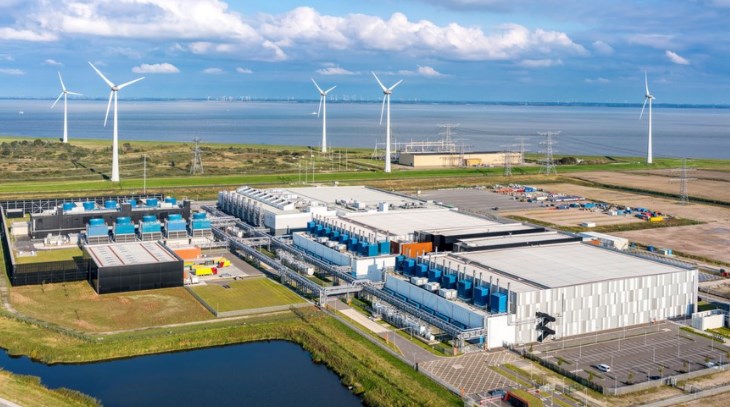
Google in bid to buy 50 more hectares for its Belgian data centres – For nearly two decades, the Walloon province of Hainaut has quietly served as one of Google’s most important European nerve centers. On Saturday, November 21, 2026, reports revealed that the American tech giant is looking to expand that presence even further, entering formal talks to purchase two additional brownfield plots covering 50 hectares at the former BASF petrochemical site in Feluy.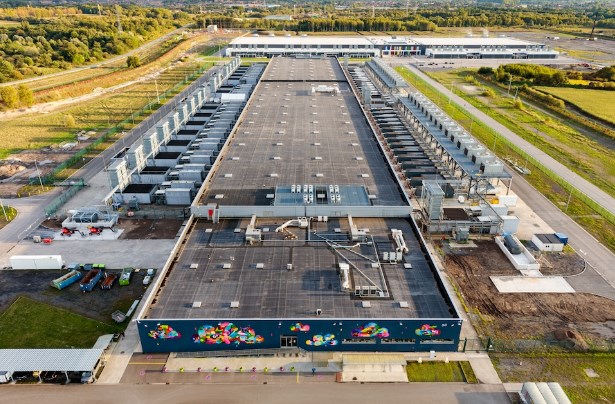
Turning an Industrial Past Into Digital Infrastructure
The Feluy site sits in the municipality of Seneffe, right in the heart of Hainaut—a region that once relied heavily on coal mining, steel, and heavy chemical manufacturing before transitioning toward logistics and modern technology. Rather than building on untouched agricultural land or green space, Google’s bid targets two brownfield parcels left behind by former BASF petrochemical operations.
Repurposing decommissioned industrial land has become a favored strategy for hyperscale data center operators across Europe. Brownfield sites often come with pre-existing heavy utility connections, road access, and industrial zoning, allowing companies to redevelop dormant land while avoiding the ecological disruption of greenfield construction.
If the December 18 due diligence window concludes smoothly, the Feluy plots will add a major new anchor to Google’s rapidly expanding Walloon network—complementing its long-running flagship campus in Saint-Ghislain and its €1 billion facility in Farciennes, where construction began in 2024. Google in bid to buy 50 more hectares for its Belgian data centres
Nearly Twenty Years of Investment in Wallonia
Google’s interest in Feluy builds upon a relationship with Belgium that stretches back to 2007, when the company broke ground in Saint-Ghislain on its very first data center outside the United States. Over the ensuing 19 years, that single campus grew into a sprawling 90-hectare server park powering core products such as Google Search, Maps, Workspace, and Google Cloud’s artificial intelligence infrastructure for users across Europe.
In October 2025, Google underscored its long-term commitment to the country by announcing a separate €5 billion two-year investment program for 2026 and 2027 aimed at expanding its Saint-Ghislain operations and adding 300 full-time roles, bringing its cumulative investment in Belgium past the €11 billion mark.
-
Regional Economic Impact: Studies conducted by Deloitte and the University of Mons estimate that Google’s existing data center operations generate up to €1.5 billion in Belgian GDP annually while supporting roughly 15,000 direct and indirect jobs across construction, engineering, catering, security, and local supply chains.
-
AI Capacity Pressure: Surging enterprise and consumer demand for generative AI tools has forced cloud providers to seek larger land parcels capable of housing high-density computing clusters.
Growing Scrutiny Over Power and Water Consumption
Despite the economic upside, Google’s push to secure another 50 hectares has immediately drawn scrutiny from local residents, environmental groups, and energy observers concerned about the strain hyperscale server farms place on Belgium’s electricity grid and water supply.
Modern AI data centers consume vastly more electricity per square meter than traditional cloud storage facilities, and they require substantial cooling capacity to keep tens of thousands of processors from overheating. Across Belgium and neighboring countries like the Netherlands, rapid data center expansion has increasingly collided with grid bottlenecks and municipal pushback over resource allocation.
Google has sought to counter those concerns by highlighting its sustainability commitments in Wallonia. The company has signed power purchase agreements for more than 110 megawatts of renewable energy with Belgian suppliers including Eneco, Luminus, and Renner as part of its goal to run on 24/7 carbon-free energy by 2030. On the water front, Google has pledged to replenish 120 percent of the water consumed by its Belgian facilities through local watershed restoration and smart leak-detection partnerships with schools and public buildings in Hainaut.
Countdown to December 18
For now, the proposed €2.4 billion Feluy project remains in an evaluation phase. Between now and the December 18 deadline, Google’s engineers and local authorities will scrutinize soil remediation requirements on the former petrochemical land, high-voltage grid capacity, and cooling water logistics.
If the studies clear the way for a final purchase, the deal will cement Hainaut’s transformation from a historic industrial belt into one of Western Europe’s premier hubs for artificial intelligence infrastructure—even as Belgium continues to debate how much power and water it can afford to dedicate to the digital economy. Google in bid to buy 50 more hectares for its Belgian data centres
About the Author