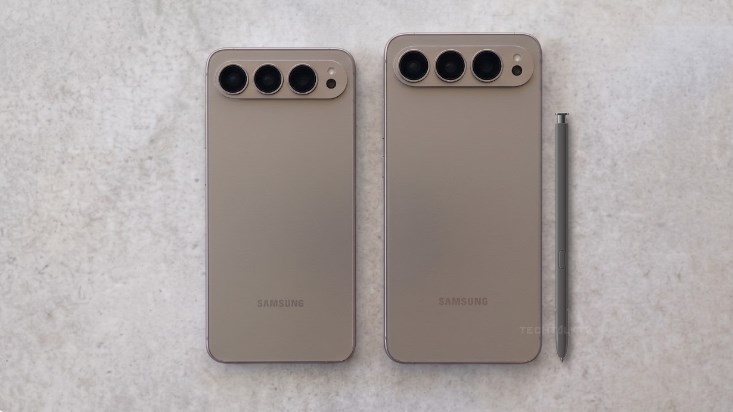
Samsung weighs raising Galaxy S27 prices above original targets – If you have been setting money aside for Samsung’s next flagship smartphone lineup in early 2027, you may need to pad that budget a little more. According to industry reports published on November 21, 2026, Samsung Electronics is actively reconsidering its pricing strategy for the upcoming Galaxy S27 series—and the numbers under discussion sit noticeably higher than the company’s original internal targets.
The catalyst behind this potential shift is a relentless surge in mobile memory and storage costs that has squeezed hardware profit margins across the smartphone industry. Having already nudged prices upward with the Galaxy S26 family earlier in 2026, Samsung now faces a difficult balancing act: protect its bottom line without triggering sticker shock among loyal buyers.
Inside Samsung’s Margin Squeeze
While Samsung is best known to consumers for its phones and televisions, its Mobile eXperience (MX) division still has to pay market rates for the components inside every Galaxy handset. Throughout 2026, massive demand from artificial intelligence data centers and enterprise server builders has soaked up global semiconductor capacity. Because memory suppliers have prioritized higher-margin AI and server chips, the supply of mobile DRAM and NAND flash has tightened dramatically.
Financial disclosures from Samsung’s own 2026 business reports illustrate just how steep that inflation has become. While mobile application processor costs rose by roughly 6 percent over the past year, procurement prices for mobile memory surged by approximately 211 percent compared to 2025 averages. That spike hit Samsung’s phone business hard: in the third quarter of 2026, the company’s combined mobile and networks unit posted a rare operating loss of roughly 600 billion won despite generating 37.7 trillion won in revenue.
For the Galaxy S27 lineup—which is widely expected to span four models: the standard Galaxy S27, Galaxy S27 Plus, a newly positioned Galaxy S27 Pro, and the top-tier Galaxy S27 Ultra—those rising part costs compound quickly:
-
Next-Generation Memory and Storage: Samsung is preparing to equip its 2027 flagships with faster LPDDR6 RAM and UFS 5.1 storage modules, both of which carry substantially higher bill-of-materials costs than previous-generation components.
-
Pricier 2-Nanometer Processors: Next-generation flagship chipsets, including Qualcomm’s Snapdragon 8 Elite Gen 6 and Samsung’s own Exynos 2700, also add upward pressure to manufacturing budgets.
-
Lineup-Wide Inflation: The pressure is not confined to top-tier phones. Reports from South Korean outlet SEDaily indicate Samsung is also weighing price increases of up to 19 percent across its popular mid-range Galaxy A series in 2027 to offset rising component expenses.
How Much More Could the Galaxy S27 Cost?
Because Samsung has not yet locked in its final retail price sheet ahead of its expected Galaxy Unpacked launch in early 2027, exact figures remain fluid. However, supply chain leaks and analyst projections offer a clear picture of the ranges being debated behind closed doors.
In South Korea, early supply chain reports suggest starting prices could climb by roughly 130,000 won—around $95—compared to the Galaxy S26 series, with even steeper jumps attached to higher-capacity storage tiers. In the United States, where the base Galaxy S26 started at $900 and the S26 Ultra debuted at $1,299.99, industry watchers warn that a $100 across-the-board increase is the most likely baseline scenario.
More aggressive estimates suggest that if Samsung passes a larger share of component inflation directly to consumers, the base Galaxy S27 and S27 Plus could see increases of up to $200, while the Galaxy S27 Pro and Galaxy S27 Ultra could start at $1,399 and $1,499, respectively. Under that upper-end scenario, a fully loaded 1TB Galaxy S27 Ultra would push close to the $2,000 mark. Samsung weighs raising Galaxy S27 prices above original targets
Shifting Production Toward Higher-Margin Models
To cushion the financial impact of higher component costs, Samsung is also rethinking how it builds and markets the S27 family. Industry reports indicate that Samsung plans to allocate more than 70 percent of its initial Galaxy S27 production volume to the higher-priced Pro and Ultra variants. Samsung weighs raising Galaxy S27 prices above original targets
The logic behind that shift is straightforward. Expensive memory chips represent a smaller percentage of the total retail price on a $1,399 flagship than they do on a lower-priced base model. By steering shoppers toward the Pro and Ultra tiers—where Samsung is reportedly concentrating major hardware upgrades, including a refined camera architecture with a single 5x optical telephoto lens designed to improve battery capacity, charging speeds, and thermal efficiency—the company can better protect its overall margins.
What Buyers Can Expect at Launch
Even if Samsung ultimately raises retail prices above its original targets, the company knows that sticker shock can stall early momentum. To keep upgrade rates healthy during the crucial launch window, Samsung is reportedly planning to lean heavily on promotional incentives.
Chief among those perks is the expected return of Samsung’s popular pre-order double-storage promotion in select markets, allowing early buyers to purchase a 256GB model while receiving the 512GB variant at no extra cost. Combined with enhanced trade-in credits for older Galaxy devices, those launch-day deals could help offset a higher sticker price for shoppers who buy early.
Still, the broader takeaway for smartphone buyers heading into 2027 is unmistakable. As artificial intelligence hardware demands faster chips and larger pools of high-speed memory, the era of predictable, year-over-year flagship pricing is fading fast. Whether Samsung settles on a modest $100 bump or a steeper adjustment, upgrading to a top-tier Galaxy phone next year is shaping up to be a noticeably pricier proposition. Samsung weighs raising Galaxy S27 prices above original targets
About the Author