No data centers planned at Pax Silica site, says Marcos Jr – Philippine President Ferdinand Marcos Jr. has directly addressed growing public backlash surrounding the U.S.-led Pax Silica initiative, assuring critics and local communities that the proposed development in the Philippines will not include energy-hungry data centers.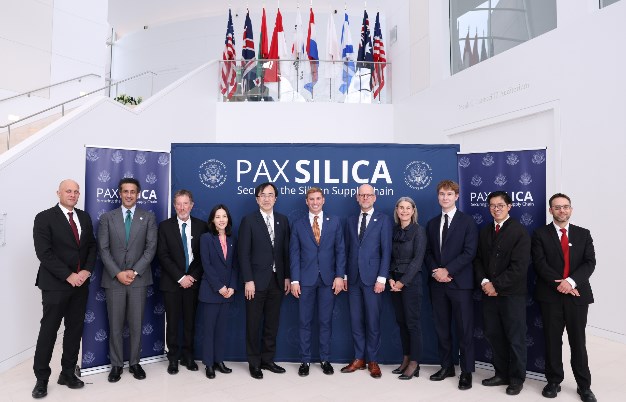
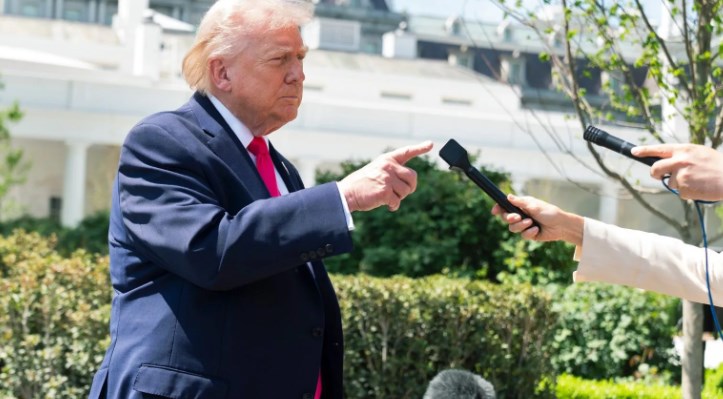
Speaking to reporters in Shenzhen, China, following his participation in the 33rd Asia-Pacific Economic Cooperation (APEC) Economic Leaders’ Meeting on November 20, 2026, Marcos sought to quell mounting environmental fears. Over the preceding days, thousands of demonstrators took to the streets across several parts of the Philippines to denounce the initiative, with protests intensifying during U.S. President Donald Trump’s two-day visit to Manila for the Association of Southeast Asian Nations (ASEAN) Summit.
Addressing Environmental Fears and Protests
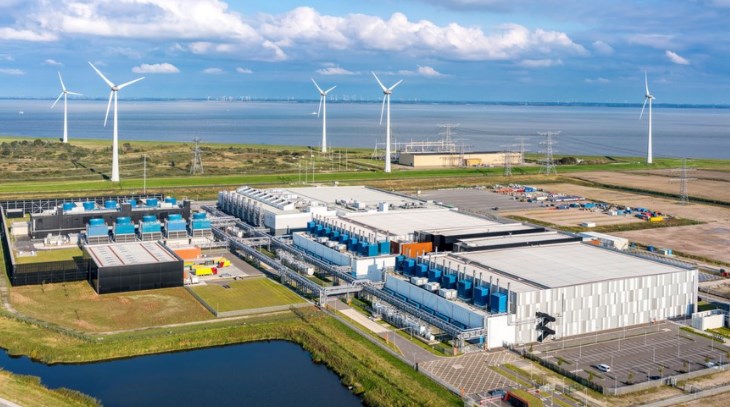
Much of the public outcry has centered on the assumption that Pax Silica would bring massive, resource-intensive server farms to Philippine soil—facilities notorious worldwide for straining local power grids and consuming vast amounts of water for cooling. Marcos, however, stated clearly that those fears are misplaced.
“I hear voices calling that it will be environmentally damaging. They are thinking about data centers. There will be no data centers in the place that we are going to put this development on AI. It’s AI-centered,” Marcos explained during the press briefing.
Beyond clarifying the physical scope of the project, the President admitted he was puzzled by the timing and specificity of the demonstrations. He emphasized that the Philippine government has neither finalized any binding terms nor signed a formal implementation agreement under the framework.
“I am a little bit perplexed by the demonstrations in the Pax Silica because, number one, there is no deal yet,” Marcos said. “If they’re demonstrating against specific provisions, I don’t see how that’s possible. There are no specific provisions. We haven’t done it yet. Wala pa tayong pinag-usapan. Wala pa tayong pinirmahan (We have not discussed anything yet. We have not signed anything).” No data centers planned at Pax Silica site
What Is Pax Silica?
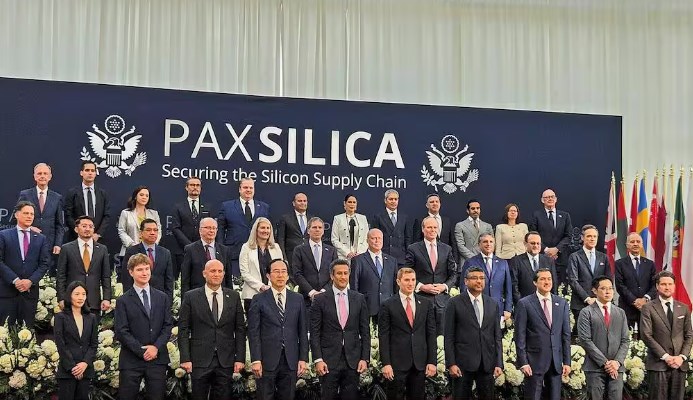
Launched as a U.S.-led strategic effort to secure and diversify global supply chains for artificial intelligence and high-tech commodities, Pax Silica welcomed the Philippines as its 13th signatory in April 2026. Rather than focusing on hyperscale data storage, the initiative aims to widen the global sources of critical technological components and foster cooperative AI innovation among partner nations. No data centers planned at Pax Silica site
In the Philippines, preliminary discussions around the initiative have pointed toward an industrial and innovation hub within New Clark City in Tarlac. Prior to the President’s remarks in Shenzhen, officials from the Bases Conversion and Development Authority (BCDA) also moved to reassure the public that any future development would strictly adhere to Philippine environmental laws, remain within designated development zones, and avoid displacing farmers or indigenous communities.
The Department of Foreign Affairs (DFA) has similarly framed the partnership as a pathway for the country to move beyond being a mere exporter of raw materials, positioning local talent and industry higher up the global technology value chain.
Staking a Claim in the Future AI Economy
While acknowledging that concrete project details still need to be hammered out before he can share more specifics with the public, Marcos stood firm on the strategic necessity of engaging with Pax Silica. In his view, sitting on the sidelines of the artificial intelligence revolution is simply not an option for a developing economy.
“No, we should be part of the decisions that are being made as to where to take AI. We should be part of that decision,” the President stressed. He added in Filipino that the Philippines must not settle for being a passive recipient of whatever technology foreign powers choose to hand down, insisting that the nation needs a seat at the table when global standards and directions are being shaped.
For Marcos, the stakes are fundamentally economic. He warned that failing to commit time, effort, and capital into understanding and developing AI capabilities now would leave the country hopelessly behind in the coming decade. “If we do not invest in it in time, in effort, in money, then wala na. Wala na tayong pag-asa (then nothing is left; we have no hope left). Because that is the economy—the global economy in the next few years,” Marcos said.
Moving Forward with Caution and Study
As the government continues to study the parameters of Pax Silica, the administration faces a dual challenge: reassuring an environmentally conscious and sovereignty-minded public while keeping the door open for high-value foreign investment. Earlier in the year, Philippine negotiators had already pushed for the inclusion of a sovereignty clause in framework discussions to ensure national interests remain protected.
For now, the message from Malacañang is straightforward. There is no signed contract, no finalized blueprint, and no plan to build data centers at the site. Instead, the government intends to take a measured look at how the Philippines can responsibly participate in the global AI conversation—ensuring that when a deal eventually takes shape, it benefits Filipino workers, strengthens ASEAN’s technological resilience, and respects the local environment. No data centers planned at Pax Silica site
About the Author