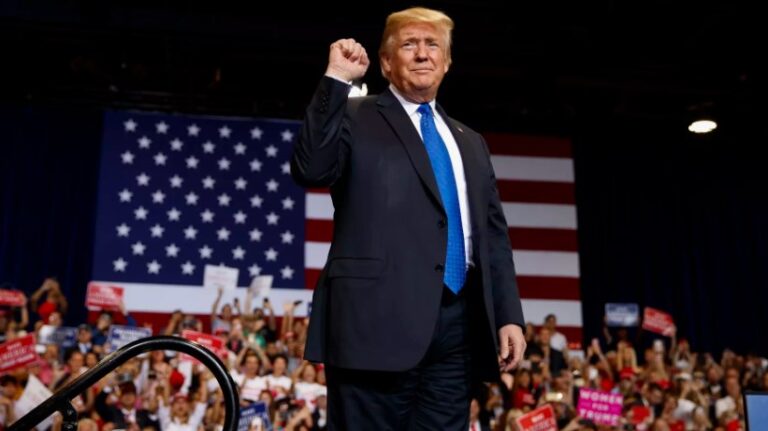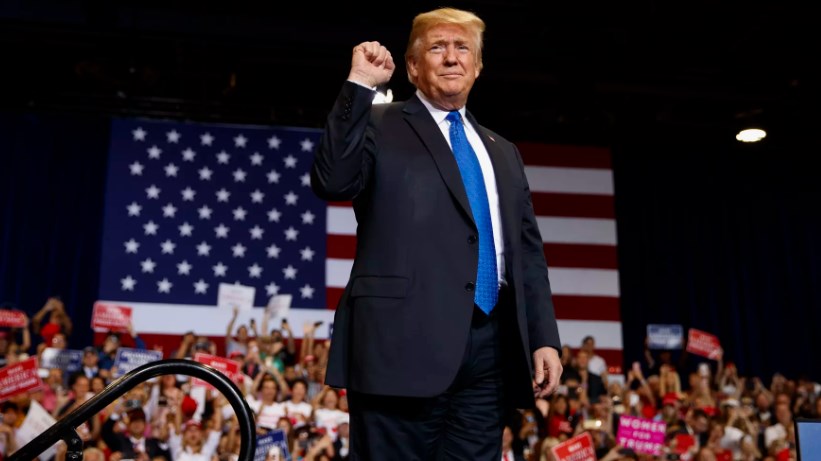
 Trump approval ticks up as GOP trails before midterms: poll – President Donald Trump’s approval rating has edged upward after hitting a new low, but the small improvement may not be enough to ease growing concerns among Republicans ahead of the November 3, 2026, midterm elections. With voters increasingly focused on rising living costs, gasoline prices, and the direction of the American economy, the Republican Party is facing a difficult final stretch as it tries to maintain control of Congress.
A Reuters/Ipsos poll completed on October 26 found that Trump’s approval rating rose to 32%, up one percentage point from the record low of 31% recorded in the previous survey. While the increase offers a modest improvement for the president, the broader political picture remains challenging. Democrats continue to hold an advantage in national congressional voting preferences, raising questions about whether Republicans can protect their narrow majorities in the House and Senate.
The latest findings arrive at a critical moment in the campaign. With Election Day approaching, both parties are working to persuade undecided voters, motivate their supporters, and convince Americans that they have the better plan for the country’s future. For Republicans, the challenge is particularly significant because the election will serve as a public judgment of Trump’s leadership and the direction of his administration.
Although a one-point rise in approval might provide some encouragement to the White House, it does not necessarily signal a broader turnaround. The president’s standing remains weak in several national surveys, and dissatisfaction with the economy continues to create political problems for his party.
Trump’s Approval Rating Shows a Small Recovery
The latest Reuters/Ipsos findings suggest that Trump’s approval rating has recovered slightly from its lowest recorded level in the poll. After falling to 31% in the previous survey, the president’s rating increased to 32%. The movement is small, but it comes at a sensitive time when even minor changes in public opinion can attract attention from campaign strategists and political observers.
However, the difference between 31% and 32% should not be interpreted as proof that Trump’s political position has fundamentally improved. Polls capture public opinion at a particular moment, and small movements can occur because of sampling variation, changing attitudes, or differences in who responds to a survey. The broader pattern across multiple polls is therefore more informative than a single percentage change. Trump approval ticks up as GOP trails before midterms
Recent surveys have continued to show substantial dissatisfaction with the president. A CNN poll published on October 21 placed Trump’s approval rating at 32%, while a Pew Research Center survey conducted from September 28 through October 4 recorded approval at 30%. Although the figures differ, both point to a president entering the midterm campaign’s final days without strong nationwide support. 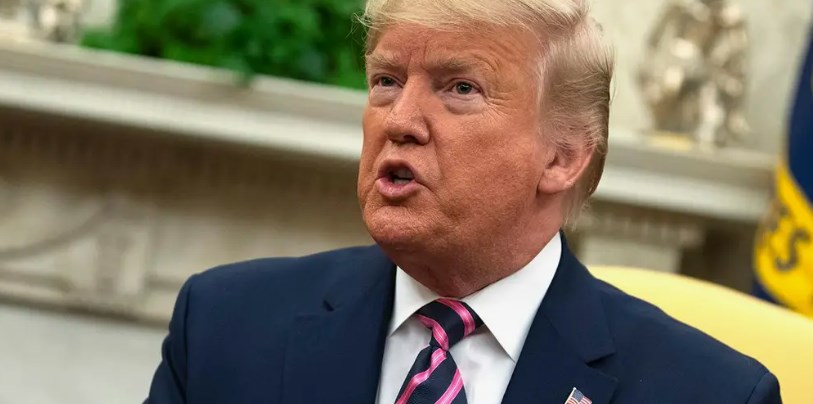
For Trump and his advisers, the immediate priority is to persuade voters that his administration’s policies are producing meaningful results. The president has continued to campaign for Republican candidates, emphasizing his political agenda and encouraging supporters to turn out. Yet the latest polling suggests that a considerable share of Americans remain unconvinced, particularly when it comes to the economy and everyday expenses. The modest rise in approval may offer Republicans a talking point, but the more important question is whether the improvement can continue. With Election Day just days away, there is limited time for either party to reshape the national political conversation.
Democrats Maintain an Advantage Ahead of Election Day
While Trump’s approval rating has moved slightly higher, Democrats continue to hold a lead in the national congressional ballot. According to the October 26 Reuters/Ipsos poll, Democrats were favored by 47% of registered voters, compared with 36% who preferred Republicans. After accounting for undecided voters’ preferences, the figures stood at 50% for Democrats and 41% for Republicans. Among likely voters, Democrats held a 53%-44% advantage.
These numbers indicate that the Republican Party faces a difficult challenge as it attempts to retain control of Congress. The midterm elections will determine the balance of power in Washington, influencing how easily the administration can advance legislation, negotiate spending priorities, and pursue its policy goals during the remainder of Trump’s term. A strong national Democratic lead could translate into opportunities to gain House seats, although the relationship between nationwide polling and actual election results is not straightforward. House races are decided in individual districts, and local candidates, campaign resources, district boundaries, and turnout can all influence the outcome. Senate contests are even more dependent on state-specific political conditions.
Consequently, Democrats’ national advantage does not guarantee that they will win control of both chambers. Republicans may still benefit from favorable electoral geography in certain states and districts, while individual races can produce results that differ from the national mood. Nevertheless, the polling presents a clear warning for Republicans. Voters appear more inclined to support Democratic congressional candidates at a time when the party controlling the White House traditionally faces pressure during midterm elections. For Democrats, the opportunity is to turn that advantage into actual victories by maintaining voter enthusiasm and ensuring supporters cast their ballots.
Rising Living Costs Put Pressure on Republicans
Economic concerns have become one of the biggest challenges facing Trump and his party. Although the administration has promoted its economic agenda, many Americans remain worried about the cost of everyday necessities, particularly gasoline, groceries, housing, and other household expenses.
The Reuters/Ipsos poll found that 73% of respondents believed the cost of living was moving in the wrong direction. Democrats also held a slight advantage when respondents were asked which party was better equipped to manage the economy, with 37% choosing Democrats and 33% favoring Republicans. These findings suggest that the GOP has struggled to convince voters that its economic approach is improving their financial circumstances.
Gasoline prices have added to the pressure. Higher fuel costs can affect nearly every part of household spending, from commuting to work to transporting goods and paying for services. For families already dealing with tight budgets, even a modest increase at the pump can become a daily reminder of economic uncertainty.
The political consequences can be significant because voters often judge an administration by how they feel their personal finances are doing. Even when government officials point to broader economic indicators, voters may remain dissatisfied if their paychecks do not stretch as far as they once did.
Republicans therefore face a difficult task in the final days of the campaign. They must defend the administration’s economic record while convincing voters that their policies will provide relief. Democrats, meanwhile, have an opportunity to make affordability a central campaign issue and present themselves as the party better prepared to address household financial pressures. Trump approval ticks up as GOP trails before midterms
The challenge for both sides is credibility. Voters may be frustrated with rising prices without automatically believing that Democrats can solve the problem. Republicans may retain support from loyal voters, but dissatisfaction with everyday expenses could persuade some independents and less committed party supporters to consider alternatives.
Voter Enthusiasm Could Shape the Midterm Results
Beyond approval ratings and economic concerns, voter enthusiasm could play a decisive role in determining the election’s outcome. Midterm elections typically attract less attention than presidential contests, making it especially important for campaigns to persuade their supporters that voting is worth the effort.
The latest Reuters/Ipsos survey found that Democratic voters appeared more enthusiastic about the upcoming election. Approximately 46% of Democratic respondents said they were very enthusiastic about voting, compared with 30% of Republicans. That gap could give Democrats an advantage if it translates into stronger turnout on Election Day.
Enthusiasm matters because a party can lead in national polling but still struggle if its supporters do not show up at the ballot box. Campaigns must convert favorable opinions into actual votes through advertising, organizing, early voting efforts, and direct contact with potential voters.
For Republicans, mobilizing Trump’s most loyal supporters remains an important part of the strategy. These voters have consistently provided the president with a dependable political base, and their participation could help Republican candidates in competitive districts and states. However, the party also needs to appeal to voters who are less enthusiastic about the administration but may still be willing to support Republican candidates.
Democrats face their own challenges. A national lead does not eliminate the need to campaign aggressively in competitive races, and voter enthusiasm can change as Election Day approaches. The party must maintain its momentum while persuading voters that congressional victories would produce meaningful changes rather than simply express dissatisfaction with Trump. The election will therefore test more than the president’s popularity. It will also reveal which party is better at turning public sentiment into participation and winning races under different local political conditions. Trump approval ticks up as GOP trails before midterms
What the Poll Means for Trump’s Political Future
The latest approval figures highlight the complicated position Trump occupies as the midterm elections approach. His rating has improved slightly, but Republicans remain behind Democrats in national congressional preferences, and economic concerns continue to weigh on the political environment.
A poor midterm performance could make the remainder of Trump’s presidency more difficult. If Democrats gain control of the House, they would have greater influence over legislation, government oversight, and congressional investigations. A change in Senate control could also complicate confirmations and the administration’s ability to advance its priorities.
At the same time, the election will not be a simple referendum on Trump’s approval rating. Individual candidates have their own records, political identities, and local constituencies. Some Republican candidates may perform better than the national numbers suggest, while others could struggle because of the president’s unpopularity or concerns about economic conditions.
Trump’s response to the results will also shape the political debate after Election Day. A Republican victory would give him an opportunity to argue that his agenda continues to enjoy public support. Significant Democratic gains, on the other hand, would intensify questions about his leadership and the direction of the Republican Party.
Even so, one election would not settle every debate about Trump’s political future. Presidential approval ratings can rise or fall as economic conditions change, major policy decisions unfold, and voters reassess their priorities. The midterms will provide an important snapshot of public opinion rather than a final verdict on the administration.
Final Thoughts
Trump’s approval rating ticking up to 32% offers a small improvement after a difficult period for the president, but it does little to change the broader challenges facing Republicans before the November 3 midterm elections. Democrats continue to lead in the national congressional ballot, economic concerns remain widespread, and Democratic voters report greater enthusiasm for participating in the election. Together, these factors create a challenging environment for a Republican Party trying to maintain its control of Congress.
The outcome will depend on whether Democrats can turn their national advantage into victories across individual races and whether Republicans can motivate their supporters while reassuring voters concerned about the cost of living. Local campaign dynamics, candidate quality, and turnout will all help determine the final result. For Trump, the small rise in approval may provide a brief positive headline, but the more important test is whether voters believe his administration is delivering results. With Election Day approaching rapidly, Republicans have little time to change the narrative.
Ultimately, the latest poll captures a campaign defined by competing messages about leadership, economic security, and the country’s direction. Whether Trump’s modest recovery signals the beginning of a turnaround or merely a temporary fluctuation will become clearer as voters head to the polls. Trump approval ticks up as GOP trails before midterms
About the Author