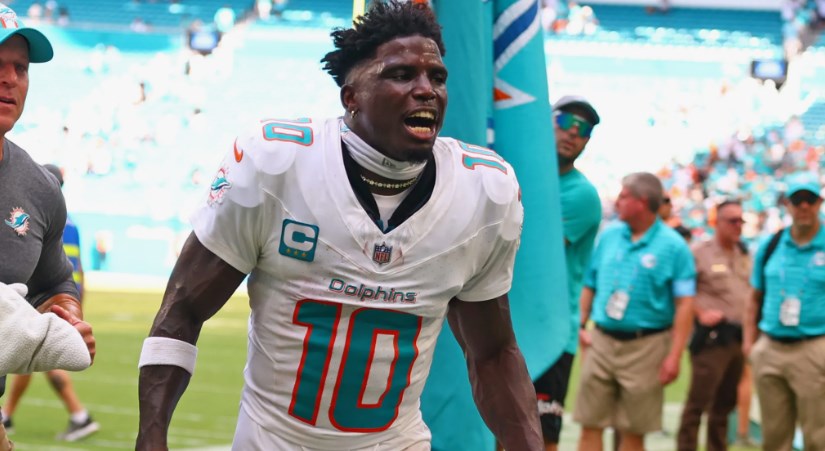
Tyreek Hill found liable on two counts of battery, jury awards estranged wife $500K – Former NFL star Tyreek Hill is facing another major challenge away from the football field after a Miami jury found him liable for two counts of battery in a civil lawsuit brought by his estranged wife, Lakeeta Vaccaro. The jury awarded Vaccaro $500,000 in compensatory damages, bringing a high-profile legal dispute involving allegations of domestic abuse to a significant turning point. However, the verdict was mixed, as jurors rejected eight other claims against Hill and declined to award punitive damages. Tyreek Hill found liable on two counts of battery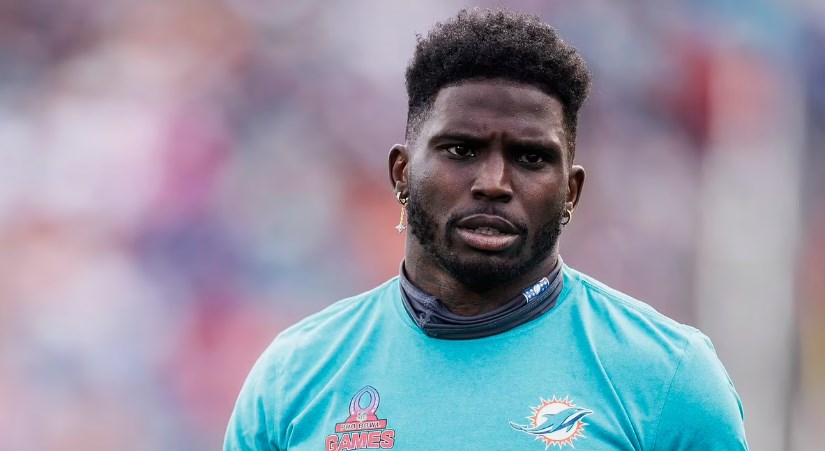
The decision, delivered on October 13, 2026, has raised fresh questions about Hill’s personal conduct, his reputation, and his chances of returning to professional football. The 32-year-old wide receiver has enjoyed considerable success in the NFL, including time with the Kansas City Chiefs and Miami Dolphins. Yet his legal troubles and recovery from a serious knee injury have placed his football future under uncertainty.
For Vaccaro, the verdict represents a legal outcome following months of serious allegations and a closely watched courtroom battle. For Hill, it is a setback that could have consequences beyond the financial award, particularly as the NFL continues to review the allegations under its personal conduct policies.
A Jury Reaches a Mixed Verdict
The civil trial centered on allegations that Hill physically mistreated Vaccaro during their marriage. After hearing testimony and reviewing evidence, jurors found Hill liable for two counts of battery involving incidents reported in January 2024 and April 2025. They awarded Vaccaro $500,000 in compensatory damages but did not impose additional punitive damages. Tyreek Hill found liable on two counts of battery
At the same time, the jury found Hill not liable for eight other claims, which included allegations of battery, assault, and continuing domestic violence. Those distinctions are important because the verdict did not establish that every allegation made during the case was proven. Instead, the jury reached separate conclusions about the individual claims presented in court.
Hill had denied many of Vaccaro’s allegations during the proceedings, describing them as false. He took the witness stand and disputed her account of several incidents, although he acknowledged that he had shoved her during one confrontation and caused a hole in a wall. His testimony offered the jury a different account of the couple’s relationship and the arguments that led to the lawsuit.
Following the verdict, Hill embraced one of his attorneys and shook hands with members of his legal team before leaving the courtroom alone. The decision closed a major chapter in the civil case, but questions remain about the potential consequences for his professional future and the NFL’s ongoing review.
Vaccaro’s Allegations and Testimony
Vaccaro described a relationship that she said became increasingly difficult and, at times, physically aggressive. During her testimony, she recounted incidents in which Hill allegedly pulled her hair and used physical force during arguments. She also described an alleged confrontation while she was pregnant, which became one of the most serious claims discussed during the trial.
Her account painted a picture of a marriage marked by conflict and emotional distress. She told jurors about arguments that allegedly escalated beyond verbal disagreements, explaining how the experiences affected her sense of safety and her relationship with Hill. Her testimony was a central part of the case, alongside other evidence presented to the jury.
Hill disputed the broader accusations and challenged Vaccaro’s characterization of their relationship. He argued that many of her claims were untrue and suggested that financial motives were behind the lawsuit. While acknowledging inappropriate behavior during some arguments, he rejected the more serious allegations made against him.
The jury’s findings ultimately reflected a distinction between the claims it accepted and those it rejected. Hill was held responsible for two battery counts, but the remaining allegations did not result in liability. That outcome underscores the importance of examining each claim individually rather than treating every accusation as a proven fact.
What the $500,000 Award Means
The $500,000 award is compensatory damages, meaning it is intended to compensate Vaccaro for harm recognized by the jury. It is not a criminal fine, nor does it represent a criminal conviction. The case was a civil proceeding in which jurors evaluated whether Hill should be held legally responsible for the claims brought against him. Tyreek Hill found liable on two counts of battery
The jury’s decision not to award punitive damages is another significant part of the outcome. Punitive damages are intended to punish particularly wrongful conduct and discourage similar behavior. Their absence does not erase the two findings of liability, but it does mean the jury did not grant that additional form of financial relief.
The verdict also does not mean Hill was found responsible for every allegation raised during the proceedings. Eight claims were rejected, and the jury did not find that he had engaged in continuing domestic violence. Those conclusions should be reported alongside the two battery findings to provide a complete and accurate account of the case.
For Vaccaro, the compensation marks a meaningful result in a dispute that brought intensely personal matters into public view. For Hill, the financial consequences are only one part of the situation. The reputational impact and the possibility of NFL disciplinary action may prove equally important as he considers what comes next.
How the Verdict Could Affect Hill’s NFL Future
Hill’s legal troubles arrive at a difficult time in his football career. After establishing himself as one of the NFL’s most dangerous wide receivers, he suffered a serious knee injury in September 2025 while playing for Miami. The injury involved a dislocated knee and torn ligaments, leaving him facing a lengthy recovery.
The Dolphins released Hill in February 2026, and he remains a free agent. His agent, Drew Rosenhaus, has indicated that the receiver could be ready to return to the field as early as November, depending on his recovery and the circumstances surrounding a potential contract.
Before the verdict, Hill’s football future was already uncertain because of his injury and the lack of a current team. The civil jury’s findings introduce another concern for clubs considering whether to sign him. NFL teams must weigh a player’s athletic ability against potential disciplinary issues, public reaction, and the risks associated with bringing a high-profile player into their organization.
The verdict does not automatically determine whether Hill will be suspended or prevented from playing. The NFL conducts its own investigations under its Personal Conduct Policy and makes disciplinary decisions through its established procedures. The league’s review could therefore become a crucial factor in deciding whether Hill gets another opportunity in professional football.
Even if Hill recovers physically, a team interested in signing him will need to consider the legal outcome and the possibility of further developments. His speed and production have made him a valuable offensive player throughout his career, but talent alone may not settle the questions surrounding his return.
A Case With Consequences Beyond Football
The case also highlights how legal disputes involving professional athletes can extend far beyond sports. When allegations concern behavior within a marriage, the proceedings can bring deeply personal experiences into public view while attracting attention because of the individuals involved.
For Vaccaro, the trial offered an opportunity to present her account before a jury and seek compensation through the civil justice system. The resulting award reflects the jury’s findings on the claims it considered proven. At the same time, the rejected allegations demonstrate that the outcome was not a complete victory on every issue raised in the lawsuit.
For Hill, the verdict represents a serious legal and reputational setback at a moment when he is trying to recover from a career-threatening injury. His response to the outcome, any further legal developments, and the NFL’s review may all shape what happens next.
The case also serves as a reminder that public success does not place athletes outside the legal system. Professional players face the same fundamental expectation that allegations brought before a court will be evaluated through evidence, testimony, and established legal standards.
Conclusion
Tyreek Hill’s civil trial has ended with a mixed verdict that carries substantial consequences. A Miami jury found the former Chiefs and Dolphins wide receiver liable for two counts of battery and ordered him to pay his estranged wife, Lakeeta Vaccaro, $500,000 in compensatory damages. Jurors rejected eight additional claims and did not award punitive damages.
The outcome establishes liability for two incidents without proving every allegation presented during the case. It also leaves open questions about Hill’s NFL future, particularly as he continues recovering from a major knee injury and remains without a team.
Whether Hill returns to professional football will depend on several factors, including his physical recovery, the interest of NFL teams, and the league’s independent review. For now, the verdict marks a major development in his life beyond the field, with financial, professional, and reputational consequences that could follow him long after the courtroom proceedings have ended.
About the Author