Taylor Farms, RFK Jr., and Mexico comment on the cyclospora outbreak – Mexico has denied any involvement in the widespread outbreak of a parasitic infection connected to lettuce that has afflicted thousands of people in 41 states in the United States.
As of July 21, the Centers for Disease Control and Prevention reported that there were more than 4,000 laboratory-confirmed instances of cyclosporiasis, a disease that causes unpleasant symptoms such explosive diarrhea. The actual number of sick people is expected to be above 10,000. Taylor Farms’ lettuce in the central Mexican state of Guanajuato was identified by the U.S. Food and Drug Administration as the cause of the illness.
On July 21, David Kershenobich, the nation’s health minister, denied the FDA’s claim. In a press conference that same day, Robert F. Kennedy Jr., the secretary of health and human services, declared the outbreak to be “under control.”According to Reuters, Kershenobich stated during a press conference that “no evidence has been found to indicate that it originated there thus far.” “However, we are taking all precautions in case that were the case.”
Kennedy and the Trump administration have been under fire for making cuts to pertinent health agencies. Some critics claim that the cyclospora epidemic and other recent outbreaks like screwworm were made possible by reduced staffing and surveillance. A long-standing federal-state collaboration that tracks foodborne diseases, including those brought on by cyclospora, was pared back by the CDC last year.
Kennedy nevertheless referred to the criticisms as “invalid.”In the briefing on July 21, he stated, “We did cuts in the FoodNet program, but they were for redundant surveillance, and all the states will tell you that we’re still doing forensics.”
Compared to other recent foodborne outbreaks, the quest for the cause of the case clusters has proven more difficult for authorities in the US and Mexico. Taylor Farms, RFK Jr., and Mexico comment on the cyclospora outbreak
What did the term “false positive” mean?
In a statement released on July 19, Taylor Farms reported that the FDA has “apologized” to the company for a “false positive” that resulted from testing its iceberg lettuce goods from central Mexico for cyclospora. However, according to food safety expert Bill Marler, the company’s statement doesn’t tell the whole story because it doesn’t do anything to establish responsibility in any way, which is typical in this kind of study.Because the food being tested was different from what consumers were actually consuming, a positive test is meaningless, and a negative test is meaningless, Marler told Sortea. “The product that people consumed, the people ate the evidence … or it’s past its best-by date and was thrown out.”
In a July 20 X post, the FDA stated, “To clarify, this false-positive lab sample DOES NOT change the basis for FDA’s ongoing outbreak investigation or the overwhelming epidemiological data supporting the current voluntary recall by Taylor Farms.”
Even when food samples never test positive for a pathogen, producers, growers, or distributors are frequently blamed for outbreaks. According to Marler, “when that occurs, it’s not because they weren’t the underlying source, but rather because the offenders have already gotten past the system or were hiding in other places, like soil or water.”According to his 33 years of expertise managing these cases, there is typically never a food product accessible for testing during an outbreak, he stated. “Because the product is completely gone by the time you realize the outbreak is occurring. This particularly applies to perishable goods.
What does the false positive actually signify, then? Not much in either direction, Marler noted, adding that the same uncertainty surrounds Mexico’s claims of nonculpability.”It doesn’t necessarily mean that Taylor Farms was the source if it had tested positive,” he stated. “And if it tested negative, it doesn’t absolve Taylor Farms of being the cause.”
Is Taylor Farms safe, then?
No, it hasn’t been shown beyond a reasonable doubt that Taylor Farms is the cause of the disease.
Shredded iceberg lettuce from Taylor Farms facilities in central Mexico was identified via traceback data, according to the FDA as of July 20. The main technique utilized in cyclospora outbreaks is frequently Traceback data, which is information gathered through procedures like questioning sick individuals and used by investigators to trace illnesses back through the food supply chain.
Taylor Farms de Mexico of Guanajuato, Mexico, announced on July 17 that it was pulling all iceberg lettuce from central Mexico from the U.S. market “out of an abundance of caution” in a voluntary recall that was “prompted” by the incident. “We are actively getting rid of the products that are involved. The company added, “We are still working with the FDA, CDC, and state authorities. We have stopped receiving product from the implicated lot, suspended distribution of the iceberg lettuce from Central Mexico, and notified our customers.”
According to the CDC, a significant cyclosporiasis outbreak in the United States in 2013 that sickened over 600 people in 25 states was caused by Taylor Farms’ producing and processing facilities in Mexico and was linked to salad mix from Taylor Farms de Mexico in Guanajuato.
According to Marler, the methods utilized to identify Taylor Farms during this outbreak are identical to those currently in use.
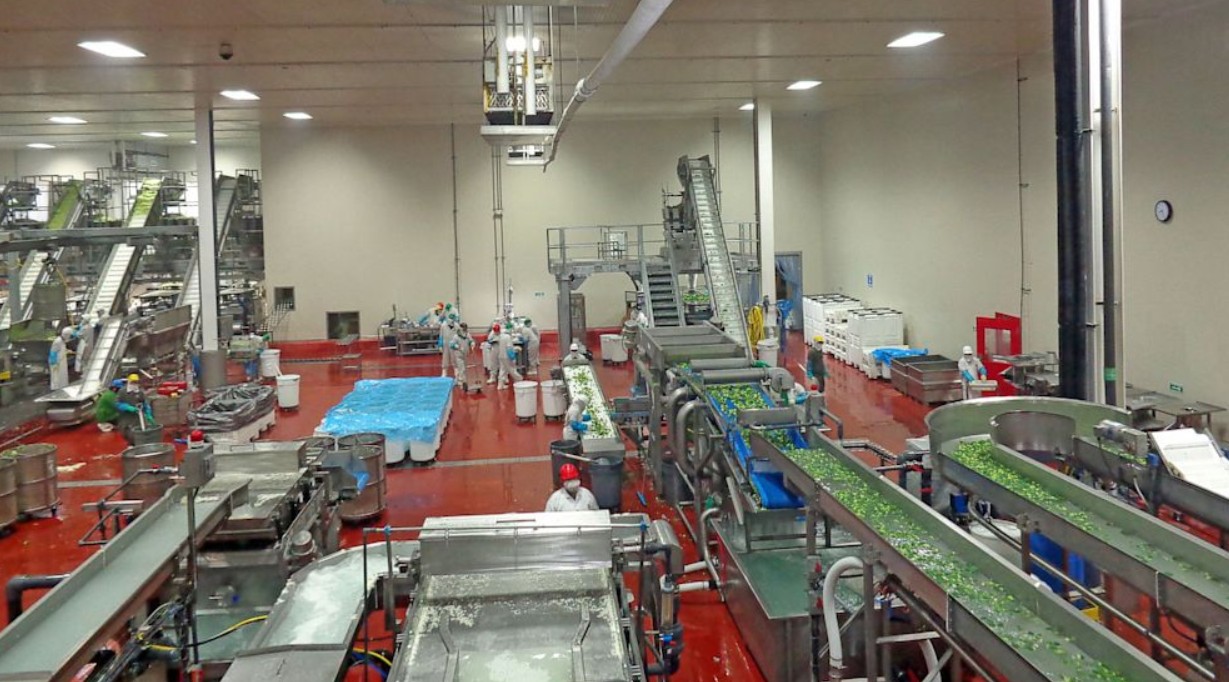
Why it’s difficult for health authorities to identify the offender
For a number of reasons, including the inability to employ the same genetic tracking technologies available for pathogens like E. coli and listeria, the source of a cyclosporiasis outbreak is more challenging to identify than foodborne infections.
Nowadays, the majority of foodborne illness and infectious disease clusters are tracked using whole-genome sequencing (WGS), a method that tests and compares a pathogen’s distinct genetic code in an attempt to create a unique “fingerprint.” By using DNA “fingerprinting,” scientists can ascertain whether pathogens causing illness are closely related, assisting investigators in linking cases and tracing outbreaks to a common source.
The CDC instead uses a separate sequencing technology that targets specific genetic markers because cyclospora is difficult to culture, cannot be produced in a lab, and is frequently found in small amounts in stool samples. Unlike WGS, targeted genotyping typically cannot identify the contaminated food or its origins on its own, but it does assist in identifying which cyclospora cases are part of the same epidemic.
Dr. Gwen Biggerstaff, deputy director of the CDC’s Division of Foodborne, Waterborne, and Environmental Diseases, described the technique as “useful for detection but not as fast and precise as whole-genome sequencing” during a media briefing on July 14. She also acknowledged that the technique is not as reliable at establishing transmission links as WGS. This is why a specific grower, manufacturer, or distributor is never identified in some cases, like the most recent outbreak linked to parsley in 2024. Taylor Farms, RFK Jr., and Mexico comment on the cyclospora outbreak

How the CDC and FDA are attempting to locate and monitor the diarrhea virus
Investigators used traceback, which is basically the food safety equivalent of detective work, extensively in this and prior outbreaks.
Investigators go backward through the food supply chain to a common source if authorities discover a group of individuals who seem to be part of the same outbreak. First and foremost, this is accomplished by asking sick individuals about their pre-illness diets—another issue that is compounded by the type of the parasite. People may find it challenging to recall what they ate throughout the two-week or longer incubation period for cyclosporiasis.
Health organizations “triangulate” by merging patient interviews, genetic testing, and food supply chain information once trends have been found. Where these three categories of evidence overlap holds the key to the solution.In order to identify a cause, the CDC and FDA are combining the pillars of surveillance and case counting, patient interviews and data tracing, laboratory testing, and clinical alerts, according to Biggerstaff. “Cyclospora investigations are particularly challenging and take a significant amount of time and effort,” he added. “We want to be transparent that this is an active and evolving investigation.”
About the Author