Five key insights from Arizona Republicans’ nomination of MAGA mainstays – Trump-aligned candidates will be closely examined in Arizona, one of the most competitive battlegrounds.
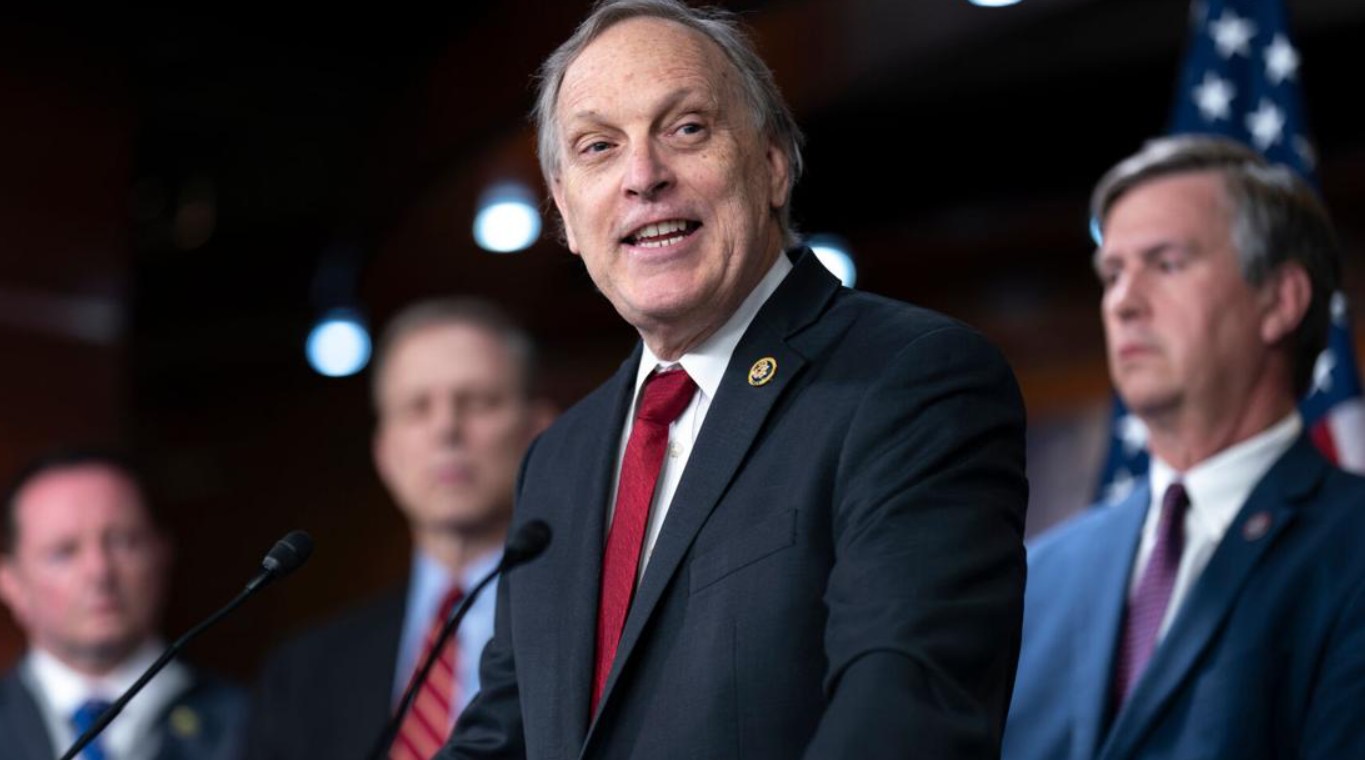
President Donald Trump’s nearly flawless record in the 2026 GOP primaries was further cemented on July 21 as Representative Andy Biggs easily won the Republican nomination for governor of Arizona.
The five-term conservative firebrand’s next challenge in his fight to unseat Democratic Governor Katie Hobbs is to win over crucial independents without deviating too far from the White House.
Arizona is one of the nation’s most fiercely contested swing states, but experts have cautioned that Trump-endorsed candidates may face more difficulties in the general election after many Republican primaries this year.
The former chair of the House Freedom Caucus was viewed by some of Biggs’ fellow Republicans as being too radical to defeat Hobbs.
Experts had ranked the governor’s race as a “toss-up,” but because of Biggs’ divisive opinions—such as his doubts that President Joe Biden won the 2020 election—it has shifted further in Hobbs’ favor.
Additionally, the Grand Canyon State will serve as a blueprint for gaining control of the U.S. House of Representatives, where Democrats are targeting at least three Republican-held seats.
The GOP nominee for secretary of state was taken by Scottsdale state legislator Alex Kolodin. His assertion that American elections, especially those in Arizona, are “rigged” and unjust has drawn a lot of attention.
Additionally, the Department of Justice dispatched federal monitors into the state on July 21, indicating the Trump administration’s intention to draw attention to issues about voter integrity in the crucial swing state this fall.Five key insights from Arizona Republicans’ nomination of MAGA mainstays
These are the key lessons learned during the competition on Tuesday.

Biggs changes course ahead of the highly anticipated governor’s race
Biggs benefited by being close to Trump and having one of the most conservative voting records on Capitol Hill, just like many other GOP primary winners this year.I’m sorry to see him go from Congress. You know, I’m a little conflicted about it,” Trump remarked in April during a Turning Point USA-hosted rally in Phoenix. “I hate to lose him, but he’ll be a great governor.”
This commitment even led the five-term congressman to vote against certifying the results of the 2020 election. However, when polls indicated Biggs would win the primary handily, he started to change course weeks ago in an effort to win over skeptical Republicans and independents.
Biggs highlighted collaborating with the late Senator John McCain to close an Amber Alert system loophole for Native American tribes in an interview prior to the July 21 race. He also mentions another 2018 proposal to mandate more reporting from lobbyists that he co-sponsored with Rep. Hakeem Jeffries, D-New York, who is currently the minority leader of the Democrats.Biggs told Sorta, “I do have a track record of reaching across the aisle and working with people to get important things done.”
Before November, Hobbs and Democrats intend to launch an anti-Trump campaign.
In a strategy plan, the Biggs campaign stated that Hobbs is “uniquely vulnerable,” considering the narrow margin by which she was elected in 2022.
Forecasters have changed their projections from “toss-up” to “leans Democratic,” despite the president and his allies’ strong desire to remove a Democratic governor from office in a swing state.
Biggs’ involvement in the 2020 phony elector scam will probably be re-litigated during this election, which is expected to be a significant referendum on the president, whose unpopular policies, such starting a conflict with Iran that has increased gas prices, Biggs has backed.Hobbs, who won by less than one percentage point in 2022, told Sortea, “I know this race is going to be close no matter what because Arizona is a swing state.” “I’m going to earn every vote by showing Arizonans how I’m putting what’s best for the state ahead of partisan politics – lowering costs, securing the border, and bringing good-paying jobs here – and that’s how I’ll win this race.”
Federal election observers are sent by DOJ.
The Trump administration declared it was sending election “monitors” into polling places in three counties to keep an eye out for election fraud as Arizona voters poured into the polls.Assistant Attorney General for Civil Rights Harmeet Dhillon stated in a post on X on July 21 that “all citizens and only citizens should get out and vote in federal races today, feeling confident that the government is here to help.”
The University of Arizona’s Voter Project director, Christopher Weber, called the DOJ’s choice to send election monitors into a state during an ongoing primary “highly unusual.”
However, according to Bill Gates, executive director of the Mechanics of Democracy Laboratory at Arizona State University, the technique is “nothing new.”In order to help assure adherence to federal voting rights rules, their presence has been a regular feature of elections throughout both party governments, he said.
The Biden administration’s decision to send monitors into four counties during the 2024 presidential election was similar to the Justice Department’s decision. Just before the polls closed, Arizona election authorities told the Sortea Network that everything was “business as usual” and that they had received no unusual reports.
However, the move also coincides with growing anxiety among Democrats and their supporters over Trump’s promises to reform American elections prior to the midterm elections and persistent false allegations of rampant election fraud.
This month, the president made broad, false claims about widespread flaws in voting systems during a prime-time speech. Trump mostly used the speech as a rallying cry for Congress to adopt the SAVE America Act, a comprehensive voting bill that would require evidence of citizenship upon registering to vote, but he also inflated the degree of Chinese meddling in the 2020 election.
Through a ballot measure in 2004, Arizona became the only state to require evidence of citizenship in order to register to vote in municipal and statewide elections. However, Dhillon vowed to prosecute any election official who “knowingly retains noncitizens” on the state’s voter rolls in a letter dated July 7 to Arizona’s secretary of state. Five key insights from Arizona Republicans’ nomination of MAGA mainstays

Arizona is a key route for Democrats to flip Congress.
According to a recent Economist/YouGov poll published this week, only 36% of Americans are satisfied with the president’s job performance, suggesting that his approval ratings are declining every week.
However, this does not ensure that Democrats will have a successful autumn. According to a July Washington Post-Ipsos survey, their advantage over Republicans in the next congressional elections is only 48% to 45%.
The GOP must defend numerous battleground seats if it hopes to maintain its tiny House majority, and Democrats are targeting three in Arizona. The most important one is the election for Arizona’s first congressional district to replace Republican David Schweikert, who was defeated by Biggs on Tuesday in the gubernatorial primary.
That district, which includes northeastern Maricopa County, was won by Biden by one and a half points in 2020 but by Trump by three percentage points in 2024.
The president has selected Republican Jay Feely, a former NFL Pro Bowl kicker who wants to take advantage of his name ID, which helped him defeat businessman John Trobough and former state representative Joe Chaplik.
The Democratic Congressional Campaign Committee, the campaign wing of the House Democrats, has chosen Marlene Galaïn-Woods, a former TV news anchor, over former state legislator Amish Shah. However, Shah leads Galan-Woods by nearly 10 percentage points with roughly 76% of the precincts.
Additionally, Arizona’s 6th Congressional District is listed by the DCCC as a potential flip, with the goal of unseating Republican Representative Juan Ciscomani, whose district Trump won by less than one percentage point in 2024. The Democratic primary for that position was won by Marine Corps veteran JoAnna Mendoza.
Another Democratic target is Rep. Eli Crane, a Republican who presently represents Arizona’s 2nd District. Given that Trump carried the region by 15 percentage points two years ago, experts are less bullish about their chances there. However, political analysts note that former Navajo Nation president and Democrat Jonathan Nez did fare better in the district than former Vice President Kamala Harris.
Notably, four-term Rep. Greg Stanton defeated activist Kai Newkirk, who leaned toward opposing data centers and attracted the wrath of wealthy AI organizations, amid a growing wave of more progressive Democrats toppling longstanding incumbents.
Conspiracies in the 2020 Arizona secretary of state race resurface
As the primary person in charge of managing elections and keeping up the voter registration database, Arizona’s secretary of state will play a crucial role in the 2028 presidential contest.
Now that Republicans have selected state Representative Alex Kolodin, a lawyer from Scottsdale, as their nominee, that autumn contest will once again be a proxy struggle for the 2020 election.
Kolodin was a member of a legal team that attempted to prevent Arizona’s 11 electors from voting for Biden by discarding mail-in ballots. The state bar sanctioned him in 2023 for his involvement in the lawsuits. He has proposed stricter voting regulations as a state lawmaker, including doing away with the state’s early-voter list.
In 2022, Democratic incumbent Secretary of State Adrian Fontes defeated Republican Mark Finchem, a well-known Trump supporter who prevented Biden from winning, by more than 4 percentage points.
Fontes, who ran as an outspoken “democracy defender” in that race, has opposed the administration’s repeated attempts to get Arizona’s voter registers while criticizing Trump’s continued obsession with the election from six years ago.
About the Author