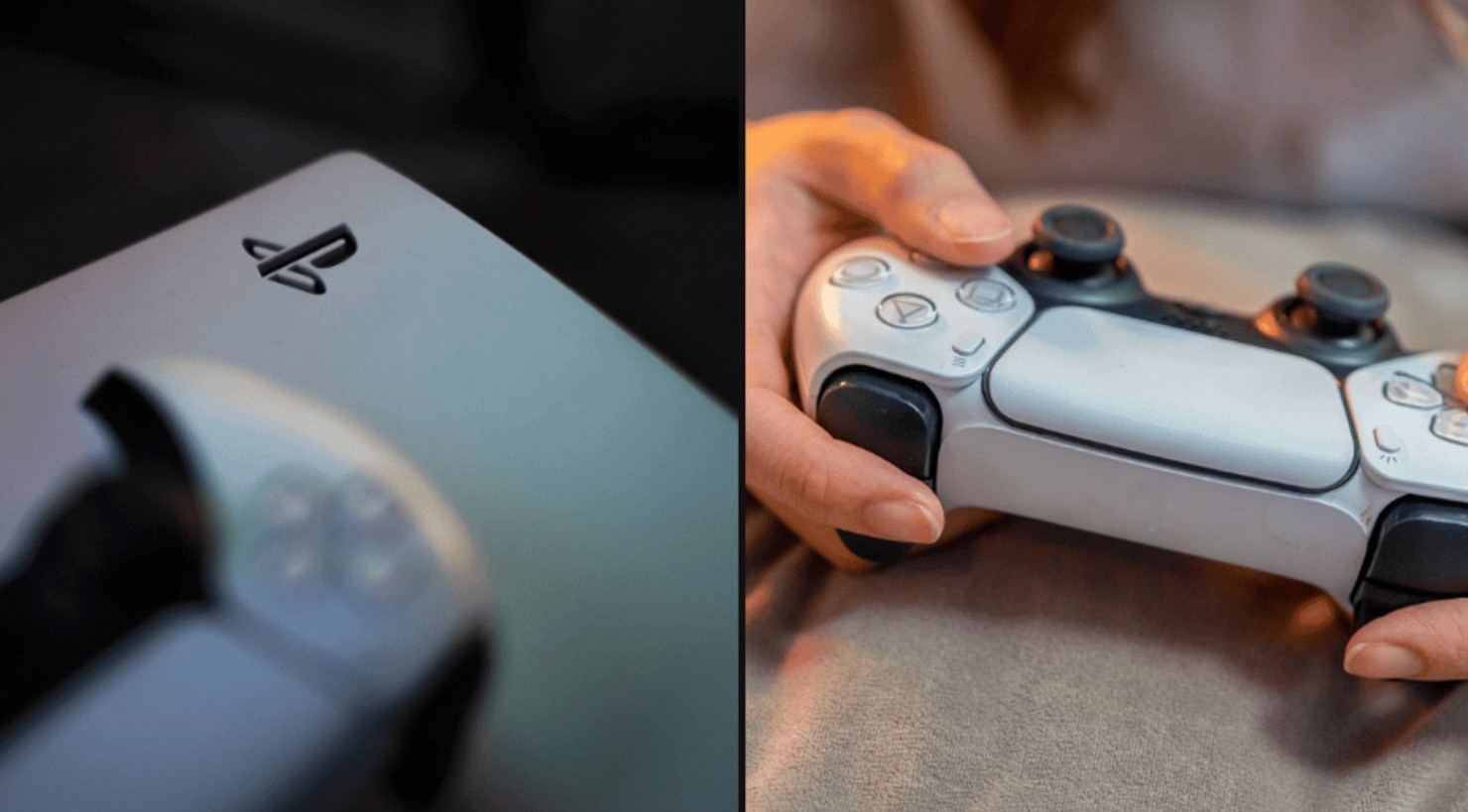
Do you think you owned your PlayStation games? Think again. – Sony has already demonstrated that Digital PlayStation purchases are licenses, not ownership. As the corporation develops toward an all-digital future, this distinction becomes more important than ever.
If I went to the PlayStation Store right now and browsed the game catalog, I would notice a conspicuous “Buy Now” button for each title. However, the phrasing is patently false, a cozy and planned bit of psychological theater. In actuality, deep within the PlayStation Network Terms of Service, Sony specifically says that all software is licensed rather than sold. The world witnessed how Sony manages software licenses in March 2024, when the Stellar Blade demo leaked early.
Hundreds of people downloaded it on their consoles, only to discover hours later that Sony not only removed the file from the digital marketplace, but also accessed their hardware, revoked the digital licenses, and locked the data on the players’ SSDs. And, as Sony moves toward a digital-only PlayStation environment by 2028, I must acknowledge that the Stellar Blade demo incident demonstrates a troubling reality: In a digital-only future, I’m paying a premium for conditional rentals, which Sony can cancel at any time.
You will own nothing and be happy.
The Stellar Blade demo lockout is an excellent example of Sony’s digital ecosystem working perfectly as intended. When I “buy” a game, I do not acquire ownership; rather, I pay for a conditional permission slip. In essence, I’m purchasing a service agreement that provides me access to a game as long as I keep an internet connection, follow Sony’s restrictions, and, most crucially, acknowledge that Sony retains the rights to host that file. PlayStation gaming has been like way for some time, but Sony’s shift to an all-digital future further emphasizes the shortcomings of that decision.
Worse, to ensure that you, I, and other customers cannot fight back when these permissions are denied, Sony has effectively militarized its Terms of Service, requiring players to agree to a Binding Individual Arbitration clause and an explicit Class Action Waiver. That implies that if Sony revokes the licenses to the content we purchased, I, along with millions of others, will be unable to file a class-action lawsuit against them.
If you’re wondering how we ended up here, it was a long time coming. The waters further muddy during the PlayStation 3 era, when poor optical Blu-ray read speeds compelled developers to implement obligatory, multi-gigabyte hard drive installs for physical discs. With the PlayStation 4, Sony required you to clone each disc to the console’s hard drive before starting a game. This terrible architectural shift taught consumers to think of games as just data that we download or discard, rather than as permanent physical products.
Simply looking at the medium’s history will help you properly appreciate this stunning deterioration. From the Atari 2600 days in the late 1970s to the turn of the millennium, purchasing a video game meant owning a physical product. If I purchased a cartridge or a CD, that bit of plastic and silicon was mine forever. I could play it, give it to a friend, or sell it. Unfortunately, this appears to be coming to an end.
The Studio Canal Purge: The Future is Now
Defenders of the digital-only market may argue that comparing a free, leaked demo like Stellar Blade to a retail game purchase is sensationalism. However, this justification crumbles under the weight of recent announcements. PlayStation fans do not need to anticipate a dystopian future in which their digital purchases vanish; we are already experiencing it.
Sony sent a broad legal notification to PlayStation Network subscribers in the United Kingdom and several European territories. Due to the expiration of third-party licensing arrangements, Sony has announced that more than 500 films distributed by Studio Canal will be permanently removed from consumers’ libraries. When the clock strikes midnight on September 1, mere months from now, many films, including Apocalypse Now, Terminator 2, and Total Recall, will be removed from consumers’ accounts in those territories.
They are not streaming movies that require a monthly subscription; they are digital assets that individuals paid full retail price to “buy” and keep. Sony undertook a similar content-erasure campaign in Austria and Germany in 2022, so I know how this will turn out: Sony will most likely issue no refunds or compensation. Because the firm is legally protected by the terms of service, which consumers naively accept owing to their length and dense legalese, PlayStation owners bear 100% of the financial loss when these corporate contracts expire.
The difference between this corporate ecology and actual physical ownership is startling. I can glance over to my own living room shelf right now and see tangible DVD and Blu-ray discs for many of the movies that are currently being axed. My physical copy of Hot Fuzz will continue to spin and play regardless of whether licensing agreements expire or Sony determines that the server infrastructure is no longer worth maintaining. Physical ownership has a clear advantage over digital ease.
The ‘Foreseeable Future’ Time Bomb.
Beyond licensing issues, Sony’s digital library will not age gracefully. According to corporate, your content has an expiration date. Just look at the PS3 and PS Vita situation. These stores are set to close globally in July 2027, while regional closures begin in August. As a result, you will no longer be able to purchase digital games on these systems, which is bad news for game preservation.
What scares me the most in this scenario is that I may be unable to redownload titles to my PS3 or PS Vita. Sony says that you can continue to re-download previously purchased titles “for the foreseeable future.” This corporate-coded language instantly raises red flags. With the demise of the disc drive, my digital game library will only exist as long as the server that hosts it, which will only last as long as Sony considers it financially viable.
This ticking clock isn’t just for obscure, decades-old vintage games; it’s a standard feature in a few big titles. Consider annual sports powerhouses such as Madden NFL or NBA 2K. These titles are delicate, legally complex webs of real-world, short-term licensing contracts. Every player likeness, brand logo, stadium layout, and music track is a distinct contract that will eventually expire. Electronic Arts and 2K frequently shut down the multiplayer servers for these games after only two or three years, effectively removing them from marketplaces and abandoning them. In an all-digital world, you wouldn’t be able to buy a sports game once the license expired, and there’s no assurance you’d be able to redownload it if you previously had. Physical releases are essential for enjoying licensed games in the future.
Digital Convenience Trap
Proponents of a digital-only ecosystem frequently disregard these concerns by citing ease. They say that downloading a game from an SSD is faster, saves shelf space, eliminates the need for disc shifting, and follows the logical progression of modern media consumption.
The Stellar Blade demo lockout is an excellent example of Sony’s digital ecosystem working perfectly as intended.
However, this is a faulty assumption that ignores the complete loss of control that customers experience when they choose digital-only media. When I swap tangible media for convenience, I’m not simply getting rid of plastic containers; I’m giving up a free-market economy.
A digital-only console gives Sony a complete retail monopoly on software pricing. Price cuts, sales windows, and base retail charges are all determined by a single corporate body. In the physical world, Sony faces competition from secondhand stores, local businesses, and peer-to-peer markets. If a game is too expensive on the PlayStation Store, I can get a used disk elsewhere for a fraction of the price. That option is no longer viable in a digital-only world. It’s dreadful, and no one should advocate for an all-digital future. Physical game releases should always be a choice.
Sony Still Has a Chance of Not Being Awful
While the situation appears dire, Sony has an opportunity to do the right thing by consumers as it presses forward with its digital-only effort. If Sony actually wants to move away from physical discs, it should look to its immediate competitors for infrastructure solutions that value the customer.
First, Sony should follow the Steam Families approach. For decades, PC gaming has been exclusively digital; nevertheless, Valve allows you to share your entire digital collection with up to five close family members. I believe this would make the all-digital future more bearable, given borrowing games is a vital aspect of the pastime.
Second, Sony might adopt Nintendo’s physical Game Key Card model. When purchasing a Switch 2 game, you can get a physical card with a digital download code from brick-and-mortar retail outlets. This maintains some semblance of a free-market economy. It enables third-party sellers to conduct independent sales, clear physical inventory, and provide discounts, breaking the digital platform owner’s stringent pricing monopoly. In Sony’s case, it might use its existing PlayStation Store gift card network to deliver individual software licenses.
Crucially, Sony’s adoption of a Game Key-like policy would provide a lifeline to the millions of collectors who refuse to empty their gaming shelves. For a big element of the community, the tangible artifact—the opportunity to display cover art, compile a physical timeline of gaming history, and take pleasure in a curated collection—is part of the value of a game purchase. A case containing a quality, nicely printed cardboard coupon with an activation code inside might nonetheless meet this requirement.
How Can We Reclaim Customer Control?
The Stellar Blade demo kill switch, the Studio Canal movie purge, and the removal of the PS3 and Vita shops are not separate instances. They are business milestones that demonstrate Sony’s progress toward a totally digital future. Even if Sony reverses its choice, as Microsoft did in 2013, we must keep this pivot in mind and make more informed customer judgments.
I do not have to accept failure, nor should you. There is no need to completely boycott gaming. If Sony eliminates our usual market options, we must adapt our strategy and speak with the almighty dollar, the single voice of power.
First, we must arm our wallets. We should not preorder digital games or buy them at full retail price ($70-$100). We may push Sony to realize that consumers do not value a license nearly as much as a physical copy by only purchasing digital games during steep (50% or greater) sales periods.
Second, we must stop relying on a single ecosystem. If a game is cross-platform, purchase it on PC if possible. I intend to buy as many titles as possible via GOG, a pro-consumer shop that includes a DRM-free installer that I can save permanently to my own drive.
Let the Stellar Blade demo tragedy serve as a clear warning shot of the impending digital dystopia: a world in which your hard work, money, and entire collection might be remotely annihilated. It is time to regard digital transactions exactly as they are described in the tiny print: an expensive, volatile renting system. I will continue to vote for physical preservation while I still have the option, and I will refuse to pay high fees for games that I do not genuinely own. You should do the same.
Read Also:
- Looking to cancel PlayStation Plus? Sony could send you a proposition.
- Snapdragon, or Exynos? The Galaxy S27 Pro’s chipset could have been leaked.
- Xbox suffers as Microsoft slashes 4,800 jobs.
- Samsung announces forthcoming Galaxy Watches and earphones before they are released
- Will Be the Samsung Galaxy S26 Ultra worthy upgrading to? Things you ought to know
About the Author