Trump says he saw no decline in Biden after debate
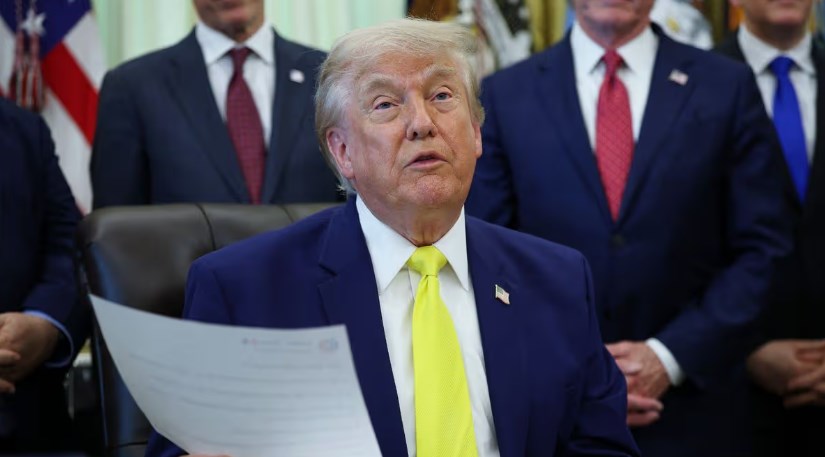
Trump says he saw no decline in Biden after debate – In the aftermath of a closely watched presidential debate that drew intense scrutiny from both supporters and critics, former U.S. President Donald Trump made a striking claim: he said he saw “no decline” in President Joe Biden during the televised exchange. The remark, delivered in Trump’s familiar direct style, immediately sparked discussion across political media circles, not only because of what it said—but because of what it implied in a highly sensitive election environment.
The debate itself had already been framed by commentators as one of the most consequential political events of the cycle. Millions tuned in, expecting a face-off that would test stamina, clarity, and command of policy detail from both candidates. In the days leading up to the event, speculation about Biden’s age and mental sharpness had dominated headlines, often fueled by clips of speeches, gaffes, or moments of hesitation that circulated widely on social media. Against that backdrop, every pause, misstatement, or sharp exchange during the debate was analyzed with near forensic intensity.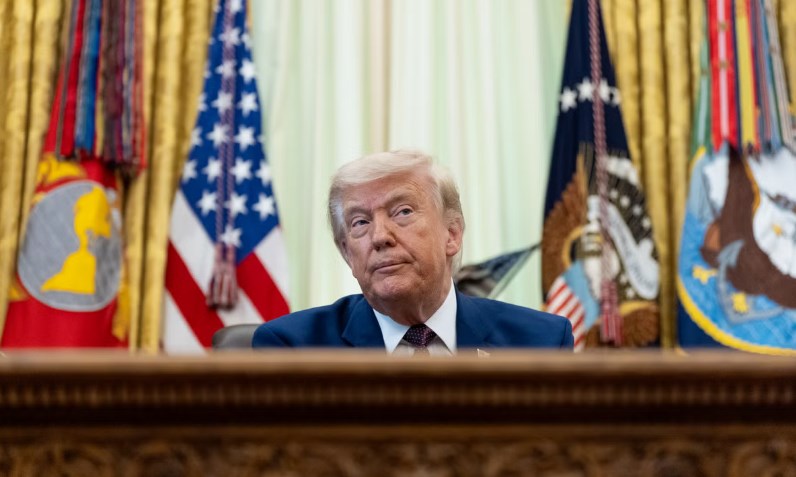
Yet Trump’s post-debate assessment ran somewhat counter to the narrative that many of his allies and critics alike had been debating for months. Speaking to reporters afterward, he downplayed the idea that Biden had shown visible deterioration during the encounter. Instead, Trump suggested that Biden appeared consistent with previous performances, neither significantly better nor worse than expected. For a figure who has frequently questioned Biden’s competence on the campaign trail, the remark stood out for its relative restraint.
Political analysts were quick to dissect the statement. Some interpreted it as a strategic move rather than a spontaneous observation. By acknowledging no obvious decline, Trump could be positioning himself to avoid accusations of overreaching or appearing excessively aggressive on the issue of Biden’s age. Others argued it may have been a moment of candid recognition that, despite partisan narratives, televised debates often compress complex realities into a single performance that may not fully capture a candidate’s broader capabilities.
Still, the reaction across the political spectrum was far from uniform. Supporters of Biden seized on Trump’s words as evidence that the “decline” narrative is overstated or politically motivated. They argued that if even Trump—one of Biden’s most persistent critics—could not identify a visible drop in performance, then claims of significant cognitive or functional decline may lack substance when placed under neutral scrutiny.
On the other hand, Trump supporters interpreted the remark differently. Some suggested that Trump was simply being diplomatic in a post-debate setting, while still maintaining broader criticisms of Biden’s leadership and decision-making. Others insisted that one debate performance should not overshadow what they describe as a longer pattern of concerning behavior in unscripted moments, interviews, and public appearances.
The broader media ecosystem amplified these competing interpretations. Cable news panels replayed segments of the debate repeatedly, pausing on moments where Biden appeared to hesitate or where Trump interrupted or challenged moderators. Social media platforms further intensified the discourse, with short clips circulating rapidly and often stripped of context. In such an environment, Trump’s remark about not seeing “decline” became a focal point precisely because it appeared to resist the dominant narrative on certain outlets.
Political communication experts noted that debates about a candidate’s cognitive fitness are not new in American politics, but they have taken on greater prominence in recent years due to the aging of high-profile political figures. In this case, both Trump and Biden are among the oldest major presidential candidates in U.S. history, making perceptions of stamina, clarity, and energy central to voter evaluations. That reality ensures that even small comments—such as Trump’s observation—can carry outsized weight in shaping public discourse. Trump says he saw no decline in Biden after debate
The Biden campaign, for its part, did not immediately amplify Trump’s comment, but allies of the president pointed to it indirectly in interviews and social media posts. Some Democrats argued that the debate demonstrated Biden’s ability to remain focused under pressure, while others emphasized policy substance over performance optics. Behind the scenes, campaign strategists reportedly view any acknowledgment from Trump that Biden did not show obvious decline as a useful talking point, even if it comes from an adversarial source.
Meanwhile, political strategists on both sides continue to debate how much influence a single debate actually has on voter behavior. Historical data suggests that while debates can shift perceptions, their long-term impact is often limited unless they produce a dramatic moment or viral turning point. In this case, the absence of a clear “breakdown moment” has led analysts to conclude that the debate may reinforce existing opinions rather than fundamentally change them.
Still, Trump’s comment introduces an interesting wrinkle. It complicates the simplistic narrative of a candidate visibly deteriorating under pressure, suggesting instead a more nuanced reality: that Biden’s performance, while imperfect, may not conform to the most extreme characterizations circulating in partisan commentary. At the same time, it does little to resolve ongoing concerns among voters who have already formed judgments based on months or years of observation.
The exchange also highlights the evolving nature of political messaging in the digital age. In earlier decades, a post-debate remark from a major candidate might have been filtered through traditional media before reaching the public. Today, such comments are instantly clipped, shared, and reframed across platforms, often divorced from context. Trump, a veteran of this media environment, is well aware of how quickly a single sentence can dominate news cycles. Trump says he saw no decline in Biden after debate
In that sense, his observation about Biden may serve multiple purposes at once: a factual assessment in the moment, a strategic positioning for future arguments, and a media-calibrated statement designed to influence how the debate itself is remembered. Whether intentional or not, it ensured that the post-debate conversation did not settle into a simple storyline.
As the election season continues, both candidates are expected to face increasing scrutiny over age, health, and stamina. For Biden, every public appearance is likely to be analyzed for signs of energy and coherence. For Trump, similar scrutiny will focus on consistency, discipline, and endurance under pressure. In this environment, even seemingly minor remarks—like saying there was no visible decline—become part of a larger political narrative that extends far beyond a single night on stage.
Ultimately, Trump’s comment reflects the complexity of modern political interpretation. It sits at the intersection of strategy, perception, and reality, offering different meanings depending on who is listening. For some, it is a rare moment of acknowledgment across partisan lines. For others, it is simply another tactical statement in an ongoing campaign war of narratives.
What remains clear is that the debate did not end with the closing statements on stage. Instead, it continued in newsrooms, social media feeds, and campaign offices—where every word, including Trump’s, is weighed not just for what it says, but for what it might mean in the long road to Election Day. Trump says he saw no decline in Biden after debate
About the Author