Argentina seeks a glorious end to the Messi era with another World Cup title
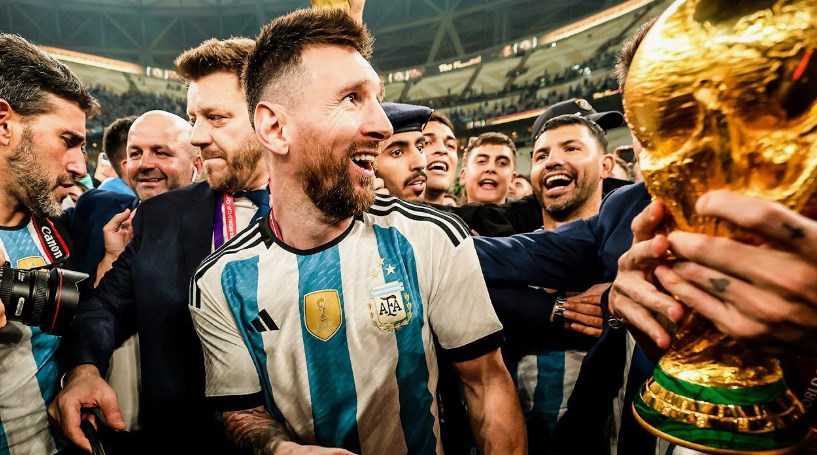
Argentina seeks a glorious end to the Messi era with another World Cup title – Argentina stands at the edge of something both beautiful and bittersweet: the closing chapter of the Lionel Messi era. As the next FIFA World Cup approaches, the national team is not just preparing for another tournament—they are preparing for what may be the final grand stage of a generational icon who reshaped football history. For many fans, the goal is simple yet emotionally heavy: to see Lionel Messi lift the World Cup one more time, and to close his international journey with the kind of ending that feels written by destiny itself.
A legacy already carved in gold
Argentina’s modern football identity cannot be separated from Messi. From his teenage debut to his record-breaking career, he has carried expectations that would have crushed most players. Yet, time after time, he delivered moments that became global memory—dribbling through entire defenses, scoring in impossible angles, and guiding Argentina through emotional highs and devastating lows.
The ultimate reward came at the 2022 FIFA World Cup in Qatar, where Argentina finally lifted the trophy after a dramatic campaign that tested nerves, belief, and resilience. That victory didn’t just add a star to Argentina’s crest—it completed Messi’s personal football story. Or so many thought. But champions rarely step away quietly. And Argentina, a nation deeply tied to football identity, is not ready to turn the page just yet.
The emotional weight of an ending era
The current narrative surrounding Argentina is not only about tactics or squad selection. It is about time. Messi is in the twilight of his international career, and every match now feels like part of a farewell tour—except this one still carries the highest possible stakes.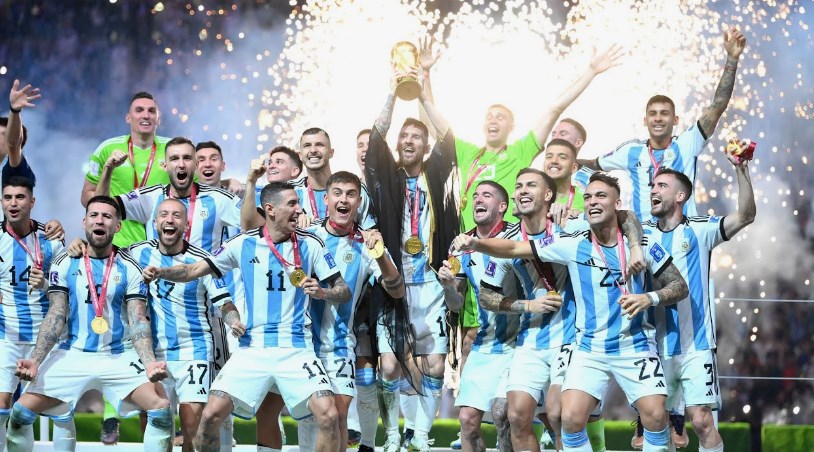
Supporters understand this duality. On one hand, they are witnessing the final years of a once-in-a-century player. On the other, they are still demanding excellence, still expecting Argentina to compete for the biggest prize in sport: the FIFA World Cup. This tension creates a unique atmosphere. Every Messi appearance feels historic. Every goal feels like a reminder that football brilliance does not fade quietly—it lingers, adapts, and sometimes even grows more meaningful with age.
A team evolving around a legend
What makes Argentina’s situation particularly interesting is that the team is no longer built solely around Messi, but still deeply influenced by him. Under a new tactical generation, Argentina has developed a more balanced structure. The team presses harder, transitions faster, and relies on a deeper midfield rotation than in earlier Messi-centric eras. Yet Messi remains the emotional and creative center of gravity.
Younger stars now share responsibility, easing the burden he once carried alone. Players like Julián Álvarez, Enzo Fernández, and Alexis Mac Allister have added energy and unpredictability. They are not replacing Messi—they are extending his influence, giving him the freedom to choose moments rather than carry entire matches.
This evolution is crucial. Argentina learned from past tournaments that overdependence on a single genius can be both a blessing and a vulnerability. Now, they aim for something more sustainable: a collective capable of delivering greatness while still maximizing Messi’s unique brilliance.
The challenge of repeating history
Winning a World Cup is difficult. Defending or repeating it is even harder. As Argentina prepares for the next tournament cycle, they face not just external competition but internal pressure—the pressure of expectation. Every opponent now studies Argentina through the lens of champions. Every match becomes a test of whether the team can maintain its elite status. And every tactical decision is analyzed against one question: how do you optimize Messi’s final World Cup journey without limiting the team’s evolution?. Argentina seeks a glorious end to the Messi era with another World Cup title
The challenge is delicate. Messi cannot—and should not—be expected to carry the same physical load he once did. But his presence remains decisive. Even in reduced minutes or modified roles, he is capable of changing matches in seconds. This paradox defines Argentina’s strategy: protect the legend, but never waste the talent.
The global spotlight intensifies
No World Cup narrative will attract more attention than Messi’s final campaign. Fans across continents are emotionally invested, even those with no direct connection to Argentina. He represents more than a nation—he represents an era of football defined by artistry, consistency, and humility.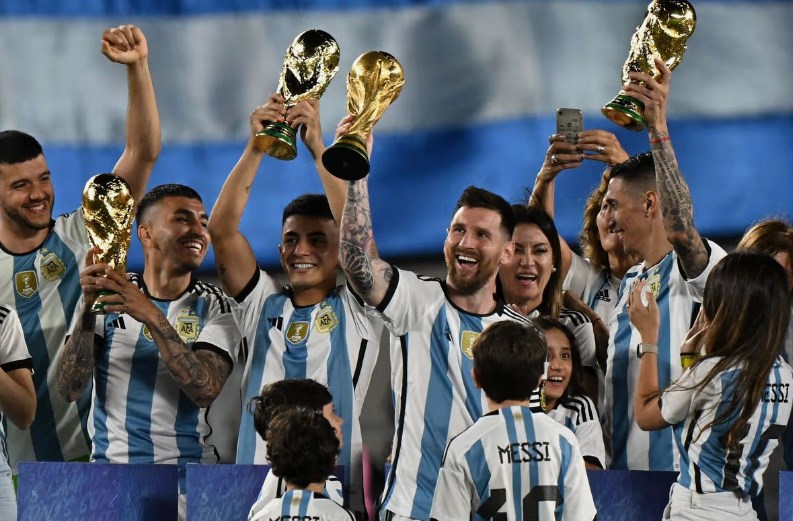
For many, this tournament is not just about who wins. It is about how the story ends. Will Messi deliver another miracle run? Will Argentina find a way to defend their crown? Or will football introduce a new twist in the final act of a legendary career?. These questions will dominate headlines, debates, and stadium atmospheres.
Pressure, pride, and possibility
Inside the Argentine camp, pressure is both a burden and a fuel. Players know what is at stake—not just a trophy, but a legacy. Winning again would place Argentina among the rarest football dynasties in history. It would also give Messi a farewell that transcends sport itself. But the path is anything but simple. Europe’s elite teams are evolving rapidly. Emerging national squads are more tactically disciplined than ever. There are no easy matches at this level, and margins for error are razor-thin.
Still, Argentina has something intangible: belief. It is a team that has learned how to suffer, how to respond, and how to win when everything feels uncertain. That mentality, shaped over years of heartbreak and redemption, may be their greatest asset. Argentina seeks a glorious end to the Messi era with another World Cup title
A story still being written
As the next FIFA World Cup approaches, Argentina is not just defending a title—they are defending a story. A story that began with a boy from Rosario and grew into a global saga of talent, perseverance, and emotional connection. Whether or not they succeed, the journey itself already carries historical weight. But football rarely stops at sentiment. Competition demands outcomes. And so Argentina steps forward with a clear, almost poetic mission: to give Lionel Messi one last glorious chapter, and to attempt what every champion dreams of but few achieve—ending an era not with decline, but with triumph.
If they succeed, it will not just be another World Cup victory. It will be a closing scene written in gold, echoing far beyond stadiums and scoreboards. It will be the kind of ending that fans talk about for generations, where football and memory become indistinguishable. And if they fall short, the legacy will still remain untouchable. But for now, Argentina dreams bigger. Because legends like Messi do not simply retire. They exit through history. Argentina seeks a glorious end to the Messi era with another World Cup title
About the Author