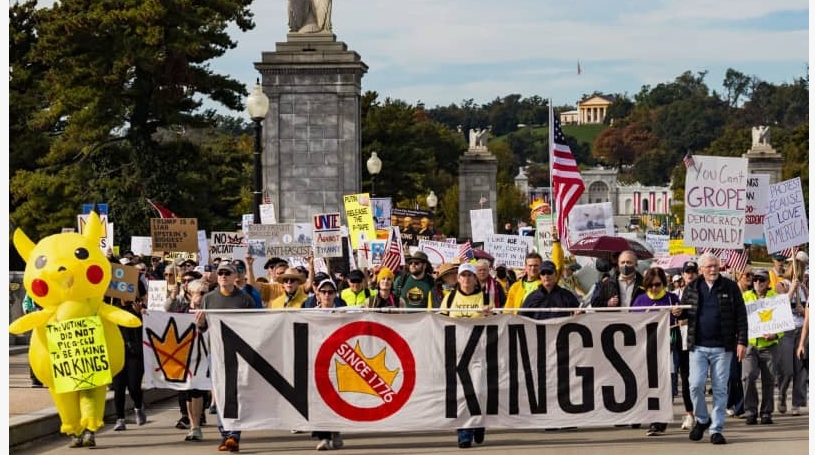
Red flare for Trump: ‘No Kings’ rallies a show of political force – The rise of the “No Kings” rallies, a dispersed but increasingly visible protest movement opposing what organizers characterize as authoritarian tendencies in contemporary American politics, is a symbol of the growing opposition to former president Donald Trump.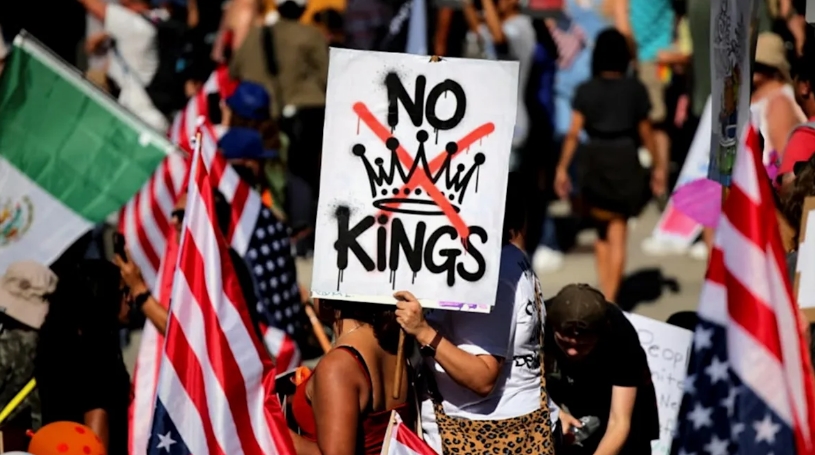
These gatherings are become more than just isolated protests in both large cities and smaller towns. They are a concerted demonstration of political power that unites activists, civic organizations, and common people around a same message: no one should have unrestricted power in a democratic system, regardless of influence or position.
A Symbolism-Based Movement
“No Kings” has a strong historical relevance. It is reminiscent of the fundamental opposition to monarchy that characterized the United States’ founding. Protesters are making a clear connection between historical struggles against centralized authority and what they see as current challenges to democratic values by using this iconography.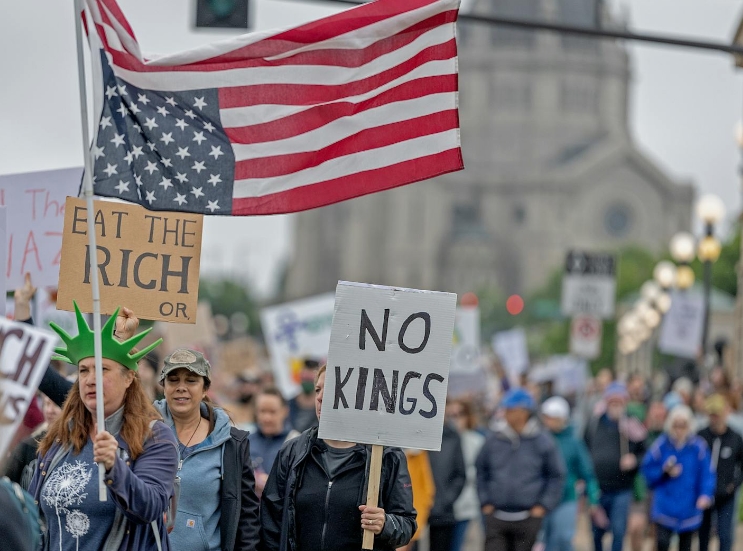
Signs pertaining to the Constitution, the rule of law, and the idea of checks and balances are frequently carried by demonstrators. Accountability, openness, and the value of institutions over people are all emphasized in chants. Despite being primarily grassroots, the movement’s messaging has shown remarkable regional consistency.
Many protestors are concerned about a larger change in political culture rather than simply one political person. They contend that over time, the democratic framework may be undermined by the normalization of strongman rhetoric, attacks on institutions, and loyalty-driven politics.
Trump as a Political Lightning Rod
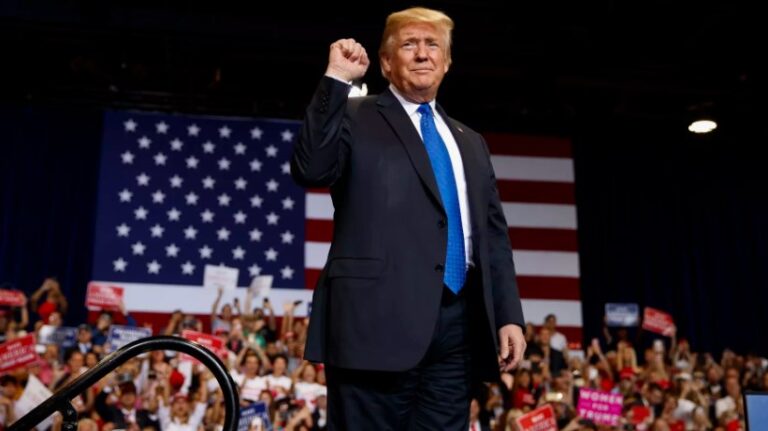
Donald Trump, whose political style continues to divide the country, is at the center of this movement. His supporters see him as a disruptor who confronts powerful elites and addresses voters directly. However, detractors observe a pattern of conduct that puts individual power ahead of institutional integrity.
The “No Kings” demonstrations portray Trump as a symbol of a greater issue—the consolidation of power in the hands of one person—rather than just as a political rival. His statements regarding presidential authority, his conflicts with judicial and electoral institutions, and his ongoing influence over a major political party are often cited by organizers.
A broad coalition has been inspired by this framing. Longtime political activists and first-time demonstrators who feel driven to speak out in support of democratic values are among the participants.
A Wide-ranging and Diverse Alliance
The diversity of the “No Kings” movement is one of its distinguishing characteristics. People of many ages, occupations, and political backgrounds attend the demonstrations. The message has struck a chord with moderates and even some conservatives who voice concerns about the direction of political leadership, despite the fact that many participants lean progressive.
At these ceremonies, civic leaders, educators, students, and veterans have all been present. The perception that their protest is motivated by patriotism rather than politics is strengthened by the fact that some of them are carrying American flags. Others relate their own experiences to explain why they think democratic institutions need to be safeguarded.
The movement has become more visible and credible as a result of this diversity. It is a more powerful force in politics since it is difficult to write off as representing a particular ideological group. Red flare for Trump
Social Media’s Function in Organizations
Social media networks and local grassroots organizations have played a major role in organizing the “No Kings” protests, in contrast to typical protest movements that heavily rely on centralized leadership. In order to organize events, mobilize participants, and spread the movement’s message, platforms have been essential. Red flare for Trump
Participants from many locations have felt more united thanks to shared images, viral videos, and hashtags. Even in the absence of a single national leader, the movement’s decentralized nature enables it to quickly adjust and sustain momentum.
But there are drawbacks to this strategy as well. It might be challenging to negotiate political outcomes or maintain consistent messaging in the absence of a centralized leadership structure. Still, the movement’s flexibility has proven to be one of its strengths.
Reactions and Political Impact
Political leaders and observers have taken notice of the growth of the “No Kings” protests. Particularly among younger and more politically involved residents, Democrats see the movement as a potential source of energy and voter mobilization. Red flare for Trump
Reactions have been divided among Republicans. While some dismiss the protests as partisan opposition, others recognize the underlying issues with institutional integrity and political norms. The movement has rekindled discussion in the larger political discourse around the distribution of power and the function of leadership in a system.
Trump has frequently escalated his tone in response to criticism, characterizing opposing movements as politically motivated assaults. The gap has only widened as a result of this dynamic, with both sides solidifying their stances.
A Mirror of a Greater Moment
The “No Kings” demonstrations are not taking place in a vacuum. They are a part of a larger period of political activity and conflict in the US. In public conversation, topics including executive power, judicial independence, and electoral integrity have gained prominence.
The rallies are both a symptom and a stimulus in this situation. They encourage more individuals to get involved in politics while also reflecting current issues. For many participants, going to a demonstration is about more than just protesting; it’s about regaining control over their lives in a political landscape that is changing quickly. Red flare for Trump
The Path Ahead
It remains to be seen if the “No Kings” movement will result in long-lasting political change. Its capacity to maintain momentum, increase its appeal, and affect election results will probably determine its impact.
Candidates from both parties may be forced to face issues of power, accountability, and democratic norms if the movement keeps growing and shapes the narrative for upcoming elections. It might potentially spur comparable initiatives that concentrate on different facets of civic involvement and government. However, the extreme polarization of American politics poses a serious problem. If the movement is to see significant change, it will be necessary to bridge gaps and promote positive discourse.
Conclusion
In a period of political unpredictability, the “No Kings” demonstrations are a potent manifestation of public engagement. The movement has drawn the interest of a country debating issues of power and leadership by highlighting democratic ideals and utilizing historical symbolism.
Fundamentally, the lesson is straightforward but profound: democracy rests on the tenacity of its institutions and the alertness of its people, not on the power of a single leader. The voices behind the “No Kings” protests are probably going to continue to play a big role in influencing the national dialogue as the political landscape changes. Red flare for Trump
About the Author