Where’s the exit? For Trump, harder to get out of the Iran war than into it – A timeless truth of modern geopolitics is on full display in the conundrum that Donald Trump faces in the 2026 conflict with Iran: starting a war is quick and easy, but ending one is sometimes difficult, risky, and politically dangerous. What seemed like a brief but significant military war has turned into a web of complications, with perils and costs associated with every possible way out.
War Is Simple to Begin But Difficult to Conclude
The war broke out on February 28, 2026, when American and Israeli forces attacked Iranian military and nuclear facilities in a coordinated fashion. Within days, American officials claimed major successes: key installations destroyed, missile stockpiles diminished, and essential infrastructure weakened. A significant escalation came with the 2026 Kharg Island operation, in which more than 90 military targets were hit in one of the greatest bombing campaigns in modern Middle East history.
Reports indicated that the operation was called “Operation Epic Fury,” and at first look it looked to fit standard U.S. doctrine: use overwhelming firepower, quickly weaken opposing capabilities, and then declare victory. Speaking personally, Trump expressed assurance, stating that there was “practically nothing left to target” and implying that the conflict could conclude at his discretion. Killing targets is just one metric of a war. Political outcomes define them, and that is where the problems started.
The Strategic Leverage and Resilience of Iran
Despite severe assault, Iran has not crumbled. Its leadership structure, on the other hand, has become more rigid and adaptive. Intelligence assessments show that the regime is intact, with the formidable Islamic Revolutionary Guard Corps cementing dominance and crushing internal dissent.
Rather than capitulating, Iran has moved to asymmetric tactics. Its most effective advantage rests in geography—specifically the Strait of Hormuz, a narrow maritime corridor through which nearly 20% of world oil travels. By threatening shipping and halting tanker traffic, Iran has managed to exert worldwide economic pressure without necessitating conventional war successes.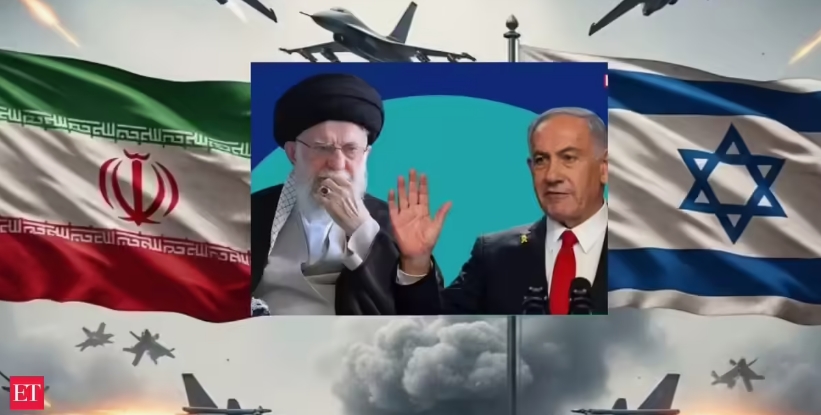
This technique has had immediate repercussions. Oil prices have soared, insurers have removed coverage for tankers, and global markets have grown increasingly volatile. Even without totally blocking the strait, Iran has created enough uncertainty to upset energy supply systems and hike petroleum costs worldwide. In effect, while the U.S. may dominate militarily, Iran retains the power to impose strategic pain—turning the struggle into a war of endurance rather than a fast knockout.
The Political Trap at Home
For Trump, the task is not simply military but fundamentally political. His presidency has long been identified with a “America First” mentality, frequently suspicious of extended overseas interventions. Entering a new Middle Eastern war already risks alienating portions of his political base. Now, staying in the conflict faces far larger consequences.
Economic strain is growing. Analysts warn that if the conflict goes on, oil prices could soar considerably, potentially exceeding historic highs and stoking inflation in the United States. Rising gasoline costs are particularly sensitive politically, especially in an election campaign.
At the same time, internal criticism within the administration is becoming obvious. The retirement of a senior counterterrorism official—who believed that Iran posed no urgent threat—highlights divisions in the national security apparatus. Such disputes weaken the notion of a cohesive and justifiable war effort. Trump now confronts a classic leadership dilemma: leaving too early risks appearing weak or conceding defeat, while continuing the conflict risks economic harm and political reaction.
No Clear Victory, No Clean Exit
One of the key concerns is the absence of a clearly defined end state. What does “winning” this war actually mean?. Regime change? Intelligence suggests that is improbable. Iran’s leadership has tightened control rather than fragmented.
Military degradation? While major damage has been inflicted, Iran has adequate capability to retaliate and destabilize global systems. Deterrence? Continued Iranian strikes and regional instability imply deterrence has not been entirely established.
Without a clear purpose, declaring victory becomes impossible. Yet without declaring victory, quitting the conflict becomes politically dangerous. This ambiguity hampers policymakers. If Trump withdraws now, detractors may conclude that the war produced little beyond damage and turmoil. If he escalates, he risks further entanglement in a region notoriously resistant to swift resolutions.
The Global Ripple Effects
The war’s ramifications stretch well beyond the battlefield. Internationally, the conflict has frayed relationships and destabilized the greater Middle East. Airspace restrictions, altered travel routes, and regional insecurity have hindered global movement. Meanwhile, Gulf nations and Western allies have expressed concern that the U.S. miscalculated Iran’s potential for retribution and resilience. Where’s the exit? For Trump, harder to get out of the Iran war than into it
Economically, the stakes are considerably higher. The Strait of Hormuz remains a chokepoint not just for oil, but for global economic stability. Any protracted disruption risks generating a bigger financial shock—potentially mirroring prior crises connected to energy supply. In this sense, the war is no longer just a bilateral battle. It has become a global issue, where every decision in Washington reverberates across markets, governments, and populations globally.
The Limited Exit Options
Trump’s prospective escape routes are all loaded with trade-offs:
Declare victory and withdraw
This is the fastest alternative but risks being perceived as premature or symbolic, especially if Iran maintains disruptive acts.
Negotiate a settlement
Diplomacy could offer a more sustainable conclusion, but it entails concessions—something politically impossible after launching a conflict.
Escalate militarily
Further strikes could try to force Iranian compliance, but they also risk expanding the conflict and raising costs.
Maintain a small conflict
Continuing targeted efforts avoids quick defeat but prolongs uncertainty, economic strain, and political peril.
None of these solutions gives a clean or cost-free escape. Each approach entails balancing military reality with local and international forces.
The Deeper Lesson
The emerging situation underscores a deeper historical tendency. From Korea to Vietnam to Iraq, U.S. presidents have repeatedly realized that the hardest aspect of war is not the initial choice to fight—but the problem of ending the combat on acceptable terms. In the case of Trump and Iran, that lesson is playing out in real time. The battle may have begun with confidence and haste, but it now sits in a gray zone—neither fully won nor readily abandoned. Where’s the exit? For Trump, harder to get out of the Iran war than into it
Conclusion
The inquiry “Where’s the exit?” has no clear solution. For Donald Trump, the route out of the Iran war is confined by military realities, economic pressures, political considerations, and global implications.
What began as a demonstration of القوة (strong) has developed into a strategic riddle with no obvious answer. Iran’s resiliency, the instability of global energy markets, and disagreements within the U.S. leadership all hamper efforts to bring the conflict to a finish.
Ultimately, the war highlights a hard truth of modern power: starting a conflict may take days, but finding a way out—without losing credibility, stability, or control—can take far longer, and cost far more than imagined. Where’s the exit? For Trump, harder to get out of the Iran war than into it
About the Author