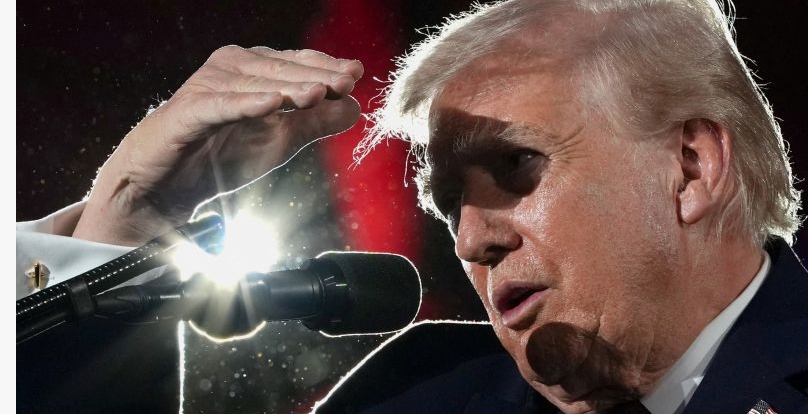
Trump teases calling the Strait of Hormuz the ‘Strait of Trump’ – Donald Trump, the former president of the United States, has once again drawn attention from around the world with a daring and controversial statement. This time, he suggested that the strategically significant Strait of Hormuz might be renamed the “Strait of Trump.” The remark highlights deeper themes about geopolitics, personal branding, and the ongoing significance of one of the most important maritime chokepoints in the globe, even though it was delivered with a blend of humor and political bluster.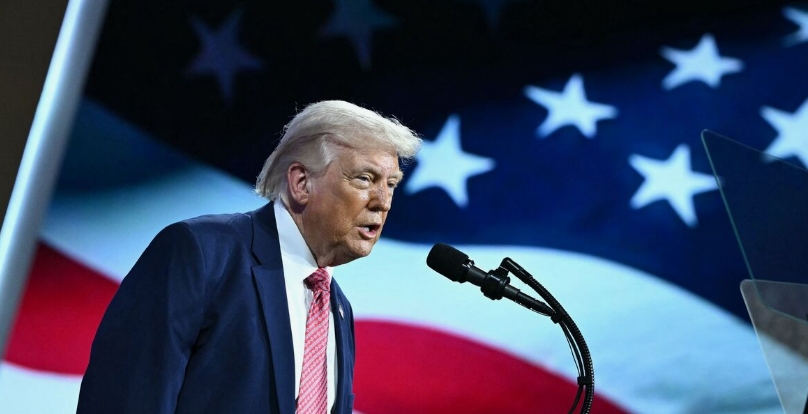
One of the world’s most politically sensitive waterways is the Strait of Hormuz, a narrow channel that links the Persian Gulf to the Arabian Sea and the Gulf of Oman. This corridor is essential to the world’s energy markets since it transports about one-fifth of the world’s oil supply. Any interruption in this area, whether brought on by political unrest, sanctions, or violence, has the potential to have a profound impact on economies all around the world. The strait is bordered by nations like Iran and Oman, and control over it has long been a source of conflict in international relations.
Trump’s comment of renaming the strait is consistent with his long-standing strategy of fusing politics with personal branding. He has shown a tendency to put his name on initiatives, structures, and even concepts throughout his career in both business and politics. The “Trump” moniker has been essential to his personality in everything from golf courses to skyscrapers. Even in jest, the idea that one of the most important rivers in the world would be named after him illustrates this global trend.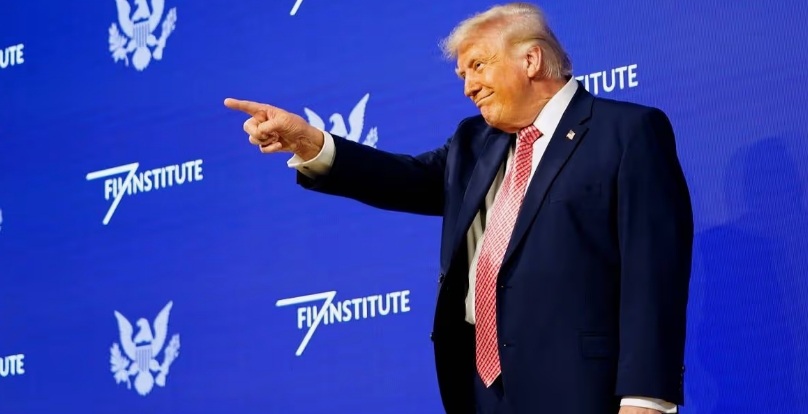
The suggestion was quickly rejected by critics as impractical and representative of Trump’s unorthodox diplomatic style. It would need widespread international agreement, involving several countries and international organizations like the United Nations, to rename a geographical feature like the Strait of Hormuz. Any such idea would probably encounter strong opposition given the existing precarious balance of power in the area.
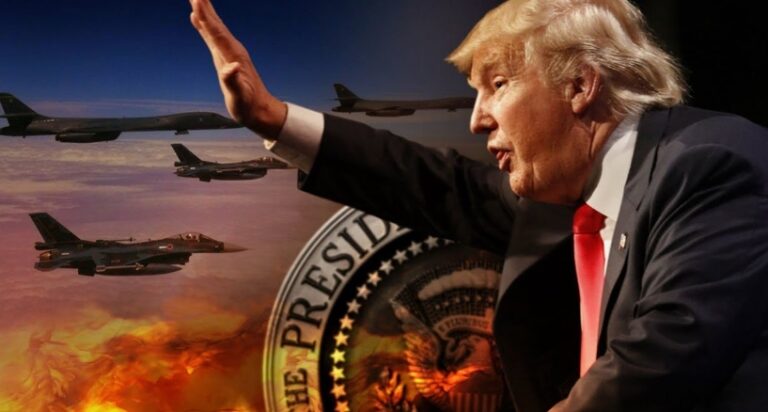
However, supporters had a different perspective on the remark. For them, Trump’s remarks demonstrate his readiness to question conventions and go beyond conventional diplomatic frameworks. Throughout his presidency, Trump regularly used an unconventional approach, interacting directly with both allies and enemies while frequently eschewing established procedures. In particular, his strategy for dealing with Iran was characterized by economic sanctions, maximum pressure campaigns, and a string of high-stakes conflicts that nearly escalated the situation in the area.
Many of these conflicts have been centered on the Strait of Hormuz. Iran has repeatedly threatened to close the strait in retaliation for military operations or sanctions from the West over the years, a move that would have disastrous effects on the world’s oil supply. To guarantee freedom of navigation, the United States and its allies have kept a robust naval presence in the area. The strait has become a symbol of both strategic leverage and vulnerability due to the prolonged stalemate.
Trump’s remark highlights the symbolic power of name and its relationship to influence, even though it is not an official legislative proposal. Geographic names are frequently associated with political power, culture, and history. Changing such a term can indicate attempts to influence narratives or changes in power dynamics; it is not only a semantic exercise. For example, disagreements over names such as the Persian Gulf vs the Arabian Gulf have long been a reflection of larger regional rivalry. Trump teases calling the Strait of Hormuz the ‘Strait of Trump’
In this regard, the concept of the “Strait of Trump” might be interpreted as a mirror of how contemporary politics increasingly interacts with media and individual identity. Trump is an expert at creating headlines; he frequently uses controversial remarks to control news cycles and influence public opinion. Regardless of whether one considers his comment amusing, self-serving, or calculated, it clearly managed to draw attention.
International observers have generally expressed skepticism, if not open dismissal. Even talking about such a rebranding, according to analysts, runs the risk of trivializing the strait’s major problems, which include commercial, security, and environmental challenges. Oil tanker disasters, drone attacks, and military conflicts have all occurred in the area, highlighting how unstable it is.
In addition, the comment sheds light on how politicians employ hyperbole to strengthen their brand. Trump’s ongoing influence on the political scene is demonstrated by his capacity to transform even a casual comment into a topic of discussion around the world. Even though he is no longer in office, he is still a major player in American politics and frequently receives attention from across the world.
The resonance of such utterances with home audiences should also be taken into account. The notion of linking Trump’s name to a momentous occasion on a worldwide scale may inspire pride or admiration in certain fans. Critics may be more concerned about how politics are becoming more personalized and how self-promotion is being combined with administration. Trump teases calling the Strait of Hormuz the ‘Strait of Trump’
In the end, it seems unlikely that the idea of renaming the Strait of Hormuz the “Strait of Trump” will transcend hyperbole. Such a shift is very impossible because to the complexity of regional politics, international law, and historical precedence. The story does, however, serve as a reminder of how political communication is changing in the twenty-first century.
Statements that were previously written off as casual remarks can soon attract international attention in a time of rapid information flow and continuous media involvement. Trump’s remark serves as an example of how both current and past presidents can influence discussions through their words as much as their policy choices.
The Strait of Hormuz will continue to be a strategically significant focus point as Middle East tensions continue to change. The conversations triggered by Trump’s comment demonstrate the ongoing interaction of geopolitics, symbolism, and personality in influencing the global scene, even though its name is almost destined to remain unchanged. Trump teases calling the Strait of Hormuz the ‘Strait of Trump’