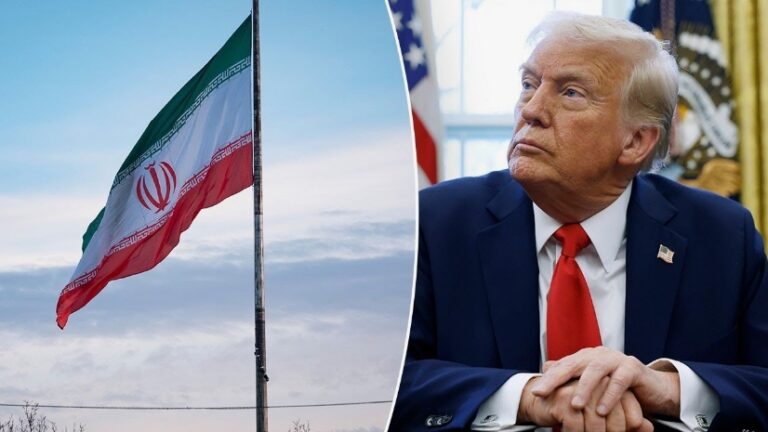
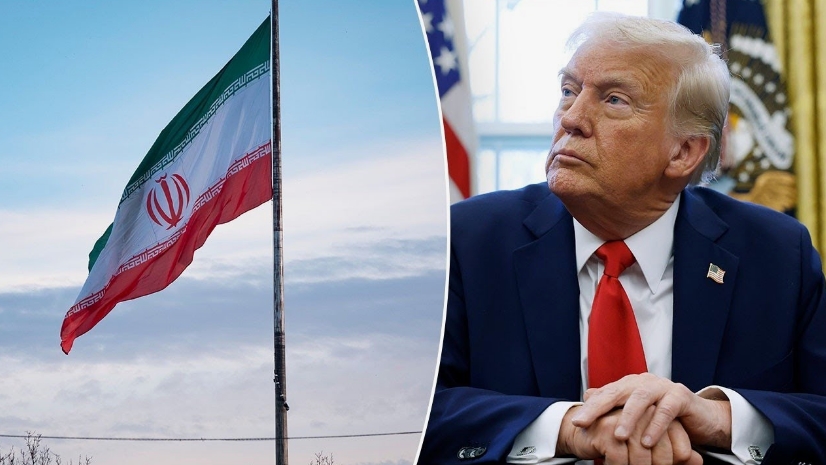
Trump signals weeks of fighting in war with Iran – In early March 2026, President Donald Trump unambiguously signaled that the United States’ military assault against Iran — initiated in an unprecedented and substantially intensified confrontation — may endure weeks rather than mere days. What began as a limited set of airstrikes has fast turned into a broader clash, with Trump’s own statements highlighting both a desire to continue hard fighting and a readiness to increase U.S. engagement if required.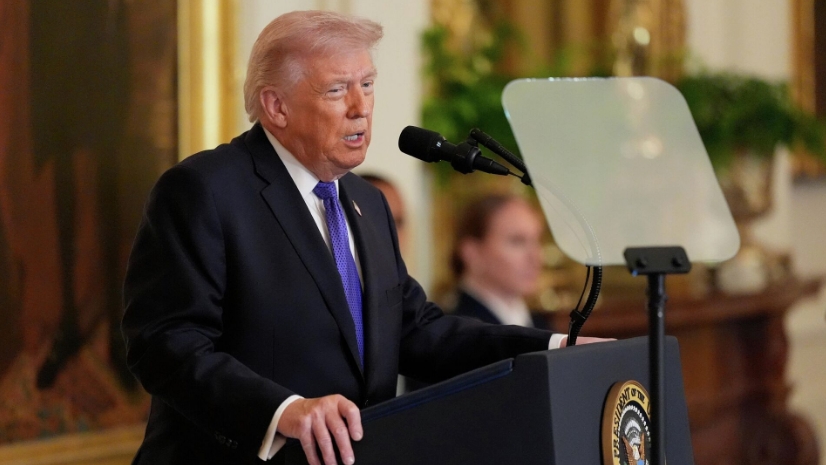
This fight — subsequently formally termed Operation Epic Fury — has already marked its place in history as one of the most momentous military operations in recent decades. The president’s pronouncements about the war’s likely duration show not just strategic calculations but also increasing splits among U.S. leadership and growing global disquiet.
A War That Defies Early Timelines
For much of the first week of fighting, Trump and his administration portrayed a relatively brief involvement. In speeches and interviews, the president consistently portrayed the battle as one that might wrap up within four to five weeks — a length aimed to comfort both allies and domestic audiences weary of extended overseas wars.
At a Medal of Honor ceremony at the White House, Trump admitted that the operation was “substantially ahead of schedule” but added a stark conditional: the United States would continue “whatever it takes” to achieve its objectives, even if that extended beyond four to five weeks.
In the tone of his public utterances, there is a mix of wounded vindication and hardened resolve. Trump, who throughout his political career promoted a “America First” posture that generally rejected extended foreign battles, has now accepted sustained military engagement as required to eliminate what he describes as “grave threats” from Iran’s missile and nuclear programs.
Shifting Goals, Rising Costs
The conflict’s timeline matters not simply for its length but for its repercussions. Initially, the administration maintained the operation’s chief purpose was to negate Iran’s nuclear ambitions, destroy its ballistic missile capabilities, and cripple its naval forces.
But as the battle unfolded, the rhetoric and signals from the White House broadened. Trump explicitly refused to rule out the option of deploying U.S. ground soldiers “if necessary,” a huge escalation that implies Washington may be prepared for an even deeper commitment.
Defense Secretary Pete Hegseth, in press briefings from the Pentagon, acknowledged the potential of greater military engagement — albeit with vaguer language regarding deadlines and exit methods. He refused to rule out future deployments while saying the campaign “is not Iraq” and “is not endless.”
On the ground, the human cost has already mounted: American service men murdered, injured troops returning home, and Iranian forces and allied militias retaliating across the Middle East. With missiles and drones flying in many directions, losses on all sides have emphasized that the fight is neither clean nor short.
From Red Lines to Open-Ended Engagement
What makes Trump’s words notable is how they indicate an evolution — or possibly a contradiction — in strategy. Early in the campaign, he underlined that the U.S. would impose a shock on Iran’s military capability and then turn toward talks or de-escalation as quickly as feasible. Now, the language has switched to a ready for many weeks of fighting if needed.
This turn has received scrutiny not just abroad but at home. Critics — including prominent U.S. news sources and analysts — have lambasted the administration’s strategy as dangerous, imperialistic, and lacking clear aims. Some warn that pledging weeks of warfare without explicit aims risks entangling the U.S. in a quagmire reminiscent of earlier wars in the Middle East.
Supporters, meanwhile, have supported Trump’s stance, insisting that tough action was necessary and that Iran’s ballistic missile stockpile and regional influence posed intolerable threats. They see a protracted battle as a necessary corrective to years of diplomatic stagnation and hostility from Tehran. Trump signals weeks of fighting in war with Iran
Uncomfortable Realities on the Battlefield
Statements about timeframes and strategy — however politically calibrated — typically skim over the realities faced by troops and civilians alike. As of early March, at least a number of American soldiers had already perished in combat operations, with many more injured. Iran’s retaliation has been robust: missile salvos, drone operations, and coordinated attacks against U.S. partners in the Gulf.
Trump has accepted the inevitability of future U.S. casualties, hailing fallen service personnel as “great people” and warning that more losses were expected before the campaign’s finish. On the Iranian side, the human toll has been catastrophic, with hundreds reported killed in strikes and counterstrikes. The conflict’s development has sent shockwaves across the region — from energy markets to diplomatic negotiations — undermining beliefs that a short, surgical strike might produce wide, permanent security.
Regional and Global Ripples
Trump’s weeks-long forecast has caused vibrations far beyond Washington. Oil markets, already sensitive to turmoil in the Middle East, responded significantly to news of persistent conflict. Analysts cautioned that protracted fighting might force crude prices higher and disrupt global supply networks, particularly while the Strait of Hormuz remains volatile. Trump signals weeks of fighting in war with Iran
Additionally, diplomatic efforts by other powers — notably Middle Eastern states and European mediators — have failed as military activities took precedence. Some regional parties have urged for immediate discussions to avert greater violence, but opposing interests and deep mistrust make a negotiated resolution unpredictable.
Political Fault Lines in the U.S.
Within the United States, Trump’s approach has split the political landscape. His base remains divided: some cheer his willingness to face Iran militarily, while others regret a break from his prior anti-interventionist stance. Journalistic voices, from The New York Times to The Washington Post, have questioned the absence of congressional authority and the logic of a possibly extended military operation.
Even some conservative critics — generally supporters of robust foreign policy — have voiced worry that the battle lacks a clear objective or a coherent approach. As Trump continues to express readiness for weeks of conflict, these political divisions are likely to grow more acute. Trump signals weeks of fighting in war with Iran
Conclusion: A War Without a Calendar
Donald Trump’s recent words regarding the Iran battle – estimating a four to five-week campaign that could stretch into even longer combat — indicate more than a tactical estimate. They show a broader shift toward open-ended participation, a departure from early pledges of swift, decisive action.
For service men and their families, the timetable is measured in days of peril and nights of uncertainty. For the world community, it is measured in economic shockwaves, diplomatic strain, and the terrifying possibility of a wider regional war. In the next weeks, as battle lingers and techniques adapt, the world will be monitoring not just how long the combat lasts, but what it finally achieves — and at what human cost. Trump signals weeks of fighting in war with Iran
About the Author