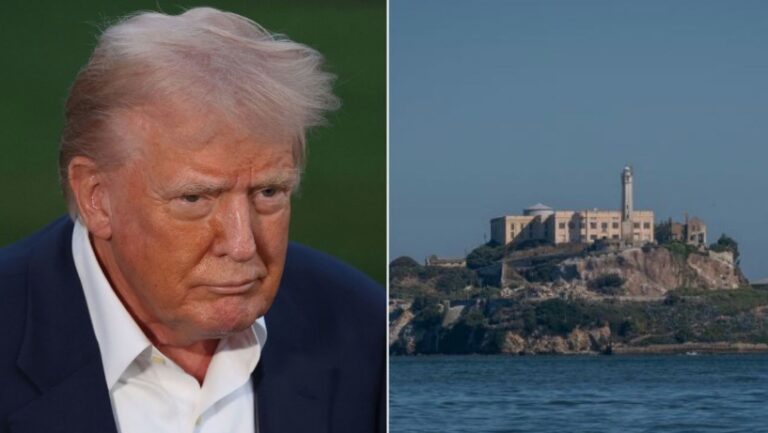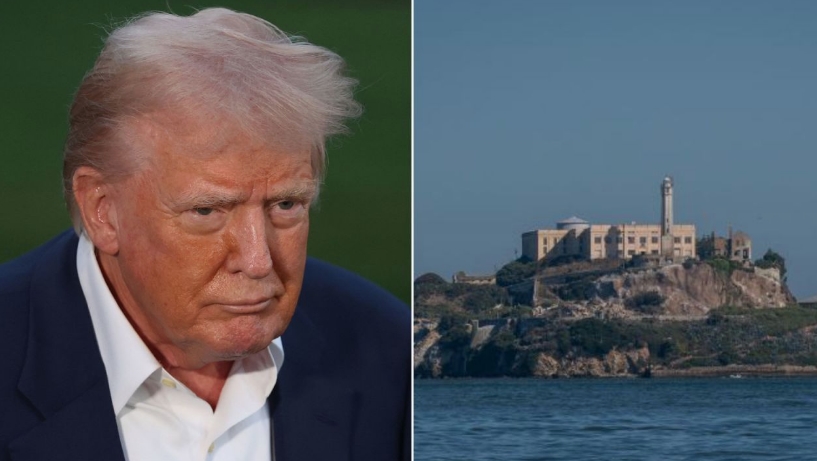
Trump requests $152M to turn Alcatraz Island into federal prison – The plan by Donald Trump to provide $152 million in government financing to turn Alcatraz Island back into an operating prison has ignited a surge of debate across political, legal, and public arenas. Once renowned as one of the most notorious penitentiaries in American history, Alcatraz has long since evolved into a historic landmark and major tourist destination. Reviving it as a functioning penal facility would signify a profound shift—not just in policy, but in symbolic.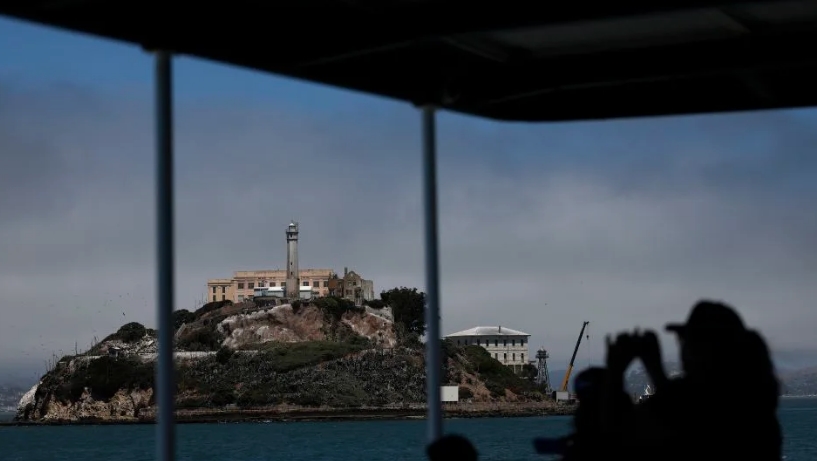
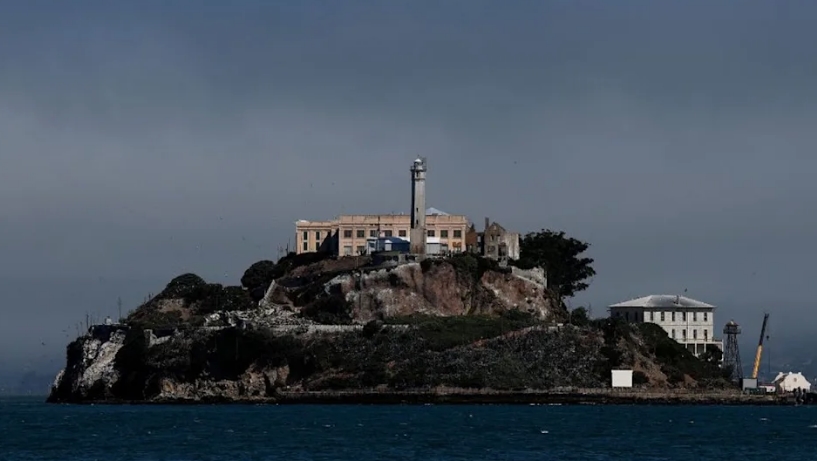
At the heart of Trump’s proposal is a tough-on-crime ideology that has defined much of his political persona. The concept of reopening Alcatraz is characterized as both practical and strategic. Supporters claim that the United States confronts continued issues with overcrowded prisons and the necessity for high-security holding centers for dangerous offenders. In this background, Alcatraz—with its isolated location in the midst of San Francisco Bay—seems virtually purpose-built for such a role. Its natural barriers, including freezing waters and powerful currents, historically made escape nearly impossible, strengthening its reputation as an impregnable fortress.
However, the reality of rebuilding Alcatraz is significantly more complex than the image it creates. The prison, which operated from 1934 until 1963, was decommissioned mostly owing to excessive operational costs and decaying infrastructure. Even at that time, it was substantially more expensive to maintain than other federal prisons. Everything—from food to fuel—had to be transported by boat, driving up expenditures. Bringing the facilities up to modern standards would involve not just restoration, but a near-total replacement. Electrical systems, plumbing, security technologies, and living conditions would all need to fulfill 21st-century requirements, which critics warn may push prices well above the estimated $152 million.
There is also the subject of historical preservation. Today, Alcatraz is managed by the National Park Service and serves as a significant portion of the Golden Gate National Recreation Area. Millions of people travel each year to see its cells, hear stories of infamous convicts, and experience a piece of American history firsthand. Turning the island back into a jail would disrupt this role totally, generating concerns among historians, conservationists, and the tourism industry. For many, Alcatraz represents more than simply a prison—it’s a cultural artifact that conveys stories about crime, punishment, and justice in America.
Economic concerns further complicate the proposal. Tourism related to Alcatraz contributes major cash for San Francisco, sustaining local businesses, tour operators, and jobs. Shutting off public access could have cascading consequences across the local economy. On the other hand, proponents of the idea claim that the construction and management of a new federal jail might produce jobs in a different way, potentially compensating some losses. Still, the balance between keeping a vibrant tourism economy and investing in a costly correctional facility remains a controversial issue. Trump requests $152M to turn Alcatraz Island into federal prison
From a political sense, Trump’s idea matches closely with larger calls for tighter law enforcement and more muscular jail measures. During his time in office and after, he has regularly underlined the necessity for stronger responses to violent crime and repeat criminals. Reopening Alcatraz fits well into that narrative, functioning as both a literal and symbolic commitment to law and order. The picture of America’s most infamous prison coming back to life conveys a powerful message—one that resonates with those who prefer swift action on crime.
Yet some regard the proposal as purely symbolic rather than practical. They contend that modern correctional difficulties require new solutions, such as rehabilitation programs, sentence reform, and investment in community-based initiatives—not the rebirth of a decades-old prison model. Additionally, legal experts point out that federal prison capacity, while strained in some regions, does not necessarily justify the immense price and logistical obstacles of restoring Alcatraz. Building new facilities in more accessible areas could be significantly more cost-effective and efficient.
Environmental considerations also come into play. Alcatraz Island is home to different bird species and marine ecosystems that have adapted to its relatively undisturbed environment. Increased development and human activity could disrupt these habitats, leading to ecological implications that would need to be carefully handled. Environmental impact evaluations alone might delay the project greatly, adding another degree of complexity. Trump requests $152M to turn Alcatraz Island into federal prison
Public opinion to the initiative has been severely split. Some consider it as a bold and inventive approach, complimenting the courage to revisit new ideas. Others regard it as impractical, even theatrical—a headline-grabbing proposal that overlooks underlying systemic difficulties. Social media and political discourse have highlighted these conflicting opinions, turning the idea into a bigger conversation about the future of the American judicial system.
There is also a deeper, almost philosophical concern contained in the proposal: what function should jails play in society? Alcatraz, in its initial form, was meant for isolation and punishment. It housed some of the most prominent criminals in U.S. history, including Al Capone and Robert Stroud. Reopening it could suggest a return to that ideology, stressing containment over rehabilitation. For some, that’s precisely the purpose. For others, it’s a step backward.
As the discussion proceeds, it’s evident that the idea is about more than simply a single facility. It deals on themes of cost, history, environment, politics, and values. Whether or not the idea gets forward, it has already succeeded in reigniting discussion over how the United States treats crime and punishment.
In the end, restoring Alcatraz back into a federal jail would require navigating a tangle of financial, legal, and social hurdles. It’s a plan that attracts attention precisely because of its audacity and its ties to a famous past. But bold ideas don’t always translate into practical solutions. As legislators, academics, and the public debate the benefits and disadvantages, one thing remains certain: Alcatraz, poised in the waters of San Francisco Bay, continues to occupy a significant position in the American imagination—whether as a relic of history or a vision of the future. Trump requests $152M to turn Alcatraz Island into federal prison