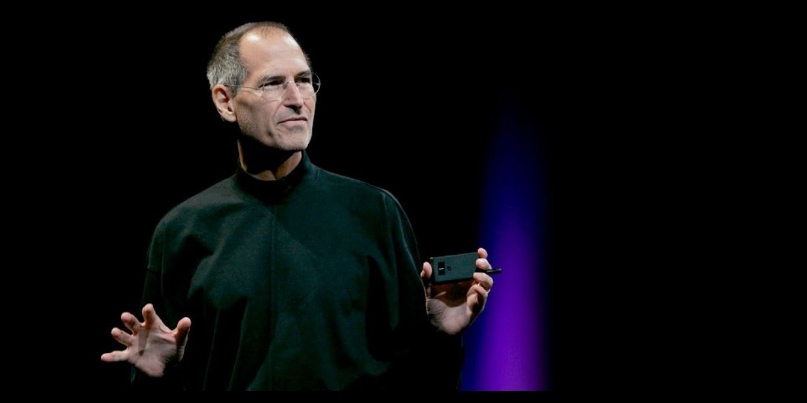
Steve Jobs’ Early Apple Items Are Going Up for Auction – The story of Apple’s earliest days has been told countless times, but every so often, a new chapter surfaces that reminds us just how fragile, improbable, and deeply human that origin really was. This month, one of the most crucial pieces of paper in American corporate history—the original partnership agreement signed by Steve Jobs, Steve Wozniak, and Ronald Wayne on April 1, 1976—is heading to the auction market.
The document, which formally founded Apple Computer Company, is being auctioned by Christie’s as part of a milestone sale titled We the People: America at 250. Estimated to bring between $2 million and $4 million, the agreement stands as both a legal artifact and a symbol of the moment a garage-based idea began its transition into a global empire.
The irony buried in that accord has only grown stronger with time. Ronald Wayne, the third co-founder whose name is virtually absent from Apple history, famously sold his 10 percent ownership just days after signing. Concerned about the financial dangers, Wayne received $800 from Jobs and Wozniak and walked away. Today, that action is generally recognized as one of the most expensive acts of prudence in recent history. Had Wayne held on, his stock would have been worth tens of billions of dollars. Instead, his reputation survives largely through this solitary document—now elevated to the rank of a historic treasure.
Christie’s has positioned the Apple cooperation agreement among things that “changed American history,” putting it alongside key works of art, furniture, and documents that impacted the nation’s cultural and economic character. In that backdrop, the estimate of $2 million to $4 million appears almost conservative. Collectors are not simply bidding on paper and ink; they are bidding on the origin story of the digital age.
That desire for early Apple memorabilia—particularly things related directly to Steve Jobs—has reached remarkable levels in recent years. Jobs, who was famously reticent to sign autographs, left behind a limited amount of verifiable signatures. As a result, anything bearing his name has become greatly sought. Even ordinary artifacts, such as autographed business cards, have been known to sell for six-figure sums. His signature, minimal and unmistakable, has come to be recognized as one of the most precious of any public figure.
“There’s an emotional connection between Steve Jobs and collectors,” says Bobby Livingston, executive vice president of RR Auction, which has handled several high-profile auctions of Apple-related artifacts. According to Livingston, Jobs represents more than financial success; he reflects a mindset of creativity, rebellion, and perfectionism that resonates powerfully with entrepreneurs and engineers. “People who start their own internet or engineering companies love Apple products,” he explains. “They see Jobs as a kind of patron saint.” Steve Jobs’ Early Apple Items Are Going Up for Auction
That emotional tug becomes considerably greater when Jobs’ name appears beside that of Steve Wozniak.
Lonnie Mimms, a technology collector and founder of a tech museum in Roswell, Georgia, knows this firsthand. Mimms has Apple check number two, another rare item from the company’s initial days. He speaks with awe about the worth of these seemingly ordinary goods. “You can get almost anything in the world with a Steve Wozniak signature on it,” he says, just half joking. “But Jobs is another story. And the two of them together—that’s the highest level of rarity.”
Yet some of the most personal Apple-related objects reside in an altogether new realm—one that blurs the boundary between history and something closer to holy relics. These objects were not produced for investors or collectors. They were never meant to leave the private sphere at all.
Those fragments are from the custody of Pat Chovanec, Steve Jobs’ stepbrother. After the death of Paul Jobs, Steve’s adoptive father, Jobs made a promise to Chovanec’s mother, Marilyn: she could live in the family home “until you drop.” True to his word, Marilyn resided in the house until her death in 2019. Jobs, who was often regarded as unsentimental, showed little interest in retrieving objects from the home. According to Chovanec, the only things Jobs desired were a few family photographs. When it came to Paul Jobs’ old desk and its contents—items steeped in calm, domestic history—Jobs just told him to take them. Steve Jobs’ Early Apple Items Are Going Up for Auction
For years, the desk and other possessions sat in Chovanec’s garage, completely unused and unknown. During that period, Chovanec built a life and profession of his own, including a 16-year tenure with Apple that began in 2005. Remarkably, he did not notify Steve Jobs that he was his stepbrother until after he had already been hired. Even then, Chovanec kept that connection mainly quiet. He worked first in Apple’s supply chain division and later in the retail section, fitting into the firm like any other employee.
“I felt it was nobody’s business,” Chovanec recalls. And for the most part, it wasn’t. Few coworkers knew of his familial links, and he made no effort to trade on the association. Still, occasions happened when the truth softly appeared. When Chovanec attended Jobs’ memorial service at Stanford University in 2011, he remembered feeling the weight of interested eyes from Apple executives. “Some of them looked at me like, ‘What are you doing here?’” he adds. The inference was clear: they didn’t realize he belonged.
In retrospect, these artifacts—desks, paperwork, checks, signatures—form a rich portrait of Steve Jobs that reaches beyond speaking stages and product debuts. They reveal the hidden networks of family, loyalty, distance, and inheritance that existed alongside the public narrative. As the Apple cooperation arrangement moves to auction this month, it does more than command a multimillion-dollar estimate. It invites us to remember that history, even when it reshapes the world, frequently begins as something delicate, unsure, and profoundly human. Steve Jobs’ Early Apple Items Are Going Up for Auction
About the Author