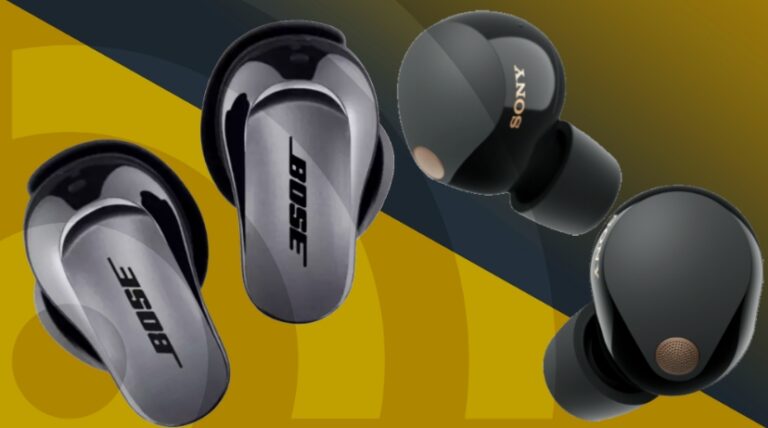
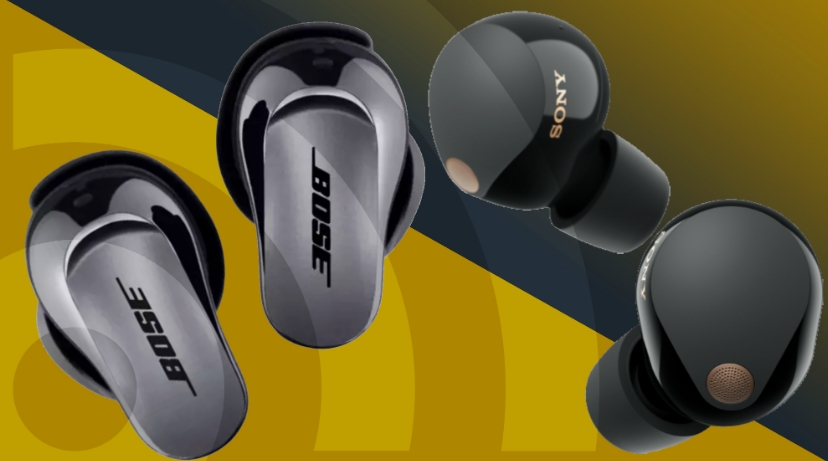
Sony WF-1000XM6 vs Bose QuietComfort Ultra vs AirPods Pro: Which earbuds are right for you? – With the announcement of the WF-1000XM6 TWS earbuds, Sony has once again thrown the flagship earbuds competition wide open. The earbuds push audio performance, promise stronger noise cancellation, and have better battery life than ever, but the $330 issue is: how do they compare with rival top offerings?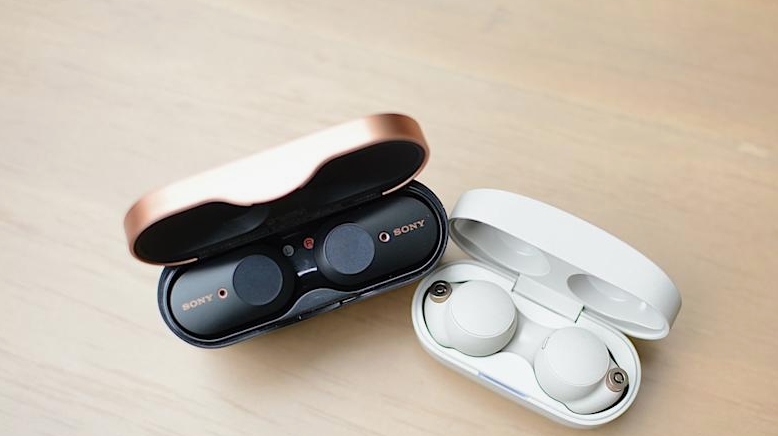
Sony faces white-hot competition from two well-received heavy-hitters from Bose and Apple. Sony is rising higher up the price ladder when matched against the second-gen Bose QuietComfort Ultra and the third-gen AirPods Pro. But do Sony’s reputation and the generation-over-generation advancements on the WF-100XM6 warrant the exorbitant asking price? Well, that depends on the additional conveniences you want from your high-end earphones, instead of just simple audio brilliance.
Price and availability
Sony’s WF-1000XM6 is available for $329.99 from the company’s official website, Amazon, Best Buy, and other authorized retailers. This is a $30 increase over the WF-1000XM5’s debut pricing. Released in September 2025, the Bose QuietComfort Ultra (2nd Gen) kept the same initial pricing as its predecessor: $299.00. However, you can currently buy a pair of these earphones at $249.00 from the company’s website. Apple’s AirPods Pro 3 debuted in September 2025 at a considerably reduced price of $249.00. With some investigation, I discovered them offered at $209.99 on Amazon.
Design
Sony WF-1000XM6s have a stem-free, bulbous oval pill-shaped design with an all-matte plastic finish and foam eartips that should provide a superior grip and seal. The outside surface of the earbuds registers touch inputs.
Bose QC Ultra Earbuds
The Bose QuietComfort Ultra earphones are based on the traditional stem-based design (with a comparatively flatter and larger stem). They also have a soft silicone loop (wrapped around the earbuds) for a tighter grip on the inner ear walls. The stem also registers touch-sensitive pads for swipes and taps.
Apple’s AirPods Pro 3 retain the iconic white stem-based design, but the earbuds are bent inward for a better, more secure fit. The device comes with foam-infused eartips, which, by the way, are available in five sizes (from XXS to L). It incorporates a force- and capacitive-touch sensor for gesture-based controls.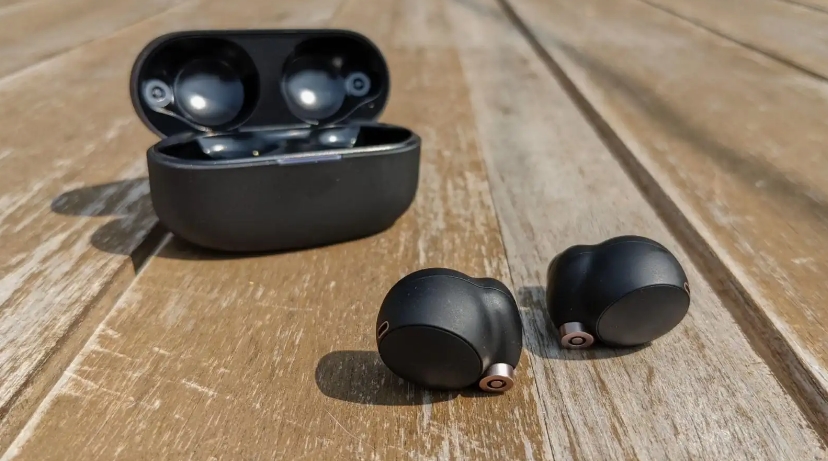
While the Sony and Bose earbuds carry an IPX4 classification for basic sweat resistance, the AirPods flaunt an IP57 rating, enabling protection against both dust and water immersion. All the earbuds come with USB-C charging cases and feature wireless charging.
AirPods Pro 3.
The AirPods Pro 3’s earbuds are the lightest at 5.55 grams, followed by Sony’s at 6.2 grams and Bose’s at 7.3 grams. Bose’s charging case is the largest and heaviest at 59.8 grams, compared to Sony’s 47 grams and Apple’s 44 grams.
Sony WF-1000XM6: Black, Platinum Silver
Bose QuietComfort Ultra: Black, White Smoke, Midnight Violet, Desert Gold, and Deep Plum
AirPods Pro 3: White Audio
The WF-1000XM6 sport 8.4mm dynamic drivers with a new soft edge and a lightweight dome to increase both treble and bass. Sony has equipped them with the QN3e CPU (together with the V2 co-processor for 32-bit audio processing). Supported codecs include SBC, AAC, LDAC, and LC3 (LE Audio).
Sony WF-1000XM6 earbuds in two color variations.
The WF-1000XM6 are the only earbuds in this comparison that include a 10-band equalization via the Sound Connect app for a totally adjustable output, making them best appropriate for audiophiles. Furthermore, the earbuds are certified for Hi-Res Audio Wireless (24-bit / 96 kHz) via the LDAC codec.
The Bose QuietComfort Ultra, on the other hand, come with somewhat bigger 9.3 mm dynamic drivers with the company’s CustomTune technology (calibrated audio performance based on your ear’s shape). With a Qualcomm chipset that supports Snapdragon Sound, the earbuds support SBC, AAC, and the aptX Adaptive family of codecs (including aptX Lossless).
AirPods Pro on a trackpad.
When used with compatible devices, the earphones produce CD-quality or near-CD-quality bitrates via the aptX codecs. Compared to the XM6’s 10-band equalizer, the three-band equalizer on the QuietComfort Ultra is truly a letdown. You receive four basic presets: Bass Boost, Bass Reducer, Treble Boost, and Treble Booster.
With proprietary 10.7mm high-excursion Apple drivers and a new multi-port acoustic architecture, the AirPods Pro 3 offer considerably thumpier bass and generate a far broader soundstage compared to the AirPods Pro 2. They contain Apple’s H2 processor and support limited codecs (AAC, SBC, and AAC-ELD for lossless audio with Vision Pro).
Bose QC Ultra Earbuds in white.
The AirPods are renowned for their Spatial Audio and head tracking features, and the Pro 3 don’t disappoint in that area. They offer Adaptive EQ, which adapts music to the specific geometry of your ear canal. You still get Headphone Accommodations for fine-tuning the output, but nothing matches a configurable equalization (nice job there, Sony).
Noise cancellation & transparency
Before I go into the nitty-gritty, all three models represent the peak of noise cancellation, allowing you to create a bubble of isolation around you to focus on work, read a book, or be at peace. Most people won’t be able to tell between the noise canceling on the earphones.
Sony WF-1000XM6 earbuds in white
With the QN3e HD noise-cancelling processor, the V2 chip, and four microphones on each earbud, the WF-1000XM6 claim to deliver “the world’s best noise cancelling performance.” While that’s hard to remark on right now, Sony says the earbuds are 25% better than their predecessors at blocking environmental noise.
They also provide the Adaptive NC Optimiser, which automatically adapts the noise cancellation to your fit and environment. Early evaluations suggest that the earbuds are substantially better than their predecessors, but they’re a tad behind Bose’s premium earbuds, which still seem to have an edge in blocking out low-frequency sounds.
Next up on the list are the QuietComfort Ultra, which perform a fantastic job of neutralising deep, persistent low-frequency sounds (like an airplane’s engine), sudden high-frequency sounds like emergency sirens, and produce a dramatic, vacuum-like feeling, as if you’re floating in the middle of the space. The earphones feature three ANC levels: Quiet (the strongest one), Aware, and Immersion.
Bose QC Ultra Earbuds
Finally, we have the AirPods Pro 3, which claim to offer twice the noise cancellation of the AirPods Pro 2, due to the H2 chip and ultra-low noise microphones. They aren’t as isolating as Bose’s earbuds, but instead deliver a little more natural, airy (relative to a vacuum) version of the vacuum we were talking about previously.
There’s an Adaptive Audio mode as well, which changes the intensity of ANC based on the ambient sound levels. According to SoundGuys, the AirPods deliver an average 90% reduction in loudness, followed by the WF-1000XM6s at 88% and the QuietComfort Ultra at 85% (despite being largely rated as the best ANC earphones).
You see, all three models are right there at the top, with gaps so minor that an ordinary user would spend hours sorting them out. When it comes to audio passthrough, the XM6s have an Ambient Sound Mode with an adjustable ambient noise level, but early reviews remain cautious about the voices seeming somewhat more robotic than they should.
AirPods Pro on a MacBook Air.
Bose also offers an Aware Mode with ActiveSense technology, but it is the AirPods that are said to offer the most natural passthrough audio via Transparency Mode.
Features
Among the unique characteristics of Sony’s premium earbuds is 32-bit audio processing, which produces higher-resolution audio with richer textures and finer details (particularly in the background soundtrack). The earbuds also feature DSEE Extreme, Sony’s patented technology that recovers the sound quality that is sometimes lost with streaming. You also get native Gemini AI support for talking to Google’s chatbot.
Then there’s a Find Your Equaliser feature in its accompanying app that plays several sound signatures to assist you find out your favorite audio profile. The app also allows you choose between ANC and ambient settings dependent on your location. To ensure clear calls, the earbuds contain a bone conduction sensor, two beam-forming microphones, and AI noise reduction.
Sony WF-1000XM6 earbuds in two color variations.
The Bose QuietComfort Ultra (2nd Gen) earphones feature TrueSpatial technology to improve the soundstage and offer a new Cinema Mode for emulating a theater-like sound experience. The ActiveSense feature watches for abrupt sounds and cancels them in real-time. Sony WF-1000XM6 vs Bose QuietComfort Ultra vs AirPods Pro
You also get essential features like SpeechClarity for separating your voice during calls, Bluetooth Multipoint compatibility for simultaneous connections to two devices, customized settings, and Google Fast Pair for near-instant connection with compatible devices. The earbuds can also activate Gemini AI if it is set as your smartphone’s default assistant.
The AirPods Pro 3 stand out in this sense, giving three capabilities, or rather experiences, that no other earbuds do. First, they come with specific sensors to assess heart rate during workouts (via the Fitness or Health app). Speaking of workouts, the Workout Buddy gives individualized encouraging messages.
Bose QC Ultra Earbuds
The gadget also supports Live Translation, a function currently available in restricted languages that permits real-time translation directly through the earbuds. Finally, Apple delivers clinical-grade hearing aid functionality and automated Conversation Boost among other hearing health features. There’s a Conversation Awareness feature as well. Sony WF-1000XM6 vs Bose QuietComfort Ultra vs AirPods Pro
Both the WF-1000XM6 and AirPods Pro 3 include superior tracking technologies. While the former relies on Google’s Find Hub, the latter leverages Apple’s Find My network to crowdsource the position of the devices. Apple’s earbuds also incorporate the U2 chip (ultra-wideband) for Precision Finding.
Battery life
With ANC enabled, the WF-1000XM6 and the AirPods Pro 3 last up to eight hours on a single charge; their charging cases add another 16 hours, bringing the total playback time to 24 hours. They also feature quick charging, with a five-minute charge delivering up to an hour of listening time.
Person wearing Sony WF-1000XM6 earbuds
The QuietComfort Ultra, on the other hand, lasts up to six hours with ANC, and up to 24 hours with the charging case. A 20-minute charge can provide up to two hours of battery life.If sound quality is your foremost priority, try the WF-1000XM6. They include Hi-Res Audio Wireless (LDAC) connectivity, a 10-band equalizer for the most personalized audio experience, 32-bit processing, DSEE Extreme, and an exceptional battery life. Sony WF-1000XM6 vs Bose QuietComfort Ultra vs AirPods Pro
Earbuds by Sony, Apple, and Bose.
If you want deep, immersive ANC that blocks most rumble, you can go for the Bose QuietComfort Ultra (2nd Gen). They feature the most secure fit of all earbuds, support multi-point Bluetooth, give outstanding call quality, and deliver the company’s unique sound profile. Sony WF-1000XM6 vs Bose QuietComfort Ultra vs AirPods Pro
If you’re an Apple customer, the AirPods Pro 3 are the most feature-packed earbuds you can buy. They offer the best Transparency in the bunch with outstanding ANC and double as a health-oriented gadget with heart-rate tracking and hearing aid features. Of course, you also receive the Apple ecosystem goodies.
About the Author