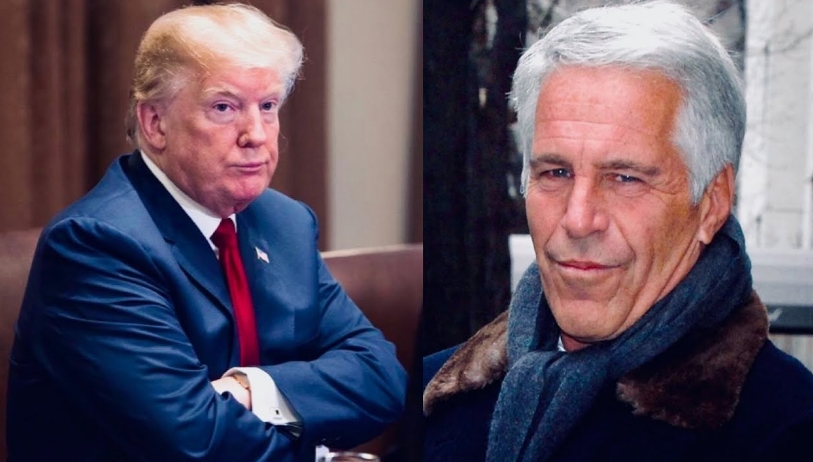
First it was Clinton, now it’s Trump’s time in Epstein files spotlight – When the first wave of newly unsealed Jeffrey Epstein documents became public, Bill Clinton suddenly found himself back in the political spotlight. Now, with the revelation of a second and far larger batch of data, that emphasis has switched firmly to President Donald Trump.
On December 23, the Justice Department released thousands of new papers from what it has nicknamed the “Epstein Library,” a large database of emails, flight records, notes, and other correspondence relating to the late financier and convicted sex trafficker. Trump’s name appears regularly throughout the documents—sometimes in banal remarks, other times in ways that have revived public scrutiny of his former association with Epstein.
The most remarkable revelation centers on Trump’s travel past. Newly discovered flight records reveal that Trump flew aboard Epstein’s private jet, notoriously nicknamed the “Lolita Express,” at least eight times between 1993 and 1996—more trips than had previously been recorded or publicly acknowledged. The records also reference a federal subpoena addressed to Trump’s Mar-a-Lago home, along with a number of unsubstantiated or deleted mentions that have fanned discussion online.
Despite the abundance of allusions, the Justice Department has highlighted one crucial point: Trump has not been accused of any crime in connection with Epstein. Epstein himself was charged with sex trafficking teenage girls and died by suicide in a Manhattan jail in 2019 while awaiting trial. His longtime associate, Ghislaine Maxwell, was convicted in 2021 and is currently serving a 20-year prison sentence. No additional individuals have been formally charged. Still, the timing and tone of the release have rendered it politically explosive.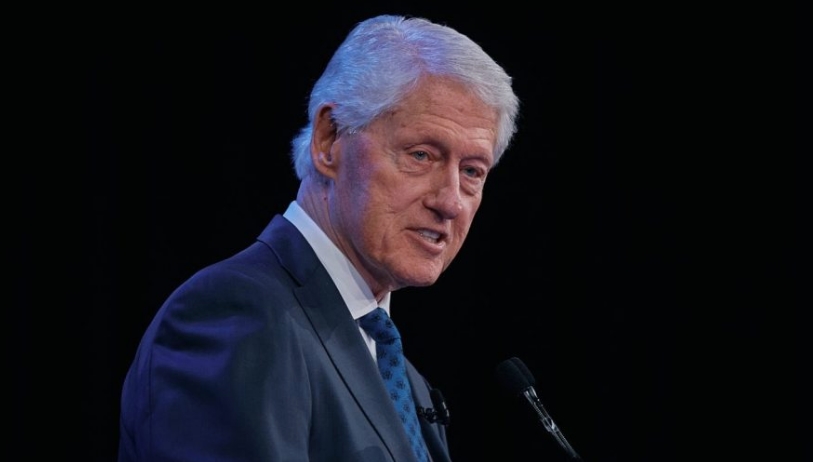
Just four days earlier, Trump allies had seized on the appearance of Clinton’s name in the initial batch of documents, using it to attack Democrats and wonder why others had dodged punishment. Anticipating a similar outcry, Trump’s own Justice Department issued an unusually forthright, preemptive statement ahead of the December 23 announcement. First it was Clinton
“The claims are unfounded and false,” the department said, alluding to allegations concerning Trump that surfaced in the files. “If they had a shred of credibility, they would have been weaponized against President Trump long ago—particularly before the 2020 election.”
The statement underlined that many of the charges referenced in the documents were unconfirmed, secondhand, or already examined. Nonetheless, the prominence of Trump’s name—especially in connection with Epstein’s jet—has drawn increased attention to a relationship Trump has long sought to deny.
According to an internal email dated January 7, 2020, an anonymous federal prosecutor noted that freshly checked flight data revealed Trump went on Epstein’s jet “many more times than previously has been reported.” The flights occurred during a period when Trump, then a wealthy New York real estate developer, met often with Epstein following Trump’s 1992 divorce from Ivana Trump and continuing until his 1999 divorce from Marla Maples.
The email states that on at least four of those flights, Ghislaine Maxwell was also on board. Other passengers mentioned beside Trump included Marla Maples, his daughter Tiffany, and his son Eric. One 1993 flight purportedly identified only Epstein and Trump as passengers. Another involved Epstein, Trump, and a “then-20-year-old” individual whose identity was removed. On two further planes, prosecutors highlighted the presence of women who could potentially have been witnesses in a Maxwell-related case.
The prosecutor highlighted that the study of the flight records—more than 100 pages of closely packed data—was ongoing and that the material was being shared internally to avoid “surprises down the road.” First it was Clinton
Beyond Trump, the newly revealed files offer light on another remaining mystery: Epstein’s probable coconspirators.
In an internal email exchange dated July 2019, just days after Epstein’s arrest, federal agents discussed discovering “10 co-conspirators” and serving them with subpoenas. The letter identified individuals believed to be in Florida, Boston, New York, and Connecticut. While the identities of most remain unknown, other emails in the trove reference Maxwell, an interview with retail billionaire Les Wexner—Epstein’s longtime business associate—and “Brunel,” widely believed to be a reference to Jean-Luc Brunel, the French modeling agent later accused of sexual abuse.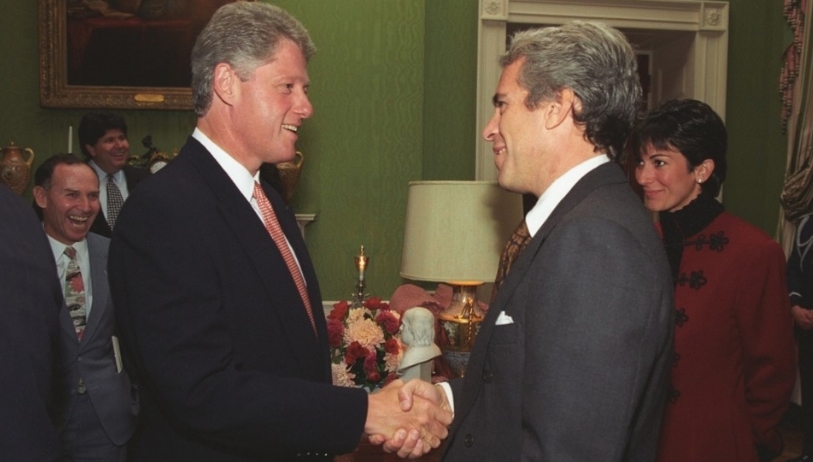
Another summary document says that two of the subpoenaed persons were pilots. Epstein’s longtime pilot, Lawrence “Larry” Visoski, appears elsewhere in the archives, though none of the documents clearly designate him a coconspirator. As with prior document disclosures, the sheer magnitude of the data leak has hindered efforts to draw definitive conclusions. Many identities are severely suppressed, not only to protect victims and survivors but also to avoid incriminating persons without formal accusations. The lack of a powerful search tool has further hindered journalists, researchers, and the public trying to make sense of the content.
Deputy Attorney General Todd Blanche recognized the frustration, saying DOJ officials are carefully scrutinizing the files to ensure victims are not identified. He said the procedure might take weeks, since hundreds of thousands of pages have to be released. First it was Clinton
That answer has done little to appease critics. Democratic lawmakers and victim advocacy organizations believe the department missed a December 19 deadline set by Congress and accuse officials of proceeding too slowly.“Donald Trump thinks our investigation is a hoax and should be over,” Rep. Robert Garcia, the leading Democrat on the oversight committee, tweeted on X. “Mr. President, we are just getting started.”
For yet, the December 23 release offers no legal resolution—only additional questions. It emphasizes how thoroughly Epstein planted himself among the powerful and how difficult it remains to separate documented facts from gossip, allegation, and political narrative. As detectives continue to pore through the remaining data, the Epstein case continues to cast a long shadow over American public life, years after the man at its core is gone. First it was Clinton
About the Author