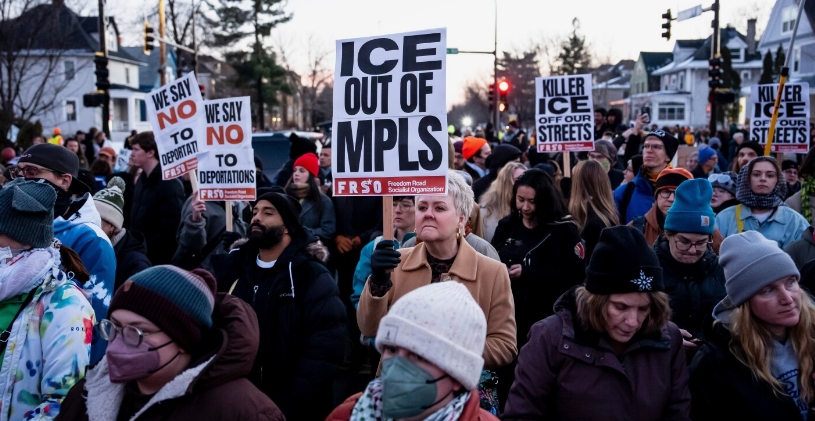
Fatal ICE shooting in Minneapolis raises furor across US – On a cold winter morning in south Minneapolis on Wednesday, January 7, 2026, what began as a routine federal enforcement operation turned into a tragedy that has ignited fury across the United States.
A 37-year-old Minneapolis woman, Renee Nicole Macklin Good, was shot and killed by a U.S. Immigration and Customs Enforcement (ICE) agent — a moment captured on video and now shared widely on social media, fueling protests, political clashes, and deep questions about policing, immigration enforcement, and the value of civilian life. Fatal ICE shooting in Minneapolis raises furor across US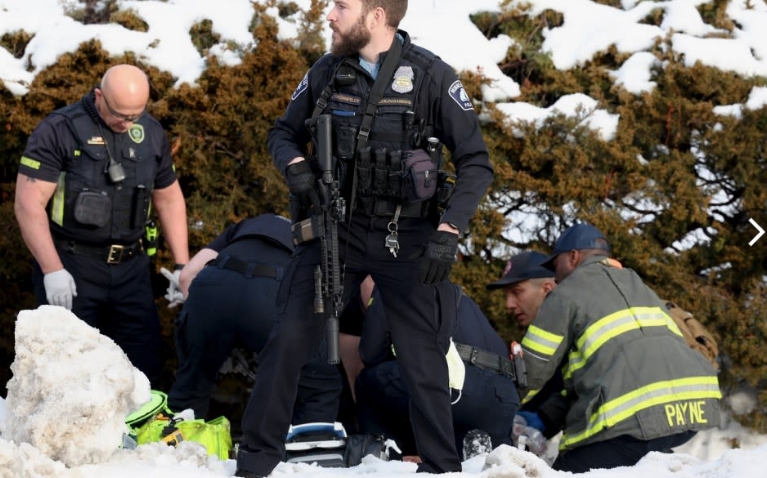
Who Was Renee Good?
Renee Nicole Macklin Good was not just a headline — she was a mother of three, a poet and writer, a wife, and a new resident of Minneapolis, having moved from Kansas City in recent years. Friends and family describe her as compassionate, devoted, and deeply connected to her children and community. She had no significant criminal history beyond a minor traffic violation and was far from the hardened criminal some federal officials later described. Her sudden death has shattered her family — and the community — leaving an entire city, and now a nation, grappling with what went wrong.
The Shooting: Conflicting Accounts
Authorities say federal agents were conducting “targeted operations” when they encountered resistance from a group of protesters, and that Good’s vehicle was “weaponized” in an attempt to run over officers, forcing an agent to fire in what the Department of Homeland Security (DHS) frames as self-defense. Homeland Security Secretary Kristi Noem even called the incident an act of “domestic terrorism.” President Donald Trump publicly echoed this defense, blaming what he called the “Radical Left” for endangering law enforcement. But witness accounts — and video circulating online — tell a very different story.
Multiple recordings show Good’s SUV, a maroon vehicle, relatively stationary in the street when ICE agents approached. One agent is seen trying to open her door, and the vehicle begins to move slowly — not charging at officers — before an agent fires multiple shots through the windshield. The SUV then drove a short distance before crashing into another car. Local eyewitnesses insist Good posed no threat and was trying either to drive away or to turn her car around — contradicting federal claims of violence. Some neighbors say she was returning from dropping her young son at school when the encounter occurred.
Immediate Local Reaction: Outrage and Protest
In the minutes and hours following the shooting, tension in south Minneapolis erupted. Crowds quickly gathered at the scene, their anger palpable in chants like “ICE out of Minnesota!” and “Get the f out!” echoing through wintry street corners. Dozens of supporters blew whistles — a symbol of resistance during the ICE operation — demanding accountability and justice. 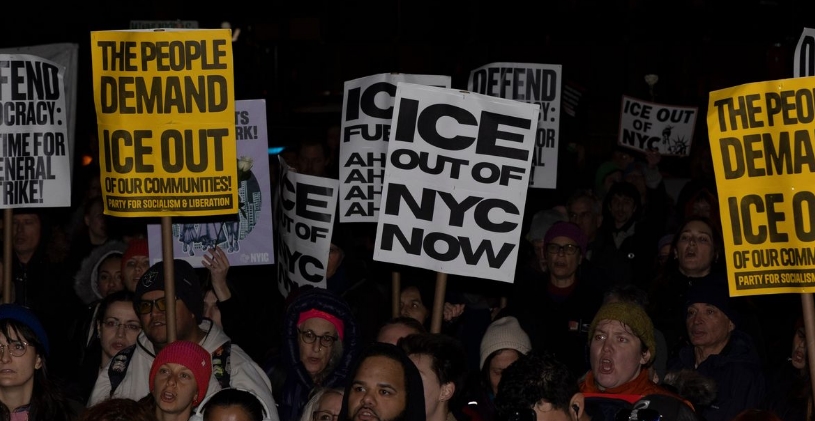
Local leaders, too, were vocal. Minneapolis Mayor Jacob Frey condemned the shooting as reckless, rejecting claims of self-defense after watching the video. “That is bullshit,” he said bluntly, adding that someone made to feel unsafe or threatened in their neighborhood should not have died that way. ([FOX 9 Minneapolis-St. Paul][7])Minnesota Governor Tim Walz, while urging protests remain peaceful, expressed deep outrage and even prepared to deploy the National Guard if needed to maintain order.
Protests Spread Nationwide
What began in Minneapolis quickly resonated beyond Minnesota’s borders. In San Francisco, about 200 demonstrators gathered outside the ICE field office to denounce the shooting and to express solidarity with Good’s family and community members back home.
Protesters blocked traffic through parts of the Financial District, chanting against federal immigration enforcement and calling for legal action against the agent involved. Across social media and across the nation in other cities, vigils and marches were organized — some large, others more intimate — but all fueled by grief and a shared sense of injustice.
Political Fallout and Deepening Divide
The political response has been starkly polarized. On one side, federal officials frame the incident as a necessary act of defensive force against a perceived threat, underscoring the risks law enforcement officers face in volatile operations. On the other, Democratic leaders and activists say that narrative is deeply misleading — even harmful.
Minneapolis City Council member Jason Chavez blasted ICE’s conduct as untrained and unmanageable, saying the woman’s death exemplified a broader pattern of aggression by federal agents. Some local officials called for the ICE officer involved to be fired and arrested, a rare demand against federal law enforcement personnel. ([CBS News][9])
Meanwhile, immigration advocacy groups and veteran organizations — such as Common Defense — called the entire ICE presence in Minneapolis “dangerous and unjust,” arguing federal enforcement is bringing fear and chaos to a city already scarred by community distrust. Fatal ICE shooting in Minneapolis raises furor across US
Investigation Underway
Federal and state agencies are now conducting investigations into the shooting. The FBI and the Minnesota Bureau of Criminal Apprehension have been involved in fact-finding efforts, while local law enforcement has tried to manage community relations in the aftermath. Questions remain unresolved: Was deadly force necessary? Was Good ever the intended target? And — critically — what role did ICE’s massive surge of agents in the Twin Cities play in creating the conditions for violence? Fatal ICE shooting in Minneapolis raises furor across US
A Nation Watching
For many Americans, the incident has struck a chord far beyond Minneapolis. Some see it as another example of excessive force by federal authorities, especially in communities wary of immigration crackdowns. Others view it through the lens of law and order, believing agents acted under threat. The truth, for many, lies in the painful ambiguity of video and testimony — and in the stark human cost of the encounter. At its heart, this is a story about a life cut short — a mother with children, dreams, and a community that loved her — and a nation forced to confront deep divides about policing, immigration, and accountability. Fatal ICE shooting in Minneapolis raises furor across US
About the Author