Has USA ever hosted the World Cup before? Revisiting the 1994 FIFA tournament in United States – The countdown is now on for the 2026 FIFA World Cup, an event that promises to alter the scale, reach, and ambition of global soccer. Running from June 11 to July 19, 2026, the competition will be jointly hosted by Canada, Mexico, and the United States, marking the first time three nations have shared hosting duties for a men’s World Cup.
Will the 2026 World Cup Crown Its First Champion on U.S. Soil?
It will also be the largest World Cup in history, growing from 32 to 48 teams, a change meant to bring more nations into the global spotlight. While matches will be dispersed around North America, the vast majority of games will be played in the United States, emphasizing the country’s growing prominence in the sport’s global ecosystem. As the final whistle blows at MetLife Stadium in New Jersey, a compelling question will linger: Will the 2026 champions become the first men’s World Cup winners crowned on U.S. soil?
Has the United States Hosted the World Cup Before?
Yes—but just once. The United States previously hosted the FIFA World Cup in 1994, a landmark event that played a revolutionary influence in the expansion of soccer across the country. That event was the final edition to utilize a 24-team format, which had been in existence since 1986. FIFA enlarged the field to 32 teams four years later, a configuration that stayed unaltered until the impending 2026 expansion.
At the time, many naysayers questioned whether the U.S.—a nation dominated by American football, baseball, and basketball—could successfully produce the world’s biggest soccer tournament. The doubts proved unjustified. USA ’94 shattered attendance records, introduced millions of Americans to elite international soccer, and established the basis for the establishment of Major League Soccer just two years later.
Mexico, by contrast, is no stranger to hosting. It has staged the World Cup twice, in 1970 and 1986, becoming the first nation to do so. Canada, meanwhile, will be entering new terrain in 2026, as it prepares to host World Cup matches for the first time in its history.
Who Won the 1994 World Cup in the United States?
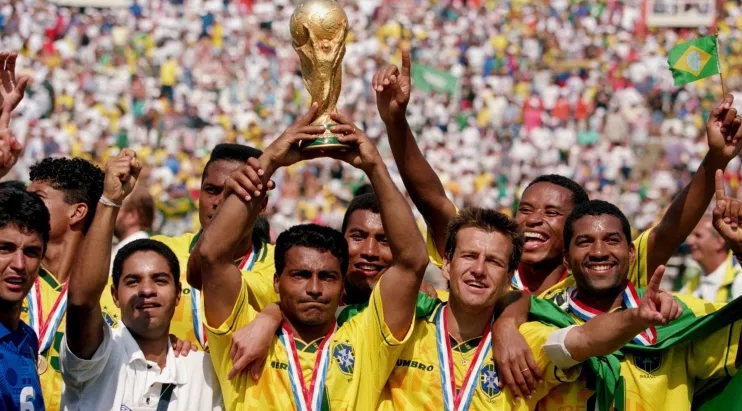
The distinction belongs to Brazil, who won their fourth World Cup trophy at the Rose Bowl in Pasadena. The 1994 final remains one of the most memorable in tournament history—not for goals, but for drama. After 120 minutes of scoreless football between Brazil and Italy, the match became the first World Cup final decided by a penalty shootout.
Italy’s agony was compounded when legends Franco Baresi and Roberto Baggio missed their spot penalties, the latter famously sending his effort soaring over the crossbar. Brazil’s victory ended a 24-year title drought and restored them to the peak of world football.
Since then, only Italy in 2006 and Argentina in 2022 have gone on to win World Cups via penalties. Brazil later achieved a record fifth trophy at the 2002 World Cup in Japan and South Korea, and their pursuit of a long-awaited sixth crown will once again pass through North America in 2026.
A Growing List of Major Men’s Soccer Events in the USA
The 2026 World Cup will not be an isolated moment. Instead, it represents the climax of a busy and crucial period for men’s soccer in the United States. Remarkably, the tournament will be the third major global soccer event hosted by the U.S. in as many years. In 2025, FIFA brought its substantially expanded Club World Cup to American soil. The final, hosted at MetLife Stadium, saw Chelsea defeat Paris Saint-Germain, cementing the venue’s role as a centerpiece for world football.
A year previously, the Copa América was hosted in the United States, with Argentina successfully defending their continental crown. The success served as a redemptive chapter for Lionel Messi on U.S. grounds, especially when juxtaposed with the anguish of Copa América Centenario 2016, where his missed penalty contributed to a shootout loss to Chile.
That 2016 tournament was important in its own right—it became the first major men’s international competition conducted in the U.S. outside the Gold Cup since the 1994 World Cup. On a regional level, the United States has been a consistent presence. The country has served as either host or co-host for all 18 editions of the CONCACAF Gold Cup since its debut in 1991, confirming its reputation as the heartbeat of North American soccer.
Women’s Soccer: America’s Defining Soccer Legacy
While men’s tournaments continue to develop, it is women’s soccer that has provided some of the most famous moments ever seen on U.S. soil. In 2024, the United States hosted the inaugural CONCACAF W Gold Cup, with the home side—guided by interim head coach Twila Kilgore—emerging as champions. The competition, however new, added another chapter to the U.S.’s lengthy history of leadership in the women’s game.
It is important to distinguish this event with the CONCACAF W Championship, which has existed since 1991. The U.S. has hosted five of its 11 editions and co-hosted once with Canada in 2002. Yet no occasion looms larger than the 1999 Women’s World Cup final. Before a sold-out Rose Bowl crowd, Brandi Chastain buried the decisive penalty against China, a celebration that became an enduring emblem of women’s sports in America. The United States hosted the Women’s World Cup again in 2003, when Germany defeated Sweden in the final thanks to Nia Künzer’s golden goal, another momentous chapter written on American soil.
A Defining Moment Awaits in 2026
From the Rose Bowl in 1994 to MetLife Stadium in 2026, the United States has transformed from a strange host to a major pillar of the worldwide game. With unparalleled scope, vast crowds, and a continent-spanning platform, the 2026 World Cup signifies more than simply another tournament. It is a moment of arrival. Whether or not the victors raise the trophy for the first time on U.S. soil, one thing is already clear: soccer’s future in North America has never looked brighter. Here is a reworked and expanded ~900-word, humanized piece based on your information, with a fluid narrative flow and greater context while keeping all facts correct and interesting.
Will the 2026 World Cup Crown Its First Champion on U.S. Soil?
The countdown is now on for the 2026 FIFA World Cup, an event that promises to alter the scale, reach, and ambition of global soccer. Running from June 11 to July 19, 2026, the competition will be jointly hosted by Canada, Mexico, and the United States, marking the first time three nations have shared hosting duties for a men’s World Cup.
It will also be the largest World Cup in history, growing from 32 to 48 teams, a change meant to bring more nations into the global spotlight. While matches will be dispersed around North America, the vast majority of games will be played in the United States, emphasizing the country’s growing prominence in the sport’s global ecosystem. As the final whistle blows at MetLife Stadium in New Jersey, a compelling question will linger: Will the 2026 champions become the first men’s World Cup winners crowned on U.S. soil?
Has the United States Hosted the World Cup Before?
Yes—but just once. The United States previously hosted the FIFA World Cup in 1994, a landmark event that played a revolutionary influence in the expansion of soccer across the country. That event was the final edition to utilize a 24-team format, which had been in existence since 1986. FIFA enlarged the field to 32 teams four years later, a configuration that stayed unaltered until the impending 2026 expansion.
At the time, many naysayers questioned whether the U.S.—a nation dominated by American football, baseball, and basketball—could successfully produce the world’s biggest soccer tournament. The doubts proved unjustified. USA ’94 shattered attendance records, introduced millions of Americans to elite international soccer, and established the basis for the establishment of Major League Soccer just two years later.
Mexico, by contrast, is no stranger to hosting. It has staged the World Cup twice, in 1970 and 1986, becoming the first nation to do so. Canada, meanwhile, will be entering new terrain in 2026, as it prepares to host World Cup matches for the first time in its history. Has USA ever hosted the World Cup before
Who Won the 1994 World Cup in the United States?
The distinction belongs to Brazil, who won their fourth World Cup trophy at the Rose Bowl in Pasadena. The 1994 final remains one of the most memorable in tournament history—not for goals, but for drama. After 120 minutes of scoreless football between Brazil and Italy, the match became the first World Cup final decided by a penalty shootout.
Italy’s agony was compounded when legends Franco Baresi and Roberto Baggio missed their spot penalties, the latter famously sending his effort soaring over the crossbar. Brazil’s victory ended a 24-year title drought and restored them to the peak of world football.
Since then, only Italy in 2006 and Argentina in 2022 have gone on to win World Cups via penalties. Brazil later achieved a record fifth trophy at the 2002 World Cup in Japan and South Korea, and their pursuit of a long-awaited sixth crown will once again pass through North America in 2026.
A Growing List of Major Men’s Soccer Events in the USA
The 2026 World Cup will not be an isolated moment. Instead, it represents the climax of a busy and crucial period for men’s soccer in the United States. Remarkably, the tournament will be the third major global soccer event hosted by the U.S. in as many years. In 2025, FIFA brought its substantially expanded Club World Cup to American soil. The final, hosted at MetLife Stadium, saw Chelsea defeat Paris Saint-Germain, cementing the venue’s role as a centerpiece for world football.
A year previously, the Copa América was hosted in the United States, with Argentina successfully defending their continental crown. The success served as a redemptive chapter for Lionel Messi on U.S. grounds, especially when juxtaposed with the anguish of Copa América Centenario 2016, where his missed penalty contributed to a shootout loss to Chile. Has USA ever hosted the World Cup before
That 2016 tournament was important in its own right—it became the first major men’s international competition conducted in the U.S. outside the Gold Cup since the 1994 World Cup. On a regional level, the United States has been a consistent presence. The country has served as either host or co-host for all 18 editions of the CONCACAF Gold Cup since its debut in 1991, confirming its reputation as the heartbeat of North American soccer.
Women’s Soccer: America’s Defining Soccer Legacy
While men’s tournaments continue to develop, it is women’s soccer that has provided some of the most famous moments ever seen on U.S. soil. In 2024, the United States hosted the inaugural CONCACAF W Gold Cup, with the home side—guided by interim head coach Twila Kilgore—emerging as champions. The competition, however new, added another chapter to the U.S.’s lengthy history of leadership in the women’s game.
It is important to distinguish this event with the CONCACAF W Championship, which has existed since 1991. The U.S. has hosted five of its 11 editions and co-hosted once with Canada in 2002. Yet no occasion looms larger than the 1999 Women’s World Cup final. Before a sold-out Rose Bowl crowd, Brandi Chastain buried the decisive penalty against China, a celebration that became an enduring emblem of women’s sports in America. The United States hosted the Women’s World Cup again in 2003, when Germany defeated Sweden in the final thanks to Nia Künzer’s golden goal, another momentous chapter written on American soil. Has USA ever hosted the World Cup before
A Defining Moment Awaits in 2026
From the Rose Bowl in 1994 to MetLife Stadium in 2026, the United States has transformed from a strange host to a major pillar of the worldwide game. With unparalleled scope, vast crowds, and a continent-spanning platform, the 2026 World Cup signifies more than simply another tournament. It is a moment of arrival. Whether or not the victors raise the trophy for the first time on U.S. soil, one thing is already clear: soccer’s future in North America has never looked brighter. Has USA ever hosted the World Cup before
About the Author