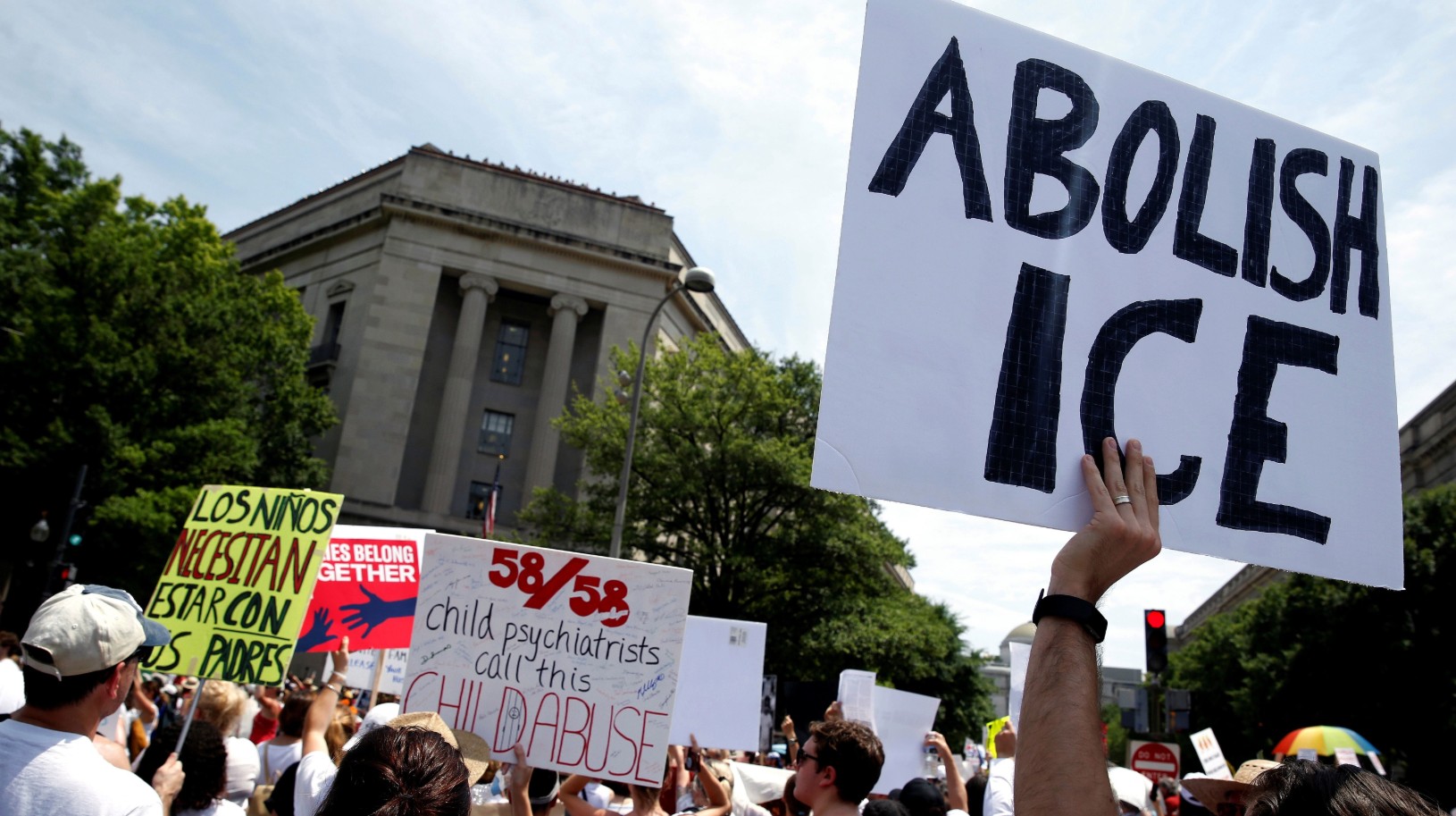
The “Belgian ICE”? Belgium’s contentious “home entry” measure has drawn harsh criticism. – As part of its increasingly stringent immigration policy, Belgium has all but approved a contentious new law that permits the government to enter the homes of individuals without proper documentation in order to deport them.
Investigating judges, law enforcement, and non-governmental organizations strongly oppose the law, despite the Federal Government and Asylum and Migration Minister Anneleen Van Bossuyt (N-VA) calling it “crucial” for a more comprehensive asylum policy.Our authorities need to be capable of carrying out their duties. Minister Van Bossuyt told The Brussels Times that anyone living here illegally and endangering national security or public order must be able to be deported.When our people’s safety is at risk, this topic should no longer be taboo. The fact that “illegal” criminals can still avoid deportation by hiding behind their home doors is intolerable, she stated. “With this draft bill, our authorities will no longer be powerless.”
What does the bill contain?
The parameters for these property searches are pretty clear, according to Van Bossuyt’s office.
This policy targets irregularly residing individuals in Belgium who consistently refuse to cooperate with their repatriation and who constitute a threat to national security or public order, such as through radicalization, engagement in extremism, or major criminal offenses.
Only after less harsh procedures have failed to get the suspect to leave the country is a home search taken into consideration.
This may be carried out against that person’s will and, if required, with force. This is now impossible without a search warrant since the Belgian constitution firmly upholds the idea of the inviolability of the home.According to the minister’s office, “it is therefore a last resort, used only when all other options have been exhausted or are not feasible.”
Furthermore, this policy is always applicable to those who are truly in danger of being removed; spaces in the federal detention facilities are set aside for them.
Such a house search is the sole action under the Immigration Act that requires previous judicial review because an investigating judge must determine the measure’s proportionality before approving it.
It is only permitted to conduct a home raid between 5:00 and 21:00.
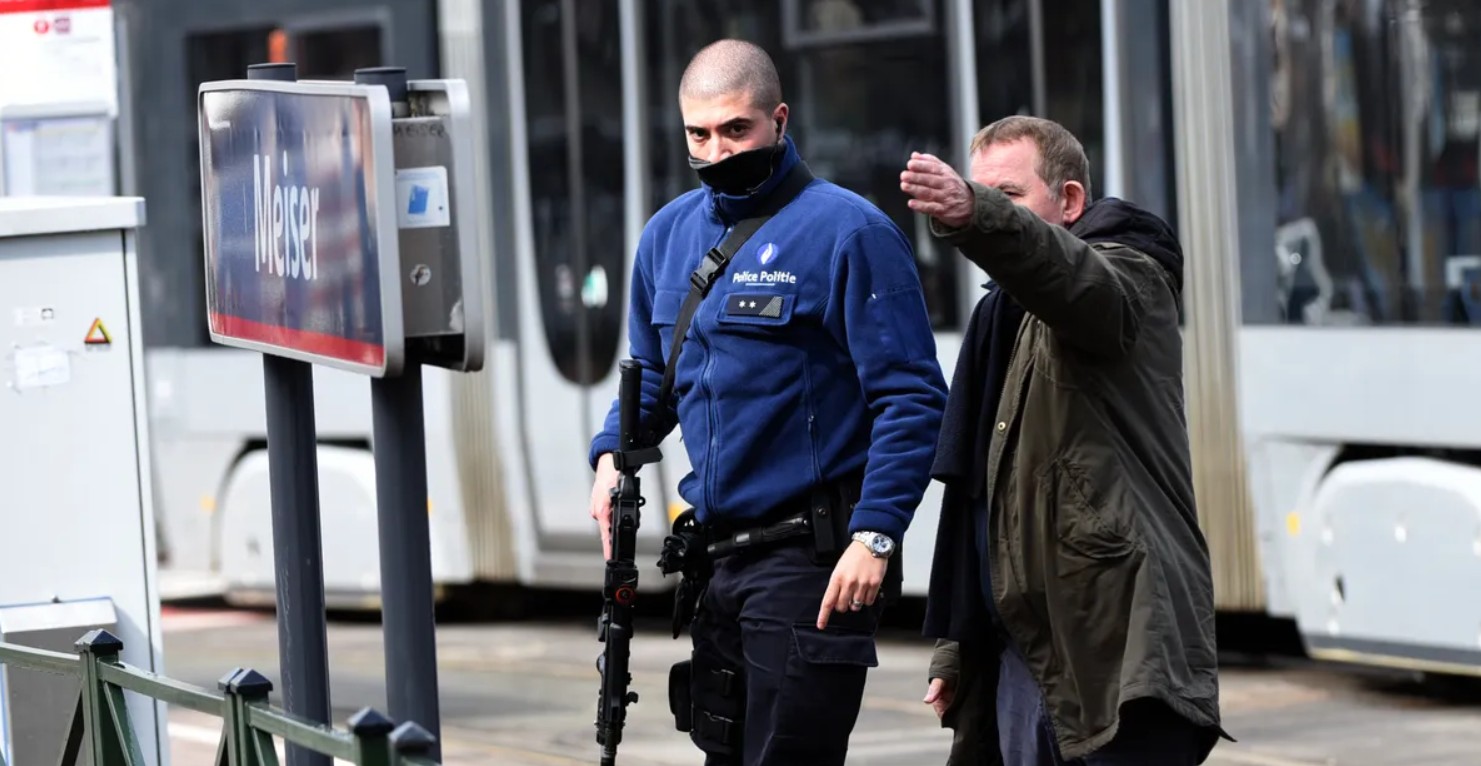
ICE from Belgium?
Home searches are deemed “disproportionate” and “in breach of fundamental rights” by critics.
They contend that the Federal Government’s requirements are overly ambiguous and assert that the security risks associated with a home search have not been adequately taken into account.
Nonetheless, NGOs like 11.11.11 and Vluchtelingenwerk Vlaanderen (Refugee Work Flanders) offer the harshest criticism. A marketing video depicting a home raid on a family was recently posted by them. “Deportations” and “raids” are terms used by the organizations.
Additionally, they demanded action against “ICE in Europe”—a reference to the brutal raids carried out earlier this year by the US Immigration and Customs Enforcement (ICE) department.
Van Bossuyt, however, denounced the video as “fake news” and “demagoguery” in her furious response.It is absurd that activist groups are purposefully disseminating false information about this draft bill because it is far from an ICE, she said.
Her office emphasized that, contrary to what is frequently suggested, there will be no violent raids or round-ups of innocent families whose only “offense” is that they lack documentation.According to Van Bossuyt’s office, this is about the capture and deportation of those who are in the country unlawfully and who could endanger national security or public order, such as rapists, hate preachers, or drug offenders.
They explained that a locksmith might be called in if the person in issue refuses to answer the door when the police knock. There is “no question” about violent raids that involve door-breaking.The operation is carried out by the police. There will be no Belgian “ICE” or special immigration police unit, she emphasized.
This draft measure also covers scenarios in which, for instance, an individual who resides in Belgium irregularly commits a crime, is found guilty, and is incarcerated.
Since there is no longer a criminal inquiry underway, the individual cannot be arrested if the agreement on return is only made after they are back on the streets. That will be altered under the new bill.The truth is being distorted by anyone who makes this an ICE story. Van Bossuyt emphasized that the bill has “passed all judicial scrutiny” and stated, “This is about preserving our citizens from dangerous individuals.”

Widespread criticism
But the criticism goes far beyond NGOs alone. Investigating judges, attorneys, police, and the Myria Migration Center came before the Federal Parliament to explain the draft measure.
They all expressed disapproval of the bill and pointed out its basic flaws, including inadequate protections, an excessively wide and arbitrary implementation, and possible inconsistencies with European regulations like the proportionality principle.
The meaning of a “threat to public order or national security” is unclear, according to investigating judges. Furthermore, they said that searches of these people are already mandated by existing laws, making a new statute unnecessary.
In the meanwhile, the Federal Migration Center Myria worries about what will happen to children and vulnerable people. “Entering a residence is not impeded by vulnerability or the presence of minors. Family separation is not forbidden, even though the text advises against it.
Along with Immigration Office personnel, the police, who will have to conduct the home searches, have a lot of concerns about the measure.
They claim that the law is overly ambiguous, which could lead to several issues in real life. “In an emergency, one cannot expect the police to interpret the law and fill in the gaps themselves,” they stated.
In the meantime, the illegal processing of personal data has been cautioned against by the Belgian Data Protection Authority (BDPA).
Strong criticism of the bill was also published by the socialist union ABVV-FGTB. “A step towards a dangerous slippery slope of arbitrariness,” according to union chair Bert Engelaar, is the “vague description” of the threat to public order. “Arbitrariness that could affect us all and undermine our rule of law and democracy.”
The union emphasized that the draft measure “trivializes violent infringements of privacy” and further criminalizes immigrants and those who support and stand with them.
However, Van Bossuyt claims that the terms “public order” and “national security” are frequently used in Belgian and European immigration laws, with dozens of offenses that compromise public order found in the Criminal Code and the Civil Code.
The Council of State reaffirmed last year the disapproval of the disproportionate violations of fundamental rights that had been expressed in 2020.
The inviolability of the home, the right to family life and privacy, and the right to a fair trial were all reaffirmed. The Council cited the danger of covert searches without the protections that apply in criminal proceedings, inadequate protection of children and third parties, and ineffective ex post facto control.
When will it take effect?
The Committee on Home Affairs, Security, Migration, and Administrative Affairs has now approved the “home entry” law, which has previously passed the Council of Ministers.
Given that the government has already accepted the draft, it is highly likely that Parliament will do the same. The majority in parliament is virtually certain since it is held by the governing parties collectively.
However, the initiative and the harsh criticism it has drawn have caused considerable uneasiness among the governing parties, MR, Vooruit, and Les Engagés.
In parliament, lawmakers from those parties emphasized that the bill may still be changed, but mostly in terms of specifics.
Autumn is when the second reading and final approval are anticipated.
Read Also:
- Planned Parenthood is once again receiving Medicaid support after being shut off for the most of a year.
- The United States starts strikes on Iran, claiming a violation of the ceasefire.
- Taylor Swift wins Florida writer’s copyright case
- Trump asked FIFA’s head to look into the US star’s World Cup suspension
- In addition America 250 celebrations intensify, intense heat is approaching. Trump is going to Mount Rushmore.
About the Author