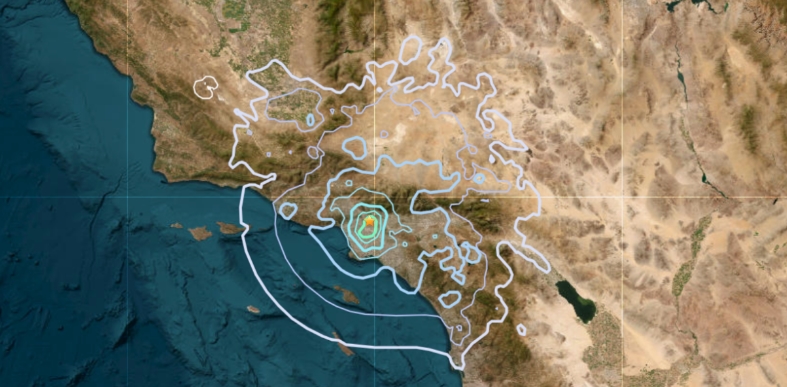
The earthquake happened in the early hours, when much of the region was either asleep or just beginning to stir. According to preliminary data from the United States Geological Survey, the epicenter was located near a fault line that has long been monitored for seismic activity. Though a magnitude of 4.6 is considered mild, it is strong enough to be widely felt across a densely populated region. Residents from San Jose to Oakland reported shaking that lasted several seconds, with some describing it as a rapid, rolling motion followed by a brief aftershock-like vibration.
For many in the Bay Area, earthquakes are a familiar part of life. Still, each tremor brings a renewed sense of worry. The region rests atop a complex network of fault lines, including the iconic San Andreas Fault, which has been responsible for some of the most deadly earthquakes in U.S. history. While this specific quake did not begin precisely along the San Andreas, it is part of the greater tectonic system that shapes California’s geology. Experts typically note that even modest quakes can provide vital insight into the stress and movement occurring beneath the Earth’s crust.
In neighborhoods nearest to the epicenter, the shaking was severe enough to knock small goods from shelves and send dogs scrambling for refuge. Some residents recalled feeling a deep rumbling moments before the ground began to move—a sound frequently associated with seismic waves flowing through the earth. Others reported feeling disoriented, unclear at first if the movement was caused by an earthquake or something else. In high-rise structures, the swaying sensation was more strong, with occupants perceiving a gradual, pendulum-like motion that remained slightly longer than at ground level.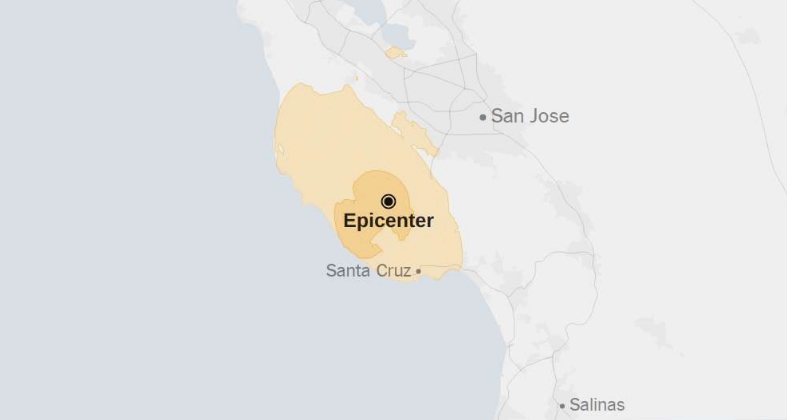
Emergency services around the region responded rapidly, however calls were primarily precautionary. Fire departments and municipal authorities conducted fast assessments to check for building damage, gas leaks, and other possible concerns. Transportation systems, including trains and bridges, were temporarily examined to verify safety before resuming normal operations. Officials asked locals to be calm but attentive, urging them to check emergency kits, secure heavy furniture, and review earthquake preparedness plans.
Despite the relatively low magnitude, the quake provoked extensive discussion on social media, as thousands of residents recounted their experiences in real time. Posts varied from funny jokes about spilled coffee to more serious concerns about the “Big One”—a term often used to signify a potentially catastrophic earthquake that scientists predict could eventually strike the region. While there is no way to forecast exactly when such an event would occur, seismologists agree that the Bay Area’s position makes it unavoidable over the long term.
One of the most essential features of earthquakes like this is the data they produce. Seismologists evaluate the patterns, depth, and severity of these earthquakes to better understand fault behavior. Each quake adds another piece to the jigsaw, helping scientists update models that anticipate future hazards. In this situation, the 4.6 magnitude event is likely to be researched for its relationship to surrounding fault systems and any potential stress transfer it may have generated.
Residents who saw the quake personally generally report a mix of exhilaration and introspection. For newcomers to California, it can be a jarring introduction to the region’s seismic realities. For longstanding inhabitants, it is a caution not to become complacent. Preparedness programs have long highlighted simple but critical procedures, such as having emergency supplies, securing heavy things, and identifying safe spaces within homes and workplaces. Events like this tend to rekindle public interest in those policies, at least temporarily. Magnitude 4.6 earthquake rattles California’s Bay Area
Infrastructure resilience is another major factor in how regions like the Bay Area resist earthquakes. Over the decades, building rules in California have evolved dramatically, requiring structures to be more flexible and better suited to absorb seismic energy. Retrofitting older structures has also been a key emphasis, particularly in urban centers where dense populations enhance the potential impact of a quake. While these initiatives have considerably increased safety, experts advise that not all structures are similarly prepared, and continuous investment is important.
The psychological impact of earthquakes should not be disregarded either. Even mild tremors can make a lasting effect, especially for people who have experienced greater quakes in the past. The unpredictability of earthquakes—the fact that they might come without warning—adds to the fear they can induce. Community outreach and education play a vital role in resolving these concerns, letting individuals feel more informed and empowered rather than scared. Magnitude 4.6 earthquake rattles California’s Bay Area
In the hours following the quake, aftershocks remained a possibility, albeit none of notable magnitude were immediately detected. Aftershocks are a typical component of the seismic process, when the ground adjusts to the original movement. While they are usually smaller, they can nevertheless be upsetting and, in rare cases, do extra harm if structures have already been undermined.
Ultimately, the magnitude 4.6 earthquake that jolted the Bay Area may fade swiftly from headlines, but its significance stays beneath the surface. It is a reminder of the dynamic forces forming California’s geography and the significance of remaining prepared in a location where earthquakes are not a matter of if, but when. For dwellers of the California coast, the ground beneath their feet is continuously in motion—quiet most of the time, but occasionally making its presence known in moments like this.
As life in the Bay Area returns to normal, the quake becomes part of the region’s continuing story—a brief but meaningful chapter in its intricate relationship with the earth. And while the shaking may have lasted only seconds, its message is clear: attention, preparation, and respect for nature’s force remain as crucial as ever. Magnitude 4.6 earthquake rattles California’s Bay Area
About the Author