Trump’s war A head for the exits in Iran leaves complications behind – In a bizarre turn of events, the battle that Donald Trump started against Iran is now characterized by a hasty hunt for an exit rather than a definitive triumph or defeat. The government seems ready to wind down operations after weeks of intense military activity, broad claims of victory, and growing global ramifications. However, underneath this sense of urgency, there is a complex web of unanswered questions that could prolong the fight indefinitely. What started out as a brief, conclusive campaign has turned into a complex strategic dilemma.
Trump gave out an air of self-assuredness right away by claiming, without equivocation, that American forces had destroyed Iran’s navy, air force, and missile capability. The war was “nearing completion,” he said in a recent national address, implying that America had accomplished its main goals. Skepticism has been voiced in response to such claims, both at home and abroad. Without a well-thought-out strategy for withdrawal, stabilization, or diplomatic resolution, experts and allies alike are wondering what the definition of “victory” is in this situation.
A basic contradiction: the need to depart swiftly vs the fact that the quarrel is unresolved—is at the core of the matter. Trump has consistently hinted that the United States may depart within weeks, even indicating that a formal agreement with Tehran may not be necessary. This strategy reflects a larger change in focus, from aiming for a lasting change in Iran to focusing on quickly pulling out of the country. However, such a shift risks creating a leadership vacuum and leaving major issues unsolved, including regional security, nuclear worries, and economic stability.
 One of the most significant difficulties is the situation of the Strait of Hormuz, a crucial artery for world oil supplies. Despite the war’s massive economic impact—driving oil prices higher and upsetting financial markets—there is no clear plan to secure or reopen this key route. In fact, signals from the administration imply that restoring the strait may not even be a major aim. This raises significant issues about the long-term repercussions of a U.S. exit that leaves one of the world’s most critical shipping routes in a state of uncertainty.
Equally alarming is Iran’s resiliency. While U.S. officials stress the damage inflicted on Iranian forces, Tehran has continued to launch retaliation attacks and demonstrate operational capacity. Far from being totally beaten, Iran is prepared for a prolonged संघर्ष, rejecting forced timeframes and claiming its own شروط for ending the war. This dynamic challenges the notion of a clean U.S. exit; even if American soldiers withdraw, the conflict itself may persist in various ways, potentially pulling the area into more instability.
The geopolitical fallout reaches beyond the battlefield. Trump’s conduct of the war has strained relationships with longstanding allies, particularly inside NATO. His criticism of allied contributions and reluctance to coordinate a cohesive strategy have widened divides at a time when joint action may have boosted diplomatic power. As a result, the United States risks emerging from the battle more isolated, with decreased influence in defining the region’s destiny.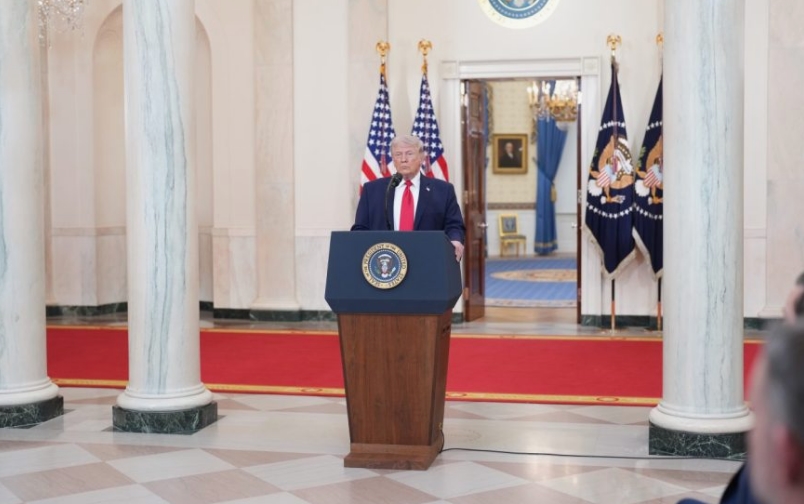
Domestically, the demand to terminate the conflict is rising. Rising fuel prices, market volatility, and deteriorating popularity ratings have sharpened scrutiny of the administration’s plan. For many Americans, the war’s costs—both financial and human—are increasingly harder to explain in the absence of obvious, concrete rewards. This political reality has undoubtedly exacerbated the demand for a speedy withdrawal, even if it means leaving crucial objectives unfulfilled. Trump’s war A head for the exits in Iran leaves complications behind
Yet the ramifications of such a withdrawal might be far-reaching. Without a negotiated settlement or a permanent post-conflict framework, the region may remain unpredictable, with continued between Iran and its foes. The risk for escalation—whether through proxy conflicts, cyber activities, or renewed military engagements—remains high. Moreover, the unresolved matter of Iran’s nuclear capability continues to loom large, particularly as the conflict has redirected focus away from nonproliferation goals.
There is also the question of precedence. A withdrawal that favors haste over stability might indicate to both allies and rivals that U.S. commitments are conditional and potentially short-lived. This impression may empower enemies while weakening confidence among partners who rely on American security commitments. In this sense, the ramifications of the war stretch well beyond Iran, impacting worldwide opinions of U.S. leadership. Trump’s war A head for the exits in Iran leaves complications behind
In many ways, the current moment reflects a broader pattern in Trump’s foreign policy: big followed by abrupt adjustments in direction. The Iran war, initially depicted as a decisive intervention, now appears to be closing in ambiguity. The administration’s to define success—whether through military measurements, economic, or political messaging—has yet to develop a unified narrative that resonates with either home or international audiences.
Ultimately, the issue resides in resolving opposing priorities. On one hand, there is a clear desire to terminate the conflict and lessen its political and economic costs. On the other, there is the truth that battles of this scale rarely provide clean conclusions. The absence of a coherent exit strategy—one that addresses security, diplomacy, and reconstruction—means that many of the war’s core causes will stay unsolved.
As the United States works toward a probable pullout, the legacy of Trump’s Iran conflict is still being written. It is a story not only of geopolitical maneuvering, but also of squandered opportunities, shifting , and the balance between ambition and moderation. The frenzied rush for the exits may bring a short to direct U.S. participation, but the complexities left behind will continue to impact the region—and the world—for years to come. Trump’s war A head for the exits in Iran leaves complications behind
About the Author