This lens breakthrough could put utterly cheap thermal cameras in phones and cars – For decades, thermal imaging has felt like something pulled straight out of a spy movie. Police helicopters scanning city streets. Firefighters navigating smoke-filled buildings. Soldiers detecting movement in pitch-black darkness.
The technology has always seemed powerful — and expensive. Too expensive, in fact, to become a normal feature in the smartphones in our pockets or the cars we drive every day. This lens breakthrough could put utterly cheap thermal cameras in phones and cars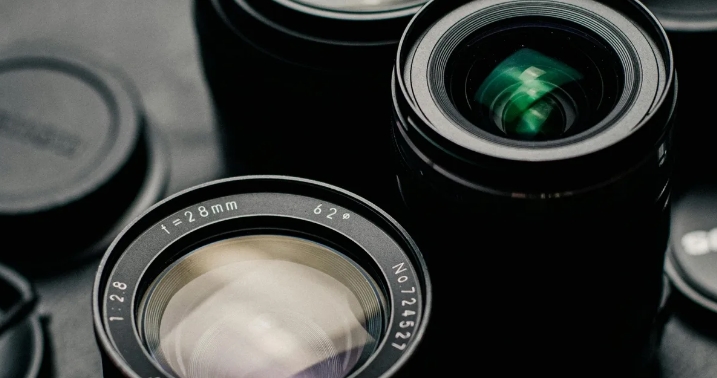
But a recent lens breakthrough could change that story entirely. Researchers have developed a radically simplified thermal lens system that could slash production costs and make ultra-affordable thermal cameras possible for mass-market devices. If commercialized at scale, this innovation could bring heat-sensing vision to everyday consumer electronics — from phones and smart home systems to driver-assistance tech in cars. And that could quietly transform how we interact with the world around us. This lens breakthrough could put utterly cheap thermal cameras in phones and cars
Why Thermal Cameras Are So Expensive
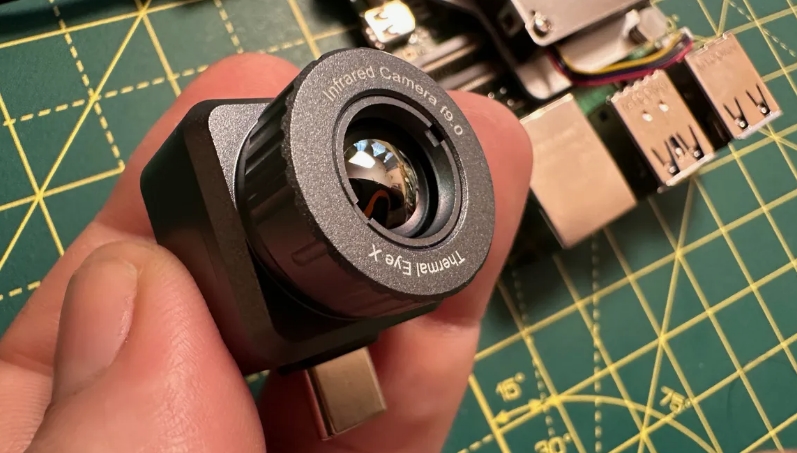
To understand why this matters, it helps to know why thermal cameras have historically cost so much. Unlike regular cameras, which detect visible light, thermal cameras detect infrared radiation — the heat naturally emitted by objects. Humans, animals, engines, electronics, even walls all radiate heat in varying degrees. Thermal sensors convert those heat patterns into images. The challenge isn’t just the sensor — it’s the lens.
Traditional camera lenses are made from glass. But glass blocks long-wave infrared radiation, which is what thermal cameras need to capture. That means thermal systems rely on exotic materials like germanium — a rare and costly element. Germanium lenses are difficult to manufacture, heavy, and expensive to polish with precision.
The result? Even small thermal imaging modules can cost hundreds or thousands of dollars. That price barrier has kept thermal imaging mostly confined to industrial tools, military equipment, high-end smartphones, and specialized vehicles.
The Breakthrough: Simpler Materials, Smarter Design
The new development focuses on redesigning the lens itself using alternative materials and simplified manufacturing techniques. Instead of relying on expensive germanium, researchers have demonstrated that lower-cost materials — including certain infrared-transparent polymers and silicon-based compounds — can be engineered into ultra-thin, high-performance lenses. These new lenses can be molded rather than ground and polished, dramatically reducing manufacturing complexity.
Even more promising is the use of flat optical designs — sometimes referred to as “meta-lenses” or computationally enhanced optics. Rather than relying purely on curved glass geometry, these systems combine lightweight lens structures with software processing to reconstruct detailed thermal images.
In other words, part of the “heavy lifting” shifts from hardware to algorithms. That change is huge. If lenses can be mass-produced like plastic smartphone camera components — instead of precision-machined specialty optics — costs could plummet.
What This Means for Smartphones
Imagine opening your camera app and switching to thermal mode as easily as you switch to portrait mode.
You could:
-
Detect overheating chargers or electronics before they fail.
-
Check for poor insulation around windows
-
Spot water leaks behind walls
-
Find your pet in the backyard at night
-
Scan a grill or stovetop for hot spots
Thermal imaging wouldn’t be a niche feature anymore. It would become a practical everyday tool. Some rugged smartphones already include thermal cameras, but they typically cost more and cater to contractors or field workers. With cheaper lens systems, mainstream brands could integrate compact thermal sensors without dramatically increasing phone prices. It could become as normal as ultra-wide lenses once were. This lens breakthrough could put utterly cheap thermal cameras in phones and cars
Smarter, Safer Cars
The automotive implications might be even more significant. Thermal cameras can detect pedestrians, animals, and cyclists in darkness or fog — situations where traditional cameras and even headlights struggle. High-end luxury vehicles have experimented with night-vision systems before, but cost has limited widespread adoption. If lens costs drop significantly, thermal sensors could be integrated into advanced driver-assistance systems (ADAS) more affordably.
Imagine a car that:
-
Detects a deer on a rural road before headlights reach it
-
Identifies a person walking in dark clothing at night
-
Monitors engine heat irregularities before a breakdown
-
Enhances autonomous driving systems in low visibility
Thermal imaging doesn’t replace radar or lidar — it complements them. Heat signatures provide a different kind of information that can improve safety layers . Lower-cost optics could make that layer standard instead of premium.
Expanding Beyond Phones and Cars
The ripple effects wouldn’t stop there.
Affordable thermal modules could accelerate innovation in:
Smart homes – Detecting heat loss, electrical hazards, or even occupancy patterns.
Healthcare – Non-contact temperature scanning for illness screening.
Industrial IoT – Monitoring machinery health continuously at lower cost.
Agriculture – Tracking livestock and crop stress through temperature variation.
Drones – Enabling consumer-grade night-search capabilities.
Thermal data, once expensive and rare, could become part of everyday sensing infrastructure.
Software Will Be the Secret Weapon
One of the most exciting aspects of this shift is how much modern computing power enhances it. AI image processing can sharpen low-resolution thermal sensors, remove noise, and combine visible-light and infrared images into hybrid overlays. This means manufacturers may not need extremely expensive high-resolution thermal hardware if software can intelligently enhance the output. We’ve seen this transformation already in smartphone photography. Computational photography turned small sensors into stunning cameras through software magic.
- Thermal imaging may follow the same path.
- Hardware gets cheaper. Software gets smarter.
- Consumers win.
Challenges Still Ahead
Of course, breakthroughs in the lab don’t instantly translate into mass production. Thermal sensitivity, durability, long-term stability, and regulatory standards must all be met. Automakers, in particular, require rigorous reliability testing before integrating new optical systems into safety-critical features.
There’s also the matter of privacy. As thermal cameras become cheaper and more widespread, conversations around surveillance and responsible use will inevitably grow louder. Technology rarely evolves without social implications. This lens breakthrough could put utterly cheap thermal cameras in phones and cars
A Quiet Revolution in Vision
What makes this lens breakthrough so fascinating isn’t just the engineering achievement — it’s the democratization of a once-elite capability. For years, seeing heat felt like a superpower reserved for specialists. Now, we may be approaching a future where thermal awareness becomes as ordinary as GPS, Bluetooth, or night mode photography.
The shift may happen gradually. A few flagship phones adopt it. Then mid-range models follow. Car manufacturers integrate it into driver-assistance systems. Smart homes quietly embed it in security sensors. And one day, it simply feels normal.
If manufacturing scales as researchers hope, the biggest impact won’t be flashy marketing headlines. It will be the quiet expansion of human perception — giving everyday people access to information our eyes were never designed to see. A cheaper lens might not sound revolutionary. But sometimes, changing the lens changes everything. This lens breakthrough could put utterly cheap thermal cameras in phones and cars
About the Author